


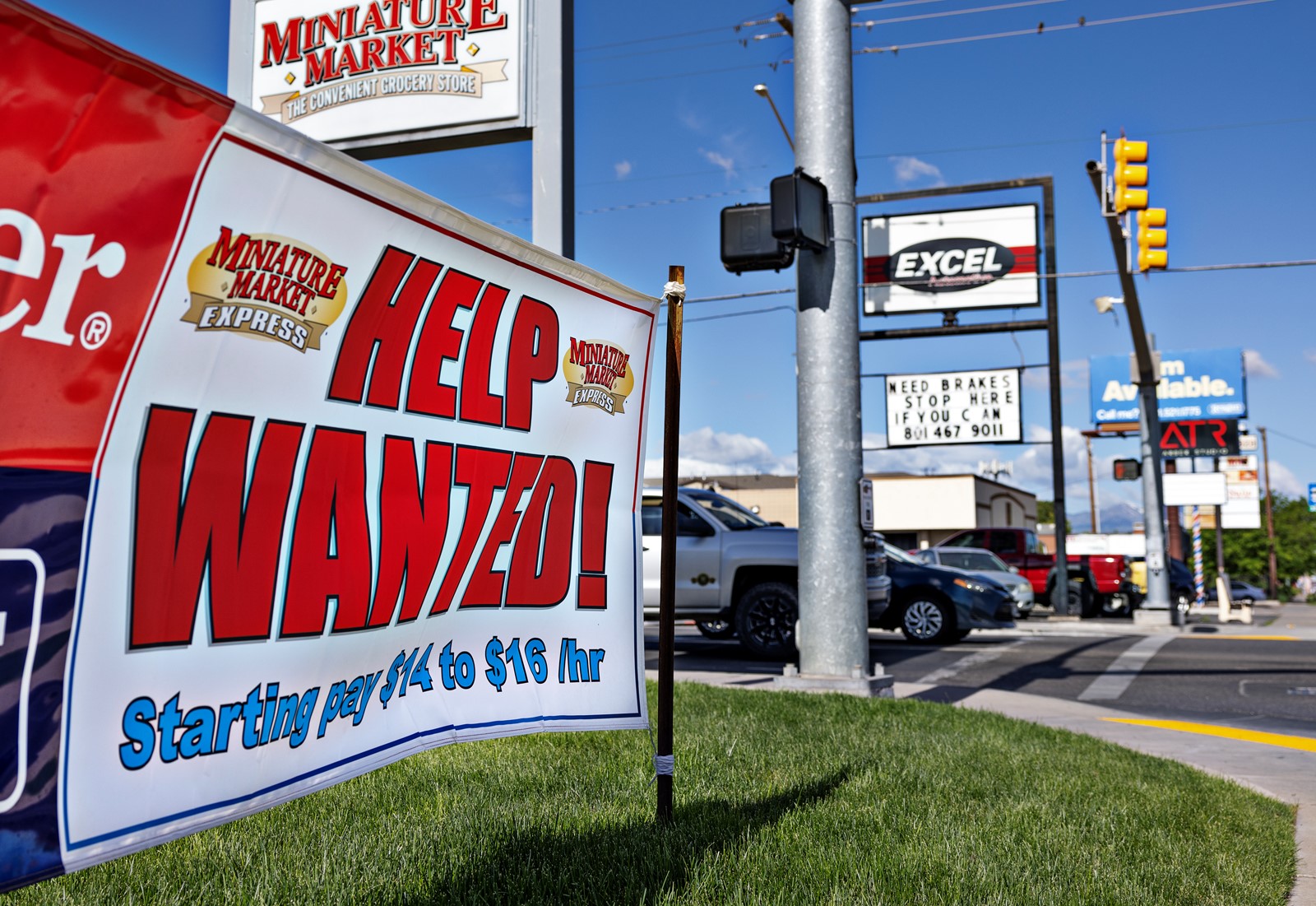


Federal Reserve officials held off on cutting interest rates this week because they want slightly more data to feel confident that inflation is truly coming under control. But while that approach is cautious when it comes to price increases, Friday’s employment report underscored that it might be a risky one when it comes to the job market.
Unemployment rose to 4.3%, up from 4.1% previously, as hiring slowed sharply. The combination is likely to raise concerns that the Fed has waited too long to begin cutting rates — and that it might be getting behind the curve, allowing the job market to slow in a way that will be hard to stall or reverse.
High Fed interest rates help to cool inflation by slowing demand in the economy. When it costs more to borrow to buy a house or expand a business, people make fewer big purchases and companies hire fewer workers. As economic activity pulls back, businesses struggle to raise prices as quickly, and inflation moderates.
But that chain reaction can come at a serious cost to the job market. And once the labor market begins to slow, the cooldown can be difficult to arrest: Economists often say that the unemployment rate shoots up like a rocket and comes down like a feather.
Given that risk and the fact that inflation has now come down notably, Fed policymakers are increasingly attuned to the risk that they might overdo it, tipping the economy into a severe enough slowdown that it pushes unemployment higher and leaves Americans out of work.
Those concerns were not enough to prod central bankers to cut interest rates at their meeting this week. But Jerome Powell, the Fed chair, made it clear that Fed officials would be carefully watching incoming jobs data for any sign that labor conditions were cracking — and suggested that Fed officials stood ready to react if they saw evidence that the job market was taking a sudden and unexpected turn for the worse.
“A broad set of indicators suggests that conditions in the labor market have returned to about where they stood on the eve of the pandemic,” Powell said during a news conference this week. He later added that “I would not like to see material further cooling in the labor market.”
Given that, Friday’s job market cool-down is likely to further cement the Fed’s plans to cut interest rates in September, and perhaps again later this year. Investors sharply bid up the chances that the Fed will make a large half-point interest-rate cut at their September meeting, rather than a standard quarter-point reduction, after the report.
The Fed will receive one more jobs report before its next meeting concludes Sept. 18.
Investors expect the central bank to cut rates by three-quarters of a point — equivalent to three normal sized rate cuts — by the end of the year. Odds that they could make a full percentage point of rate cuts remain small, but increased Friday.
Some critics of the Fed had already begun to argue that the central bank was making a mistake by waiting until its September meeting to cut interest rates. The jump in unemployment is likely to reinforce that concern, especially at a time when lingering risks that could cause inflation to get stuck at an uncomfortably high level have been fading from view.
Fed rate moves take time to work, so many worry that if the central bank starts to cut borrowing costs only when the job market is showing serious signs of strain, it could be moving too late.
“Until the Fed begins cutting, they are going to look behind the curve,” Neil Dutta, head of economics at Renaissance Macro Research, wrote in a research note after the Fed’s meeting this week.
But economists often point to a reason the Fed is tiptoeing rather than running toward rate cuts: The central bank was slow to react when inflation shot up in 2021, something it has faced widespread criticism for, and then was overly optimistic when price pressures began to cool last year. Officials have been wary of another head fake.
“We’re balancing the risk of going too soon against the risk of going too late,” Powell said this week. “It’s a very difficult judgment.”
 PREVIOUS ARTICLE

