


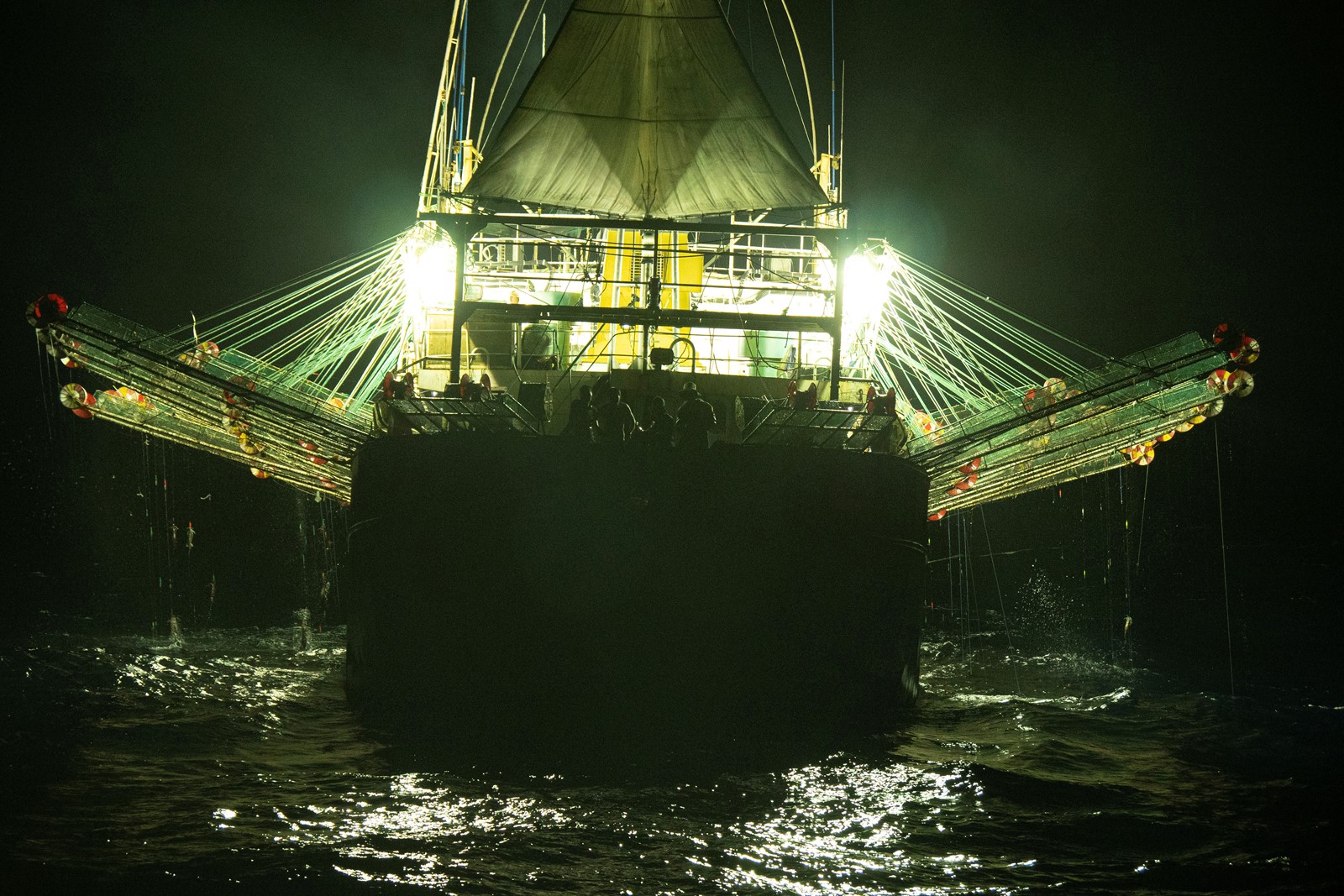


MIAMI — Hazardous, forced work conditions sometimes akin to slavery have been detected on nearly 500 industrial fishing vessels around the world, but identifying those responsible for abuses at sea is hampered by a lack of transparency and regulatory oversight, a new report concluded.
The research by the Financial Transparency Coalition, a Washington, D.C.-based nonprofit organization that tracks illicit money flows, is the most comprehensive attempt to date to identify the companies operating vessels where tens of thousands of workers every year are estimated to be trapped in unsafe conditions.
The report, published Wednesday, found that a quarter of vessels suspected of abusing workers are flagged to China, whose distant water fleet dominates fishing on the high seas, traditionally lawless areas beyond the jurisdiction of any single country. Vessels from Russia, South Korea, Spain, Taiwan and Thailand were also accused of mistreatment of fishers.
Forced labor in the seafood industry is a rarely seen but common phenomenon, one increasingly recognized as a “widespread human rights crisis,” according to the report’s authors. The Associated Press in 2015 uncovered the plight of thousands of migrant workers from Myanmar, Cambodia and Laos who were abused while employed on Thai vessels whose catch often ended up in the United States.
Globally, as many as 128,000 fishers face threats of violence, debt bondage, excessive overtime and other conditions indicative of forced labor, according to the U.N.’s International Labor Organization.
U.S. and European companies are under pressure to clean up supply chains in labor-intensive industries where worker abuse is widespread. The Financial Action Task Force set up by the Group of Seven wealthiest democracies has identified illegal logging and mining as a key driver of money laundering and encouraged its members to set up publicly available databases to raise awareness about the financial flows that fuel environmental crimes.
However, the seafood industry has escaped the same scrutiny, in part because governments often lack the tools to regulate what takes place hundreds of miles from land. This week, President Joe Biden’s administration decided to abandon a planned expansion of the flagship Seafood Import Monitoring Program used to prevent illegal fishing and forced labor on foreign vessels, which supply about 80% of the seafood Americans eat.
The National Oceanic and Atmospheric Administration said Tuesday that it decided to shelve the planned expansion after receiving public feedback on the proposed rule changes and would instead focus its attention on improving the impact of the current import monitoring program.
Another obstacle to transparency: Offenders are frequently licensed by governments like Panama and Belize with reputations for financial secrecy and minimal oversight of their fleets. Of the vessels suspected of abuse and whose ownership could be identified by the Financial Transparency Coalition, 18% flew these so-called flags of convenience.
The report identified two Chinese companies — ZheJiang Hairong Ocean Fisheries Co. and Pingtan Marine Enterprises — as the worst offenders, with 10 and seven vessels, respectively, accused of human rights violations. A third company, state-owned China National Fisheries Corp., had five.
None of the companies responded to the AP’s request for comment.
The Financial Transparency Coalition scoured government reports, media accounts and complaints by advocacy groups to compile a list of 475 vessels suspected of forced labor since 2010. Of that number, flag information was available for only about half.
 PREVIOUS ARTICLE
