


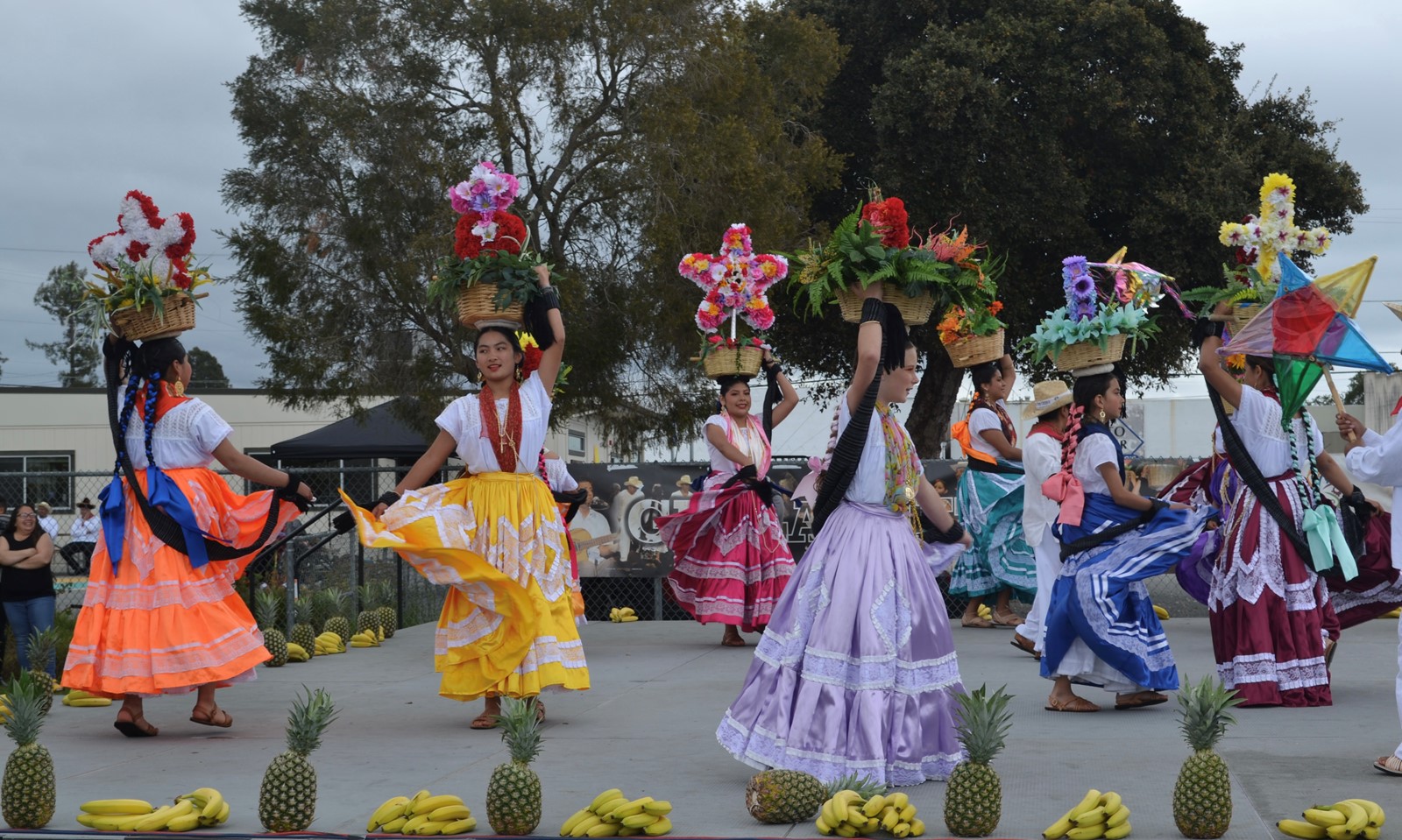
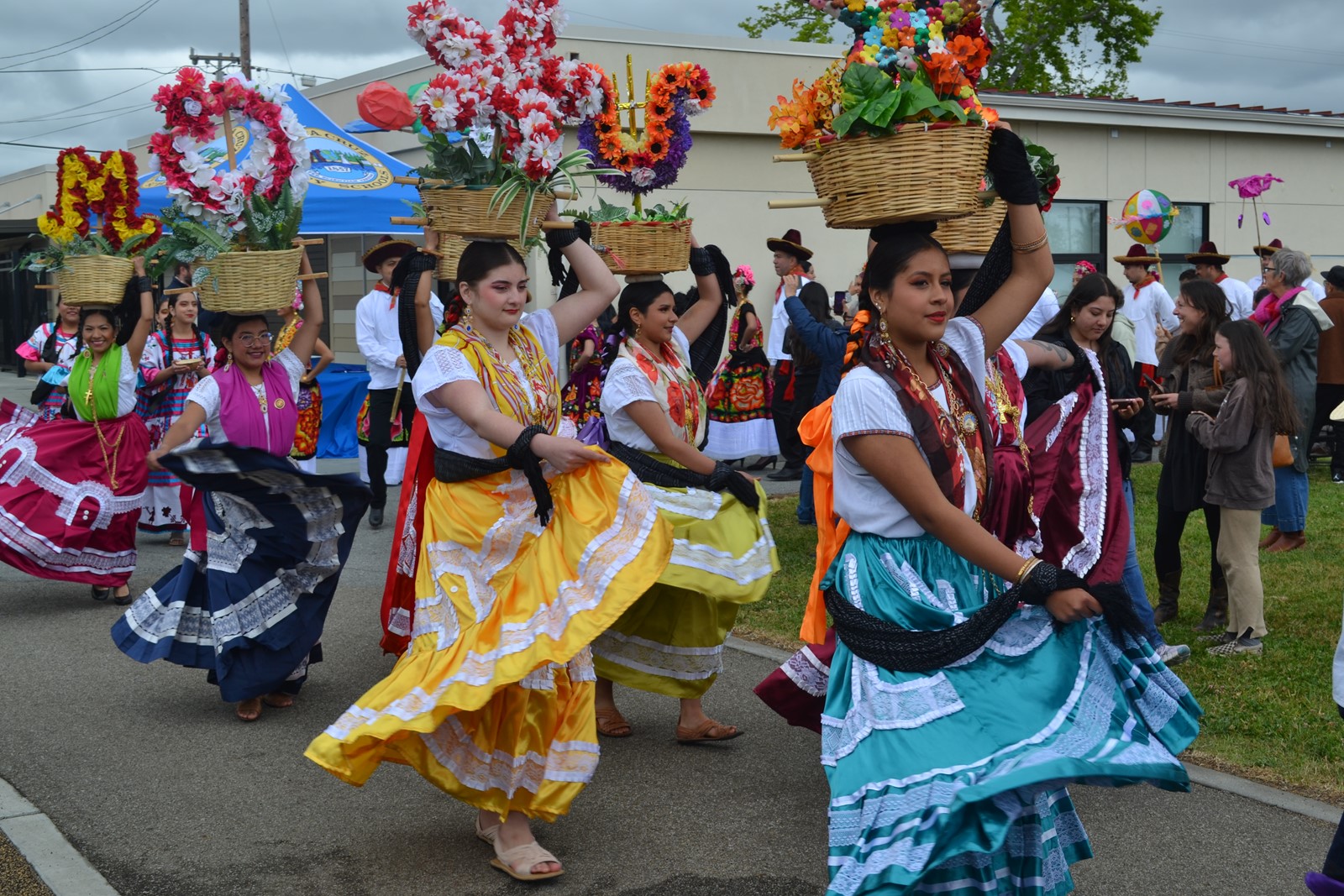


SANTA CRUZ >> Dark clouds and scattered raindrops did very little to deter a large crowd from turning out for Senderos’ Vive Oaxaca Guelaguetza Sunday.
After all, this year’s iteration of the Oaxacan cultural celebration marked a very important milestone: its 20th anniversary.
For the third year in a row since returning to an in-person gathering following the COVID-19 pandemic, people gathered on the field outside Branciforte Small Schools Campus for a six-hour block featuring music, dancing, food, crafts, art and more celebrating the culture of the Mexican state of Oaxaca. Guelaguetza, which translates to “gift” or “offering,” is an Indigenous festival originating out of Oaxaca and celebrated in communities throughout the United States, including Santa Cruz where it became recognized as an official tradition in 2017, 11 years after its first installment in 2006.
This year brought concerns following the inauguration of President Donald Trump and changes in immigration policies where the new administration has taken a more hardline approach to undocumented immigrants, including pledges of more deportations. Senderos co-founder Fe Silvera-Robles said it was important to have spaces for joy amid times of fear.
“We are concerned every day,” she said. “We are going to school, we are risking ourselves. We are going to church, we’re going to the hospital, it’s how our movement is. But this is our way to resist. What you are going to see today, this is our activism way to resist. This is what we are: We are here, and we are good citizens.”
Helen Aldana, a Senderos board member, said it spoke to why Senderos was formed in the first place.
“This is not a new political climate,” they said. “This is something that has existed for people for a long time. To be able to express our joy is an act of resistance. To be able to still dance, play our music, speak our language, that is us existing as a form of resistance.”
Senderos was founded in 2001 by Silva-Robles and her sister, Nereida Robles Vásquez, as an after-school dance club to provide cultural activities for immigrant youth and families.
“We want them to be proud of who they are,” said Silva-Robles. “We want them to survive the challenges we have in this country.”
Senderos supports students by highlighting the language, culture and “all the richness we have inside us when we move to another country,” said Silva-Robles.
“What the founders want is to send a message for education,” she said. “We want them to be educated, we want them to pursue education, to do good at school, to attend school, to have good behavior, to be a good citizen because we want them to be successful.”
Kris Munro, superintendent of Santa Cruz City Schools, said she is grateful for the work Senderos does.
“For more than 20 years, Senderos has been serving the students and the families of Santa Cruz City Schools and really creating a space that supports our students to remain connected to their culture and their values and their families as they attend school,” she said. “It helps them find their passions, either through culture or education.”
The Senderos program includes tutoring, scholarships and other tools for supporting students in their education.
“They have made this incredible nonprofit that continues to thrive and support our students and families,” said Munro.
In 2006, Senderos hosted its first Vive Oaxaca Guelaguetza festival to a crowd of approximately 2,000 people at the Santa Cruz Civic Auditorium. In subsequent years, the festival was relocated to the field outside Harbor High School and then San Lorenzo Park, which Silvera-Robles said allowed the crowd to expand to approximately 6,000. Following the pandemic, the festival switched to a virtual format, but it has been at Branciforte for three years.
“We are recovering little by little after COVID,” she said.
The festival was preceded by a parade from Water to Cooper streets Wednesday and mole dinner and live performance by visiting Oaxacan musicians Thursday. As always, Sunday’s festival was centered around Oaxacan and greater Mexican traditions. Vendors sold traditional Oaxacan and Mexican dishes such as tlayudas, mole, gorditas, barbacoa tacos, quesadillas, molotes, empanadas and rosquitos and beverages such as tejate and tepache. A number of souvenirs were also available to purchase, including a wide variety of T-shirts, hats, jewelry, instruments and many plush capybaras — immense rodents native to South America that have gained a large global following in recent years due to their cute appearance and largely unbothered attitudes.
A number of agencies also tabled at the event, including the Santa Cruz County Office of the Public Defender, Humanities Institute at UC Santa Cruz, Kaiser Permanente and Community Action Board of Santa Cruz County, which had information on its Immigration Project. The program provides services such as naturalizations to U.S. citizenship, immigration legal consultations and family-based visa petitions.
Juan Arenas, a front office representative for the Community Action Board, said his office gets approximately 20 calls per day, as there has been “a lot of uncertainty, a lot of fear in our community when it comes to their status.”
“We just try to provide the best information for the client so there’s no doubt whether they could travel or not, whether they should be worrying about their children being left behind,” he said. “There’s a lot of that conversation in the front office.”
The Community Action Board had information on immigrants’ rights and textbooks for U.S. civics tests.
“Once the community knows about their rights, they have power,” said Immigration Project representative Elizabeth Lopez. “They can make conscious decisions what is best for them. We just are here to inform, not to decide for them.”
The festival also brought a variety of performers, including a Oaxacan brass band and several different Oaxacan and Bay Area dance groups, including Senderos’ very own Centeotl Danza y Baile.
Silvera-Robles said the festival was all about community and being united for the common good.
“Together, we can be strong,” she said. “This is what we are teaching our kids: not to hide but to show themselves.”

