




WASHINGTON — The Pentagon is drawing down thousands of troops in Europe by canceling deployments to Poland and Germany as opposed to yanking forces already stationed there, U.S. officials say, as President Donald Trump has tussled with allies over the Iran war and called for changes.
Several U.S. officials confirmed that 4,000 troops from the Army’s 2nd Armored Brigade Combat Team, 1st Cavalry Division were no longer en route to Poland this week. The Trump administration had previously said it was cutting U.S. forces only in Germany, and the decision spurred questions and criticism in both Warsaw and Washington.
Two officials told The Associated Press the Poland deployment was canceled after Defense Secretary Pete Hegseth signed a memo directing the Joint Chiefs of Staff to move a brigade combat team out of Europe. One said the choice of which unit was left to military leaders.
Besides the Army combat team based in Fort Hood, Texas, the memo also led to the cancellation of an upcoming deployment to Germany of a battalion trained in firing long-range rockets and missiles, according to the two officials, who like the others spoke on condition of anonymity to discuss sensitive military operations.
Three U.S. officials said the canceled deployments were part of an effort to comply with a presidential order issued at the beginning of May to reduce the number of troops in Europe by about 5,000. The reasoning does not appear to have been well communicated because others based in Europe said they did not know if the halted deployment to Poland was part of the previously announced reduction in troops.
Trump and the Pentagon have said in recent weeks that they were drawing down at least 5,000 troops in Germany after Chancellor Friedrich Merz said the U.S. was being “humiliated” by the Iranian leadership and criticized what he called a lack of strategy in the war.
The drawdown reflects a growing rift between the administration and traditional European allies, with the U.S. leader repeatedly criticizing fellow NATO members for a lack of support for the Iran conflict.
Polish officials Friday insisted that the canceled U.S. deployment to Poland, reported earlier by The Military Times and other outlets, was not targeted directly at their country but was a consequence of Trump’s decision to reduce the number of troops in Germany.
Polish Prime Minister Donald Tusk said he “received assurances” that the decision was of a logistical nature and said it does not directly affect deterrence capabilities and Poland’s security.
Joel Valdez, a Pentagon spokesman, said “the decision to withdraw troops follows a comprehensive, multilayered process” and he argued that it was “not an unexpected, last-minute decision.”
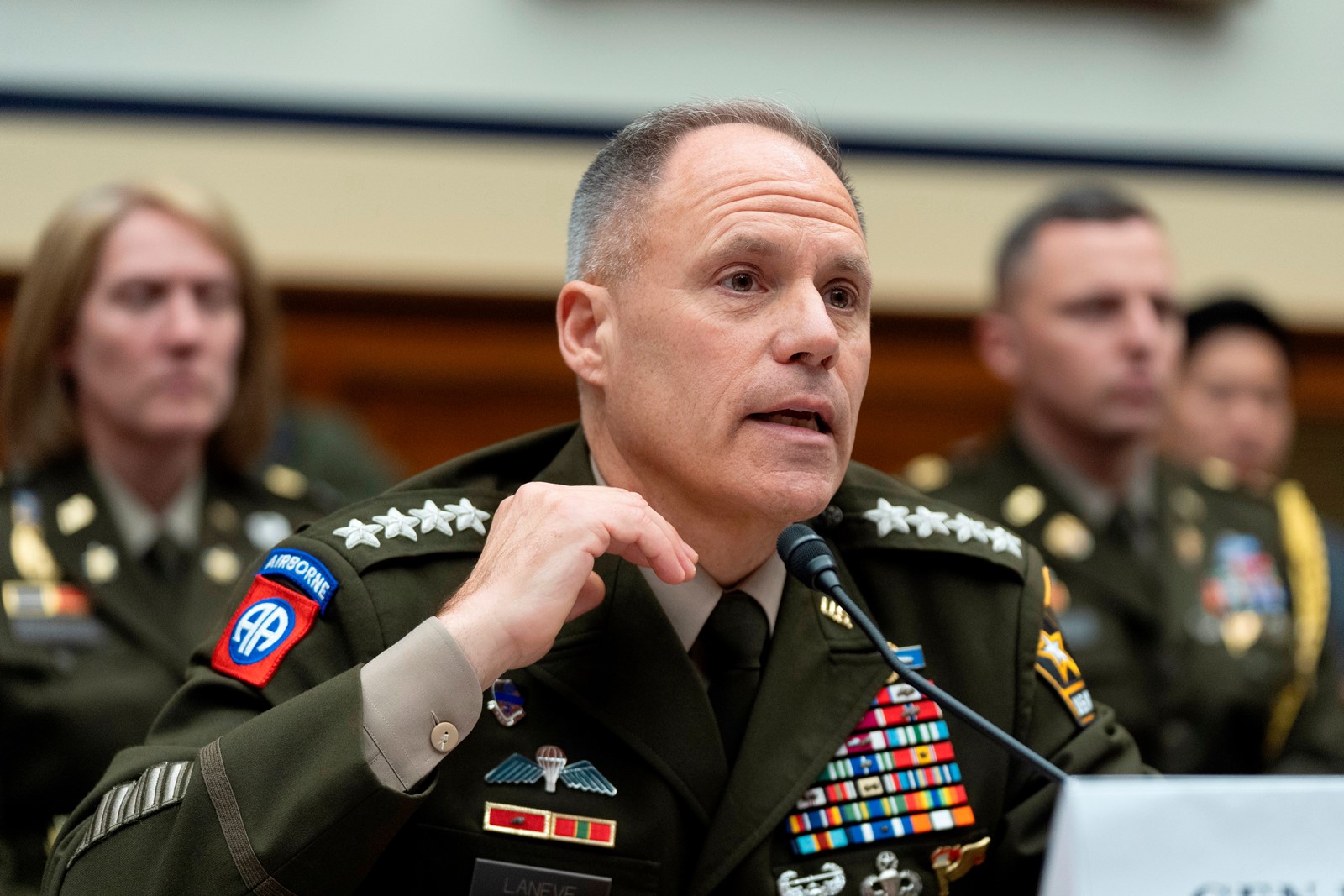
Speaking to Congress in a hearing Friday, Army Secretary Dan Driscoll and Gen. Christopher LaNeve, the Army’s chief of staff, said discussions around the halted deployment to Poland occurred over the past two weeks but that the decision itself was made in the past couple days.
Republican Rep. Don Bacon of Nebraska said he spoke with Polish officials Thursday and they were “blindsided.”
The move also left some U.S. military personnel in Europe in the dark about how the Trump administration was reducing forces. A U.S. official based in Europe said a meeting was called with 20 minutes’ notice Monday to discuss the cancellation of the deployment to Poland.
At that time, troops had already been sent to Poland and some still in the U.S. were told shortly before departure not to travel to the airport, that official said. Another official said most of the Army unit’s equipment had already made it to Europe and was sitting in ports.
Democratic and Republican lawmakers criticized the reductions as sending the wrong signal both to allies and Russian President Vladimir Putin, whose forces this week have launched one of the deadliest attacks on the Ukrainian capital in the 4-year-old war.
At the House Armed Services Committee hearing Friday, LaNeve said he worked with U.S. Gen. Alexus Grynkewich, commander in Europe of both American and NATO forces, after Grynkewich received the instructions for the force reduction.
“I’ve worked with him in close consultation of what that force unit would be, and it made the most sense for that brigade to not do its deployment in theater,” LaNeve said.
Bacon called the decision “reprehensible.”
 PREVIOUS ARTICLE

