




ATHENS, Ga. — A Venezuelan man “went hunting for females on the University of Georgia’s campus” earlier this year and ended up killing nursing student Laken Riley after a struggle, a prosecutor said Friday. The man’s lawyer, though, said the evidence is circumstantial and doesn’t prove his client is guilty.
Jose Ibarra, who entered the U.S. illegally, is charged with murder in the February killing, which helped fan the immigration debate during this year’s presidential campaign. Ibarra waived his right to a jury trial, meaning his case is being heard and decided by Athens-Clarke County Superior Court Judge H. Patrick Haggard.
Prosecutor Sheila Ross told the judge that Ibarra encountered Riley Feb. 22 while she was running on the University of Georgia campus in Athens. Riley, 22, was a student at Augusta University College of Nursing, which also has a campus in the city that is about 70 miles east of Atlanta.
“When Laken Riley refused to be his rape victim, he bashed her skull in with a rock repeatedly,” Ross said, adding that the evidence would show that Riley “fought for her life, for her dignity.”
As a result of that fight, Ibarra’s DNA was left under her fingernails, Ross said. Riley called 911 and, in a struggle over her phone, Ibarra’s thumbprint was left on the screen, she said.
That forensic evidence is sufficient to prove Ibarra’s guilt, but digital and video evidence also prove that Ibarra killed Riley, the prosecutor said.
Defense attorney Dustin Kirby called the evidence in the case graphic and disturbing, but he said none of it proves that his client killed Riley.
“The evidence in this case is very good that Laken Riley was murdered,” he said. “The evidence that Jose Ibarra killed Laken Riley is circumstantial.”
The killing added fuel to the national debate over immigration when federal authorities said Ibarra illegally entered the U.S. in 2022 and was allowed to stay to pursue his immigration case.
Republicans, including President-elect Donald Trump, blamed Democratic President Joe Biden’s border policies for her death.
As he spoke about border security during his State of the Union address weeks after the killing, Biden mentioned Riley by name.
Riley’s mother, Allyson Phillips, and other family members packed the courtroom Friday morning but didn’t return after lunch. Phillips put her face in her hands and cried frequently, especially when photos of her daughter were shown and during descriptions of what happened to her.
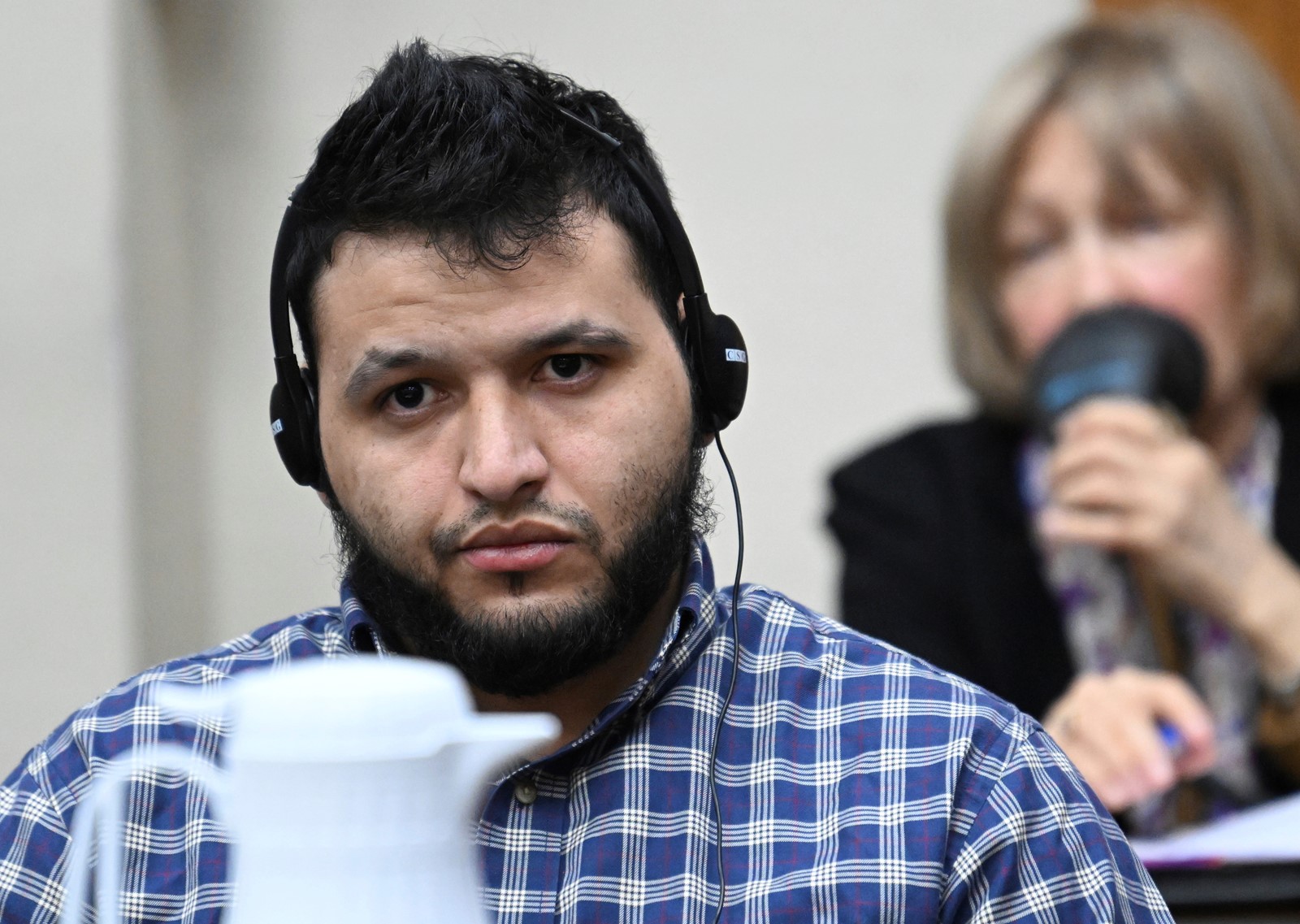
Ibarra, dressed in a plaid shirt and dark slacks and with his feet chained, wore headphones to hear a Spanish-language interpreter. He appeared attentive.
During her opening statement, Ross laid out a timeline using doorbell and surveillance camera footage, as well as data from Riley’s phone and watch, to piece together her final moments.
Riley left home at 9:03 a.m. and headed for wooded trails where she often ran. Data from her watch shows that at 9:10 a.m., she was running at a fast pace when something happened that made her “stop dead in her tracks.” She called 911 at 9:11 a.m.
A 911 dispatcher answered but no one responded when she repeatedly sought a response, and then the call was ended by the caller. The dispatcher immediately called back, but no one answered.
“Her encounter with him was long. Her fight with him was fierce,” Ross said, noting that Riley’s watch data showed her heart was still beating until 9:28 a.m.
 PREVIOUS ARTICLE
