


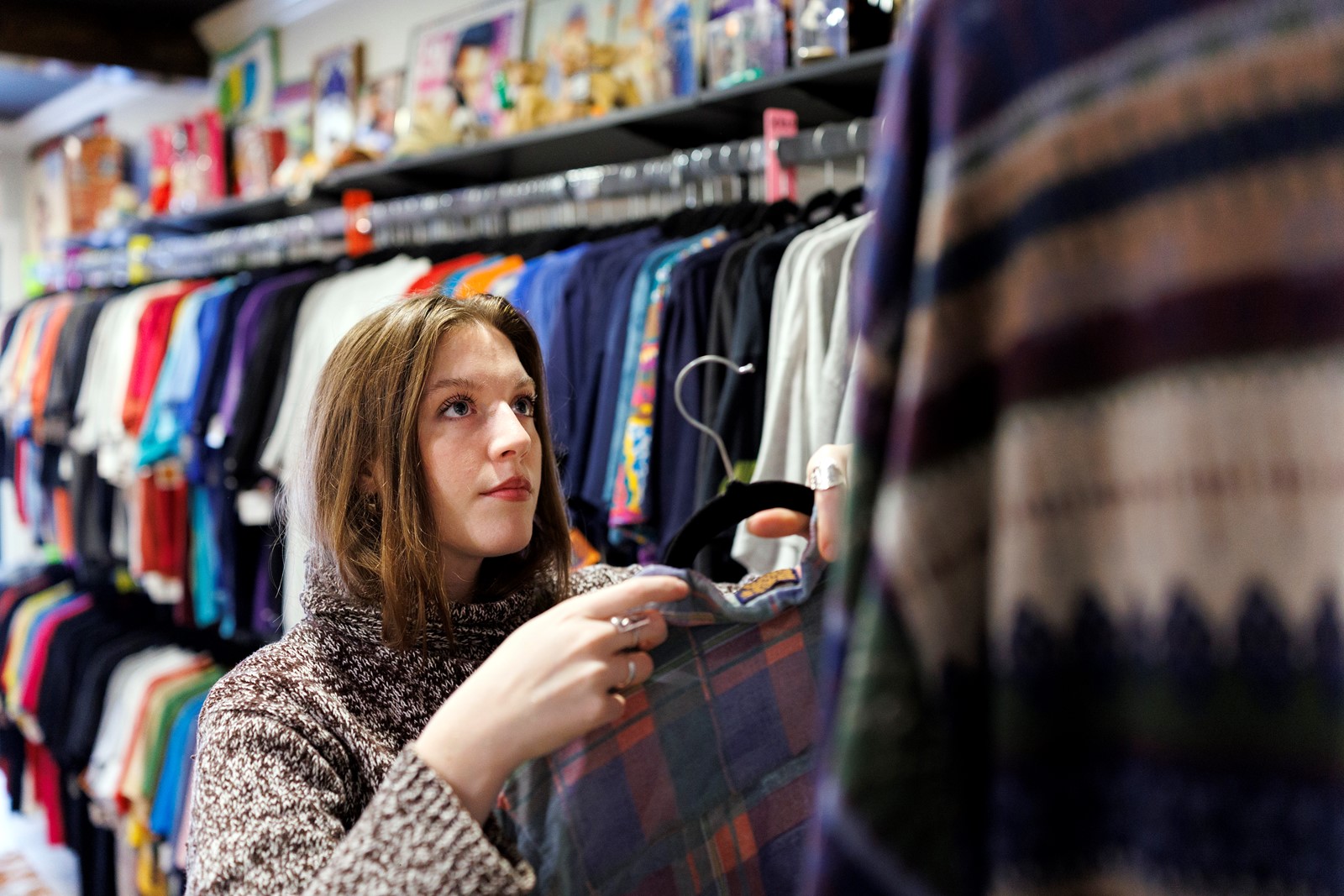


Last year, Ella Henry bought all her holiday gifts secondhand. Henry, a 21-year-old student at Western Kentucky University, wanted to save money. But she ended up loving the hunt and the surprise of finding things she’d never see in a regular store. This year, her family took inspiration from her: All their Secret Santa gifts must be purchased secondhand.
On Black Friday, many Generation Z shoppers weren’t be scouring luxury stores or big-box aisles for their gifts. Instead, they are turning to thrift stores, consignment shops and resale apps. About 86% of Gen Z-ers say they’re more likely to purchase a secondhand holiday gift this year than they would have been, according to a report from eBay.
One reason is money. Gen Z-ers’ holiday spending this year is expected to fall 23%, according to recent research, so a used sweater from a big brand that costs less and lasts longer feels like a win. But it’s not just about saving cash. The shoppers in this cohort — age 13 to 28 — are after pieces with character. They grew up on social media, where influencers made thrifting look fun, stylish and deeply personal. Now they want something unique. Something with a story. Something you can’t find in a mall window.
Tracking a trend
This didn’t happen overnight. Pandemic lockdowns “absolutely accelerated” the trend, said Danielle Vermeer, the head of product at ThredUp, an online secondhand marketplace. Young people scrolled TikTok and saw environmental and labor critiques of fast fashion. They missed going places, doing something tactile and finding joy offline. When infections slowed, thrifting delivered all of that: sustainability, nostalgia, community and a reason to leave the house again.
Social media helped. Thrift hauls, closet clean-outs and $20 thrift store challenges rack up millions of views. The chief executives of BaseCamp Franchising, the parent company of resale firms, said teens show up in stores and film the entire outing. There’s a flood of posts tagged #Thriftmas and #ThriftHaul.
No wonder Gen Z buyers have increased in the last year at Goodwill and the RealReal (a luxury resale marketplace). Sellers are there, too, offering up their own clothes for extra spending money. “I’ve been thrifting for over 20 years, and it was definitely not cool when I was a teenager,” Vermeer said. “That’s the energy Gen Z brings to secondhand.”
Throwback fashion
Another impetus is the return of older styles. Jasmine Simpson, a 25-year-old social media specialist, loves discovering clothes and jewelry in New York City that channel the early 2000s — think TLC, Destiny’s Child, old-school denim or anything that looks as if it could’ve been in a music video. Her favorite score? A fur coat for $40.
Last Christmas, her sister gave her secondhand Chanel shoes for around $325, and this year she wants to return the favor. She’ll start her hunt online and then, if nothing turns up, shift to brick-and-mortar thrift stores.
For years, Hannah Moffitt, a 25-year-old content creator in Hartford, Conn., took a dim view of thrifting. Her local Goodwill never had clothes in her size, and the store felt messy, she said. But a spontaneous trip to Savers with her fiance, who grew up loving secondhand stores, changed her view.
Now she shops mostly secondhand or from small businesses, and her gift list has shifted, too. Last year, she split her holiday shopping between thrift stores and big-box stores. This year, she wants to go fully secondhand — right down to the wrapping paper and the boxes. She and her fiance even plan to thrift their wedding decor.
“One man’s trash is another’s treasure,” she said.
 PREVIOUS ARTICLE
