


Trump embraces talking point of ‘white farmers’
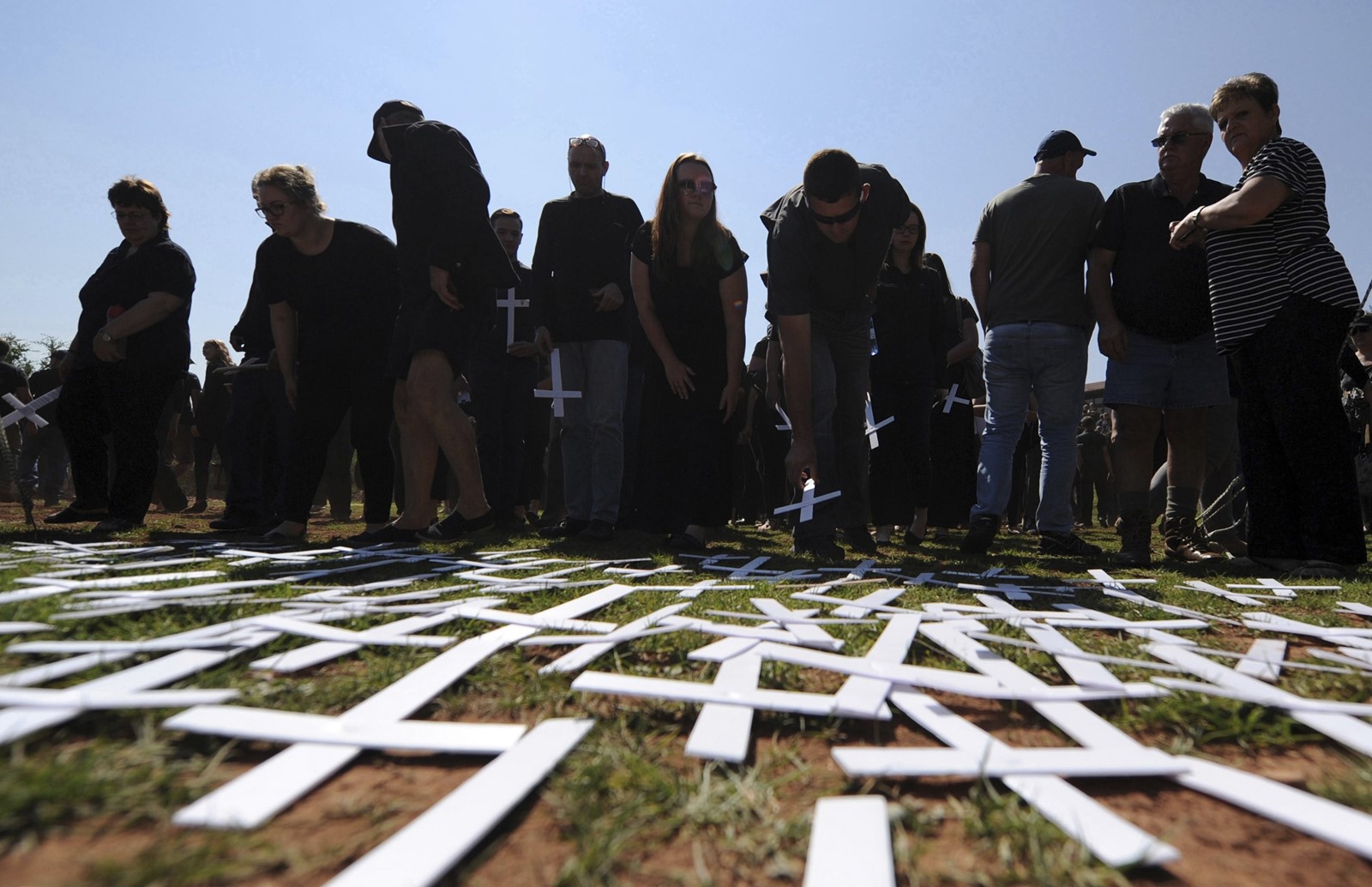


President Donald Trump embraced a longtime white-nationalist talking point when he tweeted about alleged “large scale killing” of white farmers in South Africa, drawing praise Thursday from white nationalists and protests from anti-racism groups in the U.S.
“I have asked Secretary of State @SecPompeo to closely study the South Africa land and farm seizures and expropriations and the large scale killing of farmers,” Trump tweeted Wednesday night. Appearing to quote a Tucker Carlson segment on Fox News, Trump wrote the “South African Government is now seizing land from white farmers.”
South Africa’s government protested Trump’s remark, writing on Twitter that “South Africa totally rejects this narrow perception which only seeks to divide our nation and reminds us of our colonial past.”
Trump’s tweet drew applause from white nationalists in the U.S., who have supported his presidency due to his tough stances on immigration and his past reluctance to denounce far-right figures.
“Thank you!” tweeted David Duke, a former Ku Klux Klan leader, later adding an image that said, “Stop White Genocide,” with the hashtag #SouthAfrica. Duke has praised Trump in the past, including after last year’s violent rally in Charlottesville, Va., when Trump struggled to criticize white nationalists who clashed with anti-racism protesters.
Land reform is a complicated issue in South Africa, and violence is also a serious problem. But experts say white nationalists and other far-right figures in the U.S. and abroad have conflated the issues to push a message of “white genocide” happening in South Africa.
The claim had long percolated on the far-right before appearing on Fox News and in the White House, which is what made its sudden appearance on Trump’s Twitter feed striking to anti-racism groups.
“This is a white supremacist talking point,” the Anti-Defamation League said in a statement on Twitter. “For years they’ve campaigned to stop ‘white genocide’ in South Africa & made false claims about race-based killings of white South African farmers.”
For decades, South Africa has struggled to correct the legacy of apartheid, in which a white ruling minority — the descendants of European colonialists — had denied black South Africans various rights and access to farmland.
Today, black South Africans make up 80 percent of the population but own just 4 percent of the country's land. The government, dominated by the African National Congress since 1994, has pursued policies seeking to transfer white-owned farmland to black owners, often meeting failure.
South Africa President Cyril Ramaphosa has suggested amending the constitution to allow uncompensated seizures by the government.
South Africa has a high overall homicide rate compared to other countries, and farmers have sometimes been victims of violence. But a recent report by a consortium of agricultural associations said the number of farmers killed from 2017 to 2018 — 47 — was a 20-year low.
The issue has been followed in the U.S. by white nationalists and far-right figures, who have hyped stories of black-on-white violence in South Africa, as they often do in the U.S., to help push their political messages about the need for white power.
“Opening up space to talk about White South Africans — giving his base the permission to seriously discuss White dispossession — is a monumental achievement,” tweeted Richard Spencer, a prominent white nationalist.
 PREVIOUS ARTICLE

