


Here’s what the last 24 said at the start of their journey
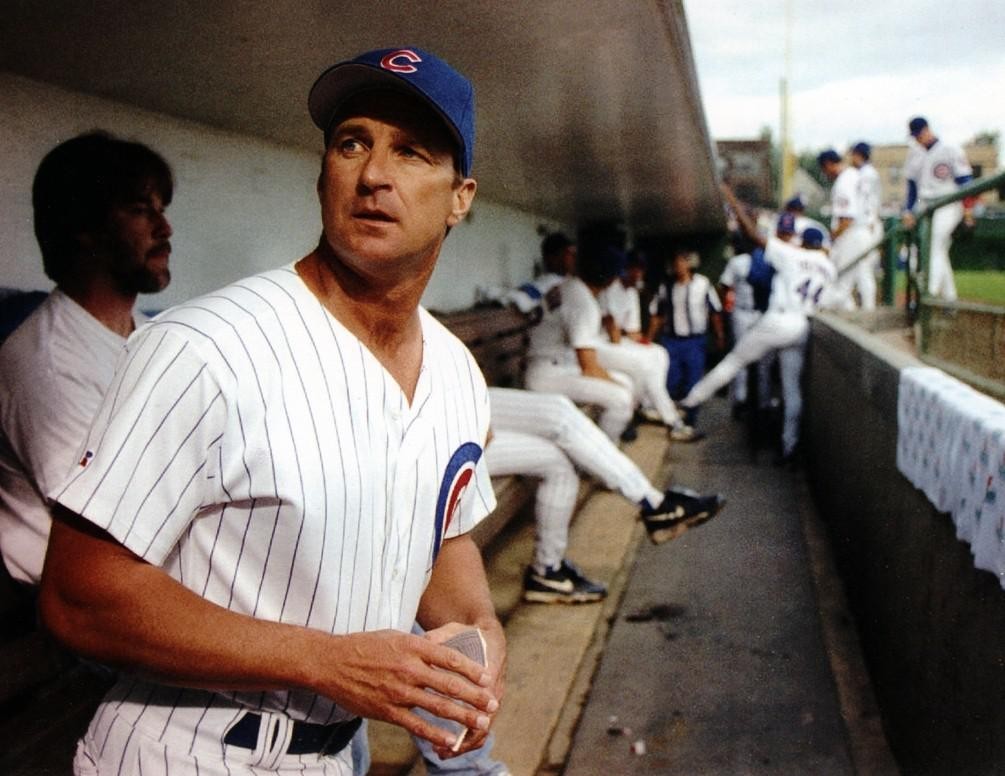


When Whitey Lockman took over for Leo Durocher as Cubs manager in the middle of the 1972 season, he vowed to treat the players differently than his predecessor, whose quick-trigger temper grated on the team.
“The game hasn’t changed, but the players have,” Lockman said at his introductory news conference at Wrigley Field. “The difference in the players is how you have to deal with them. There used to be a lot of yelling and screaming at players (by managers) in previous years, but you don’t do that today.”
The gentlemanly Lockman was supposed to be the perfect antidote to Durocher’s constant barking. Replacing a manager with his exact opposite is a tradition teams have followed through the ages, and the Cubs were no different than other teams, albeit less successful.
When Durocher began his first season with the Cubs in 1966, he said much the same thing as Lockman.
“You have to treat ballplayers differently now,” he said. “These kids are educated. You wrap a lot of money in them and you have to treat each one in a different way.”
Suffice to say Cubs managers often start their Chicago career telling fans what they want to hear, making empty promises and portraying themselves as the one who finally will get the job done, just like your average politician.
But they typically have left disillusioned and shaking their heads, like Preston Gomez after he was fired midway through his only season in 1980.
“Was I sent to war without any guns?” he lamented. “I would say so. We had a lot of injuries and you can’t run a horse with two legs.”
So what will the next Cubs manager say he plans to bring to the table upon his introduction by President Theo Epstein?
Jim Lefebvre read from a four-page, hand-written speech on his first day, insisting that “Just the words ‘Friendly Confines’ send cold chills down your back.” Joe Maddon said the Cubs would be “talking playoffs” in his first year, then invited the media for a shot and a beer, calling it “the Hazleton way.”
Everyone has his own style. The Cubs have employed 24 managers since 1966 — not including interims John Vukovich, Joe Altobelli and Rene Lachemann, each of whom managed fewer than three games. All of them had quite a bit to say to Cubs fans about what to expect from them in their new gig on the North Side and
As we await the first words of the next Cubs manager, here are some of our favorite opening remarks from the last 24 Cubs skippers.
“I’m not coming in here to win popularity contests. And I’m not a nice guy. I haven’t mellowed. I’m still the same SOB I always was. I should know. I’m the guy I’m talking about.”
“I’m sure (the players) have given their best. There are times, I know, though, when you can get psyched out subconsciously and have a letdown on the field. But a player never does that consciously. I don’t think the Cubs have consciously let down in the past and I know they won’t in the future.”
“I like to think I’m mild-mannered without all my emotions showing. But if something happens, you can count on me being out there, whether it’s a player or an umpire. I like action.”
“All managers are in the same boat, regardless of age. My goal for the Cubs is simple — win games and win a pennant before I retire.”
“I’m no miracle worker. … I have no illusions about this (1980) Cubs team. I will make no predictions. … Anything can still happen this season, of course. But the reality of the numbers is against us.”
“A lot of people say I’m too tough. I always believe you have to have a certain amount of discipline. In any business, you have to be organized and you have to have discipline.”
“I’m happy to get the chance to manage here. One thing I remember from my playing days in Chicago is the spirit and patience of the fans. It won’t take long to see what we have on the roster and what we need. There are some players who will fit in with the aggressive style I prefer, The kind of players I admire most are the ones known as ‘gamers.’”
“Some people are born to be newspapermen, some violinists. I’m a manager. It’s easier managing the second or third time around.”
“I don’t believe in coming in here and putting myself up as somebody who knows something nobody else knows.”
“I’m not going to kick the players all over the place. But I’m not going to let them get away with things. … I’m not a genius to know what every player wants.”
“You know how it is in baseball. You try to win today because tomorrow it might rain.”
“When I say run, we’re liable to do anything. I’m not afraid to try things. There will be times when you guys come in and really question me and probably second-guess the moves I’ve made.”
“I’m under no great pressure at this point, feeling that I have to make great changes or use pseudo-psychology. It’s my job to provide a spark.”
“Name one person in football, baseball, basketball, who’s successful who isn’t intense. Is (Mike) Ditka intense? You look at guys who succeed, and they are intense about their jobs.”
“We want to be a ballclub that reacts to every situation almost instinctively, and the only way we’re going to do that is to put together a very comprehensive, very repetitive — to some people, a very remedial — type of approach to this game. We’re not going to reinvent it.”
“I’m not trying to reinvent the game. We’re hoping to play on a consistently hard level every day. It’s a long season. It can’t be all hugs and kisses for 162 games.”
“A lot of times I don’t like to hear anything (after a loss). And if I hear music, I can tell you I keep a bat in my room and I know what I can use it for now — and it’s not to hit baseballs.”
“Right now I’m not locked into anything. You’ll see a couple of lineups and probably wonder: ‘Where the hell’s that coming from?’ Believe me, I have a little bit of a game plan behind it that I’m not going to give out.”
“My name is Dusty, not Messiah.”
“I’m basically a lot of fun to play for. I may be demanding, but that’s part of the equation. … I’m basically 63 years old and once in a while I get into a little episode with an umpire and I jump back and say, ‘Why the hell did I do that?’”
“I have enough people around me that if I change, they’ll slap the daylights out of me. They’re convinced I won’t change, but the world around me will. How you deal with that is going to be all important. I recognize that.”
“You have to create an environment that this (environment) is a plus for us, still get your work in on day games and don’t use these things as an excuse. Everybody has excuses. They don’t go too far. That’s just a cop-out for your own insecurity if you’re whining about things.”
“Everyone seems to think that accountability means you have to scream at somebody, you have to show the whole world you’re holding them accountable. The only (people who need) to know I’m holding them accountable are his teammates, himself and the coaching staff. The accountability factor comes in after the ballgame, in your office, over a phone call, a text, by whatever means you can use it — you’re better served. I’m very secure in who I am.”
“You have to have a little bit of crazy to be successful. I want crazy in the clubhouse every day. You need to be crazy to be great. I love crazy. I tell my players that all the time.”
 PREVIOUS ARTICLE
