


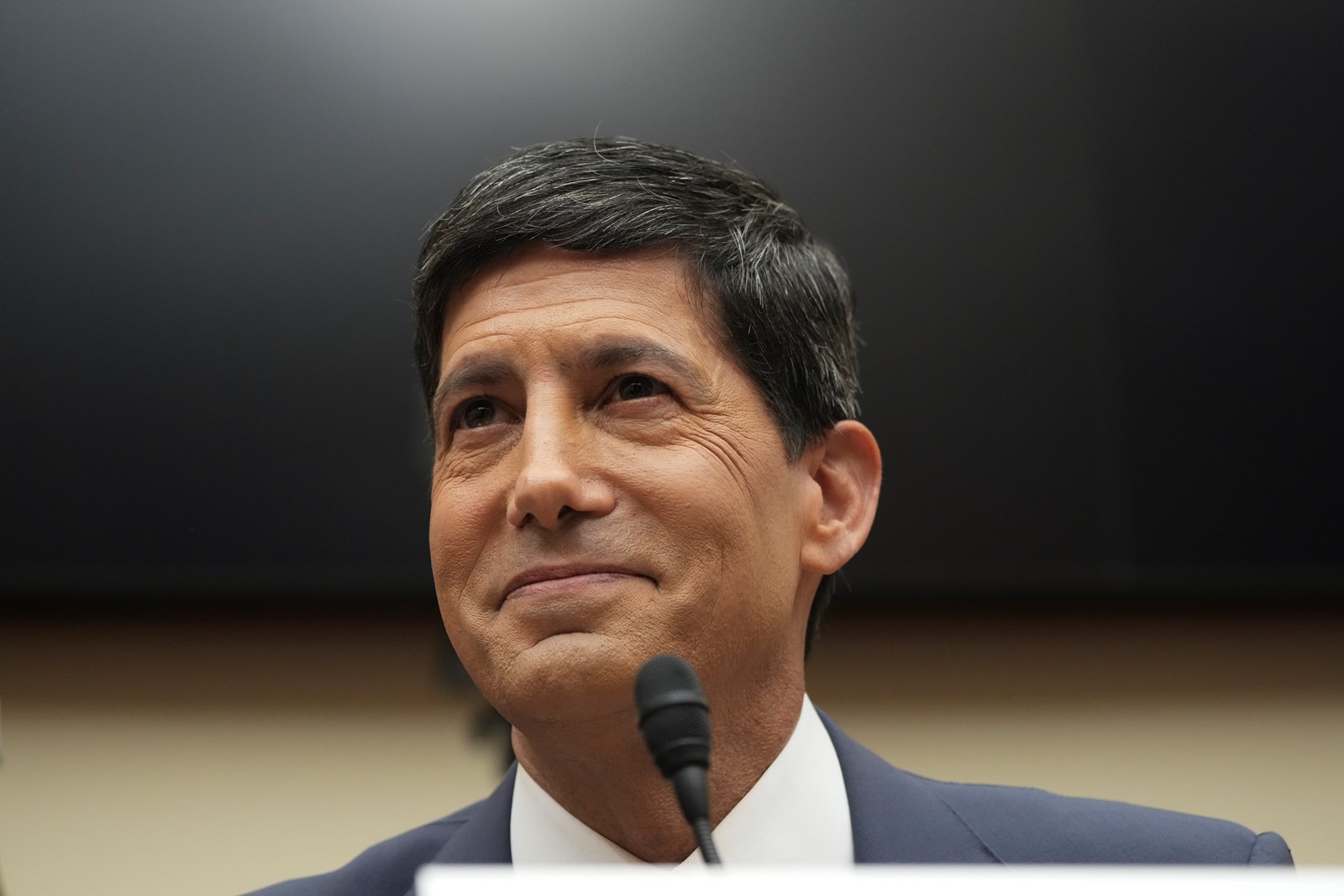


Kevin Warsh reiterated his commitment to bringing down inflation at his first congressional hearing since becoming chair of the Federal Reserve. However, he has yet to indicate whether he supports higher interest rates to achieve that goal.
Warsh told lawmakers on the House Financial Services Committee on Tuesday that the central bank would set policy “right” such that “the inflation surge of the last five years will be a thing of the past.”
A pledge to deliver price stability was established last month at Warsh’s first policy meeting in the top job, at which officials voted unanimously to hold rates steady at a range of 3.5% to 3.75%.
“The members of our committee have no tolerance for persistently elevated inflation,” Warsh told lawmakers at Tuesday’s hearing.
During the hearing, Warsh explained that restoring price stability for Americans meant that “the change in prices is at such a level they don’t have to think about it; they don’t have to talk about it.”
“That is consistent with long-term Treasury yields being lower, and that’s also consistent with mortgages being more affordable,” he said.
But Warsh was less explicit about what it may take to effectively tame price pressures, even as he was pressed by Rep. French Hill, R-Ark., the chair of the committee, about the risk of another policy error.
Warsh acknowledged that the Fed could affect the trajectory of inflation over a longer time horizon by adjusting interest rates and making changes to its $6.7 trillion portfolio of government bonds and mortgage-backed securities. But he did not say how the Fed would use those tools in the coming months.
Warsh’s first of two days of testimony this week coincided with the release of the latest measure of inflation, the consumer price index report. The data showed that inflation in June cooled sharply as falling energy prices stemming from a temporary truce in the war with Iran dragged down the overall index.
The data is unequivocally good news for the Fed. But it could prove to be short-lived now that fighting has resumed between the U.S. and Iran.
Expectations for a rate increase at the central bank’s meeting July 28 and July 29 fell sharply Tuesday after the latest data. But the debate over the need for higher borrowing costs is likely to linger, partly because of Warsh’s unwillingness to provide explicit signals about the future path for policy.
 PREVIOUS ARTICLE
