


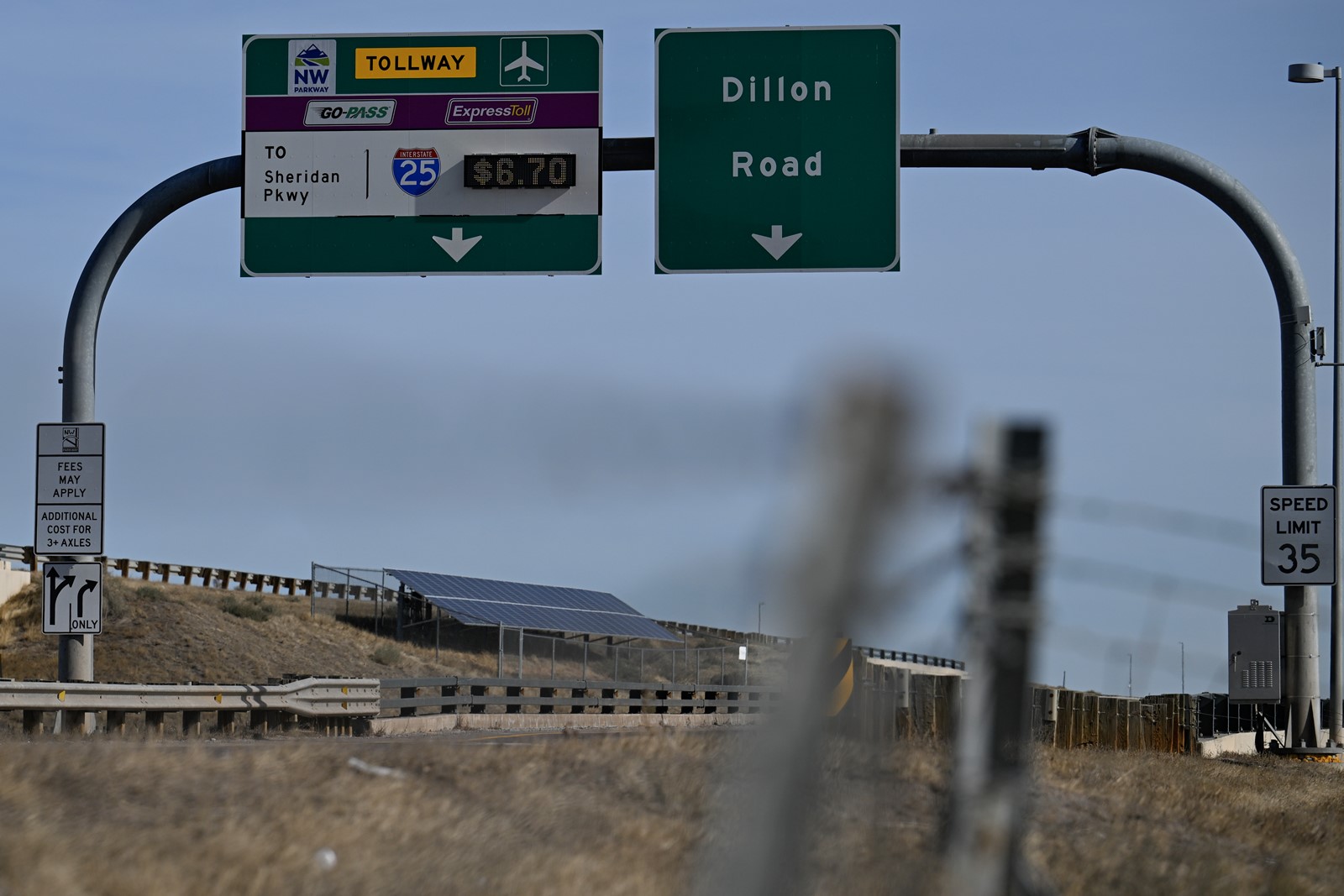


A new partnership between Northwest Parkway and the Butterfly Pavilion could transform a section of the toll road corridor into a lush habitat for pollinators.
Once an upcoming project unfolds, drivers along the westbound side of Northwest Parkway may notice new plants and flowers cropping up between mile markers 50 and 51 — but the vegetation won’t be just for show.
“Putting in the pollinator plants will allow pollinators to move through the corridor and between other habitat patches,” said Rich Reading, the pavilion’s vice president of research and conservation.
Butterfly Pavilion, located at 104th Avenue and Westminster Boulevard, is a nonprofit zoo focused on education and conservation surrounding invertebrates — animals without spines such as insects, spiders and crabs, according to the pavilion’s website. Some of its initiatives include creating habitats for the invertebrates that pollinate plants.
“Pollinators help grow a lot of the food we eat, but they also pollinate a lot of the plants that provide the oxygen we breathe,” Reading said. Many “plants rely on pollinators, and (pollinators) also provide food for a lot of other critters we like, like birds and some small mammals.”
Some of the pollinators found in Colorado that might occupy the corridor include invertebrates such as bees and butterflies, but it will also provide for other pollinators such as flies and beetles — as well as hummingbirds, a vertebrate pollinator, according to Reading.
The corridor will include “a mix of flowers, shrubs with flowers and grasses, so it should be pretty,” Reading said. “The idea is to try and put in plants that bloom throughout the year, not just in the summer, because some pollinators specialize in different parts of the year.”
The planned changes to the highway corridor also align with the sustainability goals of Vinci, the company that operates Northwest Parkway, according to Jeremy Peyre, a project director with the company.
Northwest Parkway spans several miles between Interstate 25 and U.S. 36, according to Vinci’s website.
The new pollinator corridor is slated for the one-mile stretch between mile markers 50 and 51 on the toll road’s westbound side, Peyre said.
In addition to helping connect existing habitats, the corridor will also provide the Butterfly Pavilion with important data, according to Reading.
“Despite making up (roughly) 97% of the animal species on the planet, invertebrates are very poorly studied,” he said, adding: “We do a lot of work trying to understand pollinators and other (invertebrate) species, and this project will allow us to assess the degree to which the corridor helps pollinators and add to that body of knowledge.”
 PREVIOUS ARTICLE

