


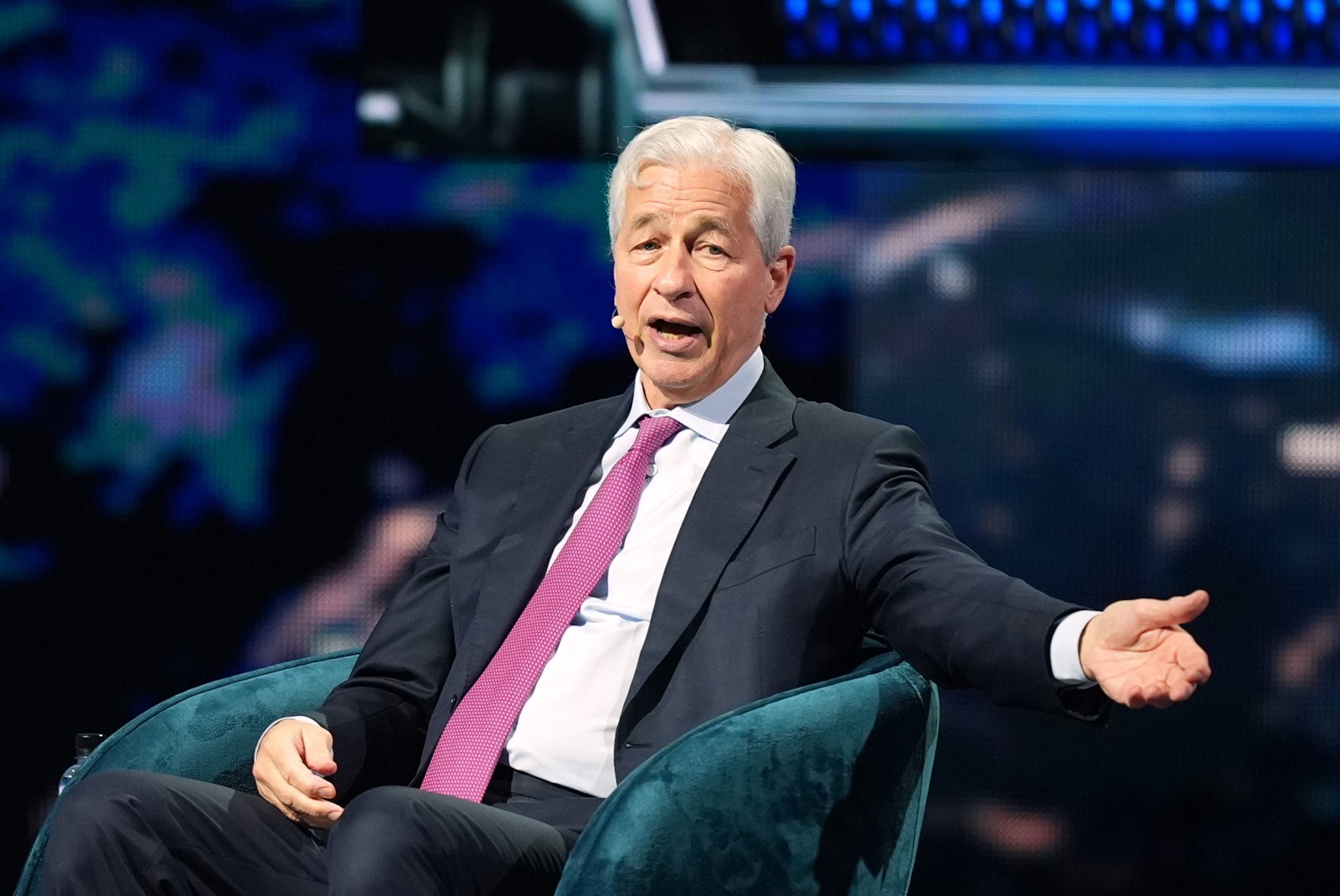


President Donald Trump sued banking giant JPMorgan Chase and its CEO Jamie Dimon for $5 billion on Thursday over allegations that JPMorgan stopped providing banking services to him and his businesses for political reasons after he left office in January 2021.
The lawsuit, filed in Miami-Dade County court in Florida, alleges that JPMorgan abruptly closed multiple accounts in February 2021 with just 60 days notice and no explanation. By doing so, Trump claims JPMorgan and Dimon cut the president and his businesses off from millions of dollars, disrupted their operations and forced Trump and the businesses to open accounts elsewhere.
In the lawsuit, Trump alleges he tried to raise the issue personally with Dimon after the bank started to close his accounts, and that Dimon assured Trump he would figure out what was happening. The lawsuit alleges Dimon failed to follow up with Trump. Further, Trump’s lawyers allege that JPMorgan placed the president and his companies on a reputational “blacklist” that both PMorgan and other banks use to keep clients from opening accounts with them in the future.
trump warns EU not to sell u.S. assets
President Donald Trump vowed “big retaliation” if European countries sell U.S. assets in response to his tariff threats related to Greenland, adding pressure on them to stick with an emerging deal over the future of the island.
“If they do, they do. But you know, if that would happen, there would be a big retaliation on our part,” Trump said Thursday during a Fox Business interview at the World Economic Forum in Davos. “And we have all the cards.”
The president did not specify what actions the U.S. might take to follow through on that threat.
Trump’s now-abandoned plan to hike tariffs on goods from eight European nations to pressure them over control of Greenland prompted speculation that Europe could dump trillions of dollars in US bonds and stocks as a countermeasure. Such a move could rattle financial markets that have already been shaken by Trump’s pursuit of the Arctic island.
Sticky inflation persisted in late 2025
Consumer prices increased moderately in October and November, according to the Federal Reserve’s preferred inflation gauge.
Data released Thursday from the personal consumption expenditures price index, as the gauge is called, showed a 0.2% monthly increase in October and a 0.2% increase in November. Compared with the same time the previous year, prices were up 2.7% in October and up 2.8% in November.
Altogether, the numbers tell a story in which inflation — while far down from its highs after the pandemic — continues to nag households. Goods inflation, for instance, which had been notably cooling since 2022, swung back up after the Trump administration implemented tariffs in the spring.
The reading is several months old because of the government shutdown in the fall. But the numbers will provide the Federal Reserve with more information to consider when officials who set interest rates meet next week. Traders expect that Fed officials will decide to not cut interest rate cuts again, for now, as economic growth has surprised to the upside, unemployment remains tame, and inflation has plateaued.
Jobless claims inch up but still low
The number of Americans who applied for unemployment benefits inched up last week but U.S. layoffs remain historically low despite signs of a softening labor market.
U.S. filings for jobless aid for the week ending Jan. 17 rose by 1,000 to 200,000, up from 199,000 the previous week, the Labor Department reported Thursday. That’s fewer than the 207,000 new applications that many analysts were expecting.
Applications for unemployment benefits are viewed as a proxy for layoffs and are close to a real-time indicator of the health of the job market.
Earlier this month, the government reported that hiring remained sluggish in December, capping a year of weak employment gains that have frustrated job seekers even though unemployment remained low.
Employers added just 50,000 jobs last month, nearly unchanged from a downwardly revised figure of 56,000 in November, the Labor Department said. The unemployment rate slipped to 4.4%, its first decline since June, from 4.5% in November, a figure also revised lower.
Compiled from New York Times, Associated Press and Bloomberg reports.
 PREVIOUS ARTICLE
