




Hey guys, can we admit now that President Donald Trump’s trade agenda is failing, or do we need a little more time?
Trump’s toxic mix of tariffs and new trade agreements alienated allies, drove up costs on American consumers and failed to accomplish its stated goals of turning around the U.S. trade deficit and reviving domestic manufacturing. Oh, and most of his tariffs are also illegal.
Now would be a perfect time for the Administration to reassess its goals and tactics, especially since the majority of Trump’s tariffs were ruled unconstitutional by the U.S. Supreme Court.
Hopefully Trump seizes the moment.
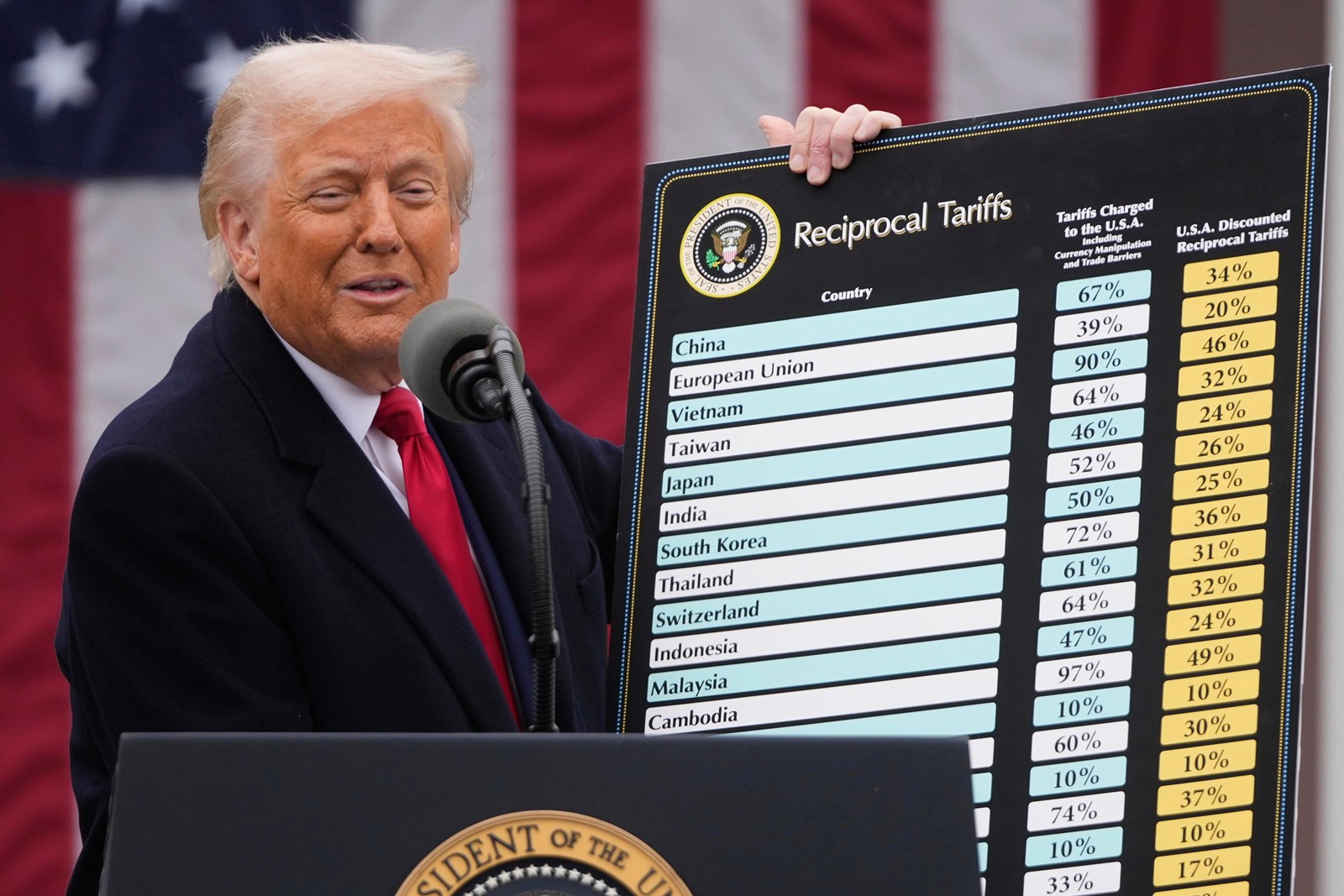
Trump’s tariff policy never really made sense. He imposed them on various countries — even unpopulated islands. He added a 10% universal baseline tariff on most imports, and then an additional hit on Canada running an advertisement, and then kinda went back and forth on rates levels and pauses and so on.
Trump has long maintained that tariffs are paid by foreign countries and not by American consumers. Of course, that belief is undercut by Trump telling companies to “eat the tariffs,” or by the U.S. Trade Representative Jamieson Greer saying it’s actually just rich Americans who pay the tariffs because they’re apparently the only ones who buy household items like electronics, groceries, automobiles and parts, furniture and appliances.
But a new study by the Federal Reserve Bank of New York found that last year the average rate of many of Trump’s tariffs on U.S. imports spiked from 2.6% to 13%, while American consumers and firms suffered nearly 90% of those costs.
In fact, the study was so damaging to the credibility of Trump’s trade agenda that Trump’s Director of National Economic Council, Kevin Hassett, called for the study’s authors to be punished.
“The paper is an embarrassment,” Hassett said. “It’s I think the worst paper I’ve ever seen in the history of the Fed system. The people associated with this paper should presumably be disciplined.”
Tariffs hit consumers throughout the supply chain. Even products officially made in America often use imported parts because America can’t make everything (see I, Pencil for further details).
So the revelation that tariffs are driving up costs on American consumers shouldn’t come as a surprise to anyone in the Administration. American households shouldn’t be surprised either as they’ve seen the effects of Trump’s tariffs on their household budgets. The Tax Foundation estimates that Trump’s tariffs cost the average American family $1,000 last year, and that will grow to $1,300 this year.
We’re told it’s America’s “Golden Age, which apparently means paying more for less for absolutely no good reason.
I suppose all this might be moot if the tariffs accomplished Trump’s stated goal of reviving American manufacturing and solving America’s totally upside down budget, but they haven’t. They haven’t even shrunk the U.S. trade deficit (this is not necessarily a bad thing), which is persistent and growing.
Since Trump became president in January of 2025, America’s already floundering manufacturing workforce has shrunk by around 1.2%. It’s the continuation of a decades-long trend, but the tariffs have certainly not helped.
Funny enough, one of Trump’s biggest backers on Wall Street, John Paulson, went from writing “The Case for Trump’s Tariffs’ in the Wall Street Journal’s opinion pages in mid-2024 to this week announcing plans to move a manufacturing plant overseas to China.
Trump has spent the past year panning most existing trade deals because they’re “bad,” even ones Trump negotiated a few years ago. Trump has repeatedly used the tariffs as a cudgel to beat trade partners and allies into submission and has drafted new agreements that are more like business deals than free trade agreements.
For example, in exchange for Trump lowering the reciprocal tariff of Japanese imports from 25% to 15%, Japan will invest $550 billion in America over the next few years, which will pay for domestic energy production and purchase aircrafts, defense equipment and soybeans and corn, among other things.
This might be all for the good, though it’s an open question what Japan and other countries will do now that most of Trump’s tariffs are struck down by the Supreme Court. Many probably won’t like being accused of ripping off Americans and will seek better terms with Trump, wait him out or forge new alliances elsewhere, like Canada and China and the EU and India.
For his part, Trump has long maintained things are going awesome.
“Given the results of the past year, and the spectacular economic numbers coming out every single day, perhaps it is time for the tariff skeptics at the Journal to consider putting on one of my favorite red hats—the one that reads, “TRUMP WAS RIGHT ABOUT EVERYTHING,” Trump wrote in the Wall Street Journal.
That’s one way to look at it. Another way is to consider that the available data (besides MAGA vibes) suggests Trump’s trade agenda is an abject failure.
What Trump does next is an open question. Will he work with Congress to get his agenda on solid legal grounds? Will he be forced to refund the illegally imposed tariff money? Will he just try to jam his agenda through in other ways?
Only Trump knows.
But if Trump was looking for a way to save face and abandon his failed policies, the Supreme Court gave him the perfect off ramp.
I encourage him to take it.
Matt Fleming is an opinion columnist for the Southern California News Group. Email him at flemingwords@gmail.com or follow him on X at @flemingwords.
 PREVIOUS ARTICLE
