




Despite federal and state programs to convert corn into ethanol and soybeans into biodiesel to fuel cars and trucks, the United States has never before regarded farming as a primary energy producer.
That changed when Congress in August passed the climate provisions of the Inflation Reduction Act, which provides $140 billion in tax incentives, loans and grants to replace fossil fuels with renewable energy that lowers emissions of carbon dioxide.
Along with the wind and the sun, the raw materials needed for a significant portion of that energy come from agriculture — alcohol from fermenting corn, and methane from the billions of gallons of liquid and millions of tons of solid manure produced by big dairy, swine and poultry operations.
Despite opposition from environmental groups concerned about increased pollution from farm waste, developers across the country see opportunities to build ambitious renewable energy projects to convert crops and agricultural waste to low-carbon energy.
“There is not a single renewable energy producer in the country that is not looking at or already taking steps to install new technology, expand their facilities, or thinking about building new plants in response to the federal tax incentives passed last year,” said Geoff Cooper, the president and CEO of the Renewable Fuels Association, an industry trade group.
In January, Avapco, a biofuel company that operates an ethanol refinery in Thomaston, Georgia, was awarded an $80 million grant by the Department of Energy to build a plant capable of producing 1.2 million gallons of jet fuel a year from wood chips. And on a 2,500-acre site near Hennepin, Illinois, Marquise Energy is collaborating with LanzaJet to build an ethanol and biodiesel plant to produce aviation fuel.
But environmental groups are wary about the additional waste the effort might produce. Phosphorus and nitrogen discharges from U.S. farms are “the single greatest challenge to our nation’s water quality,” according to the Environmental Protection Agency. More corn, the most heavily fertilized crop, and more manure from larger livestock and poultry operations could increase nutrient pollution.
Thousands of large livestock operations are also poised to take advantage of the tax benefits and subsidies. The American Biogas Council, an industry trade group, counts 2,300 biodigesters in operation in the United States that convert organic wastes to methane to burn in power plants or be used as transportation fuel. With tax credits in the new climate law, the council envisions the installation of 15,000 more, including 8,600 on large dairy, hog and poultry farms.
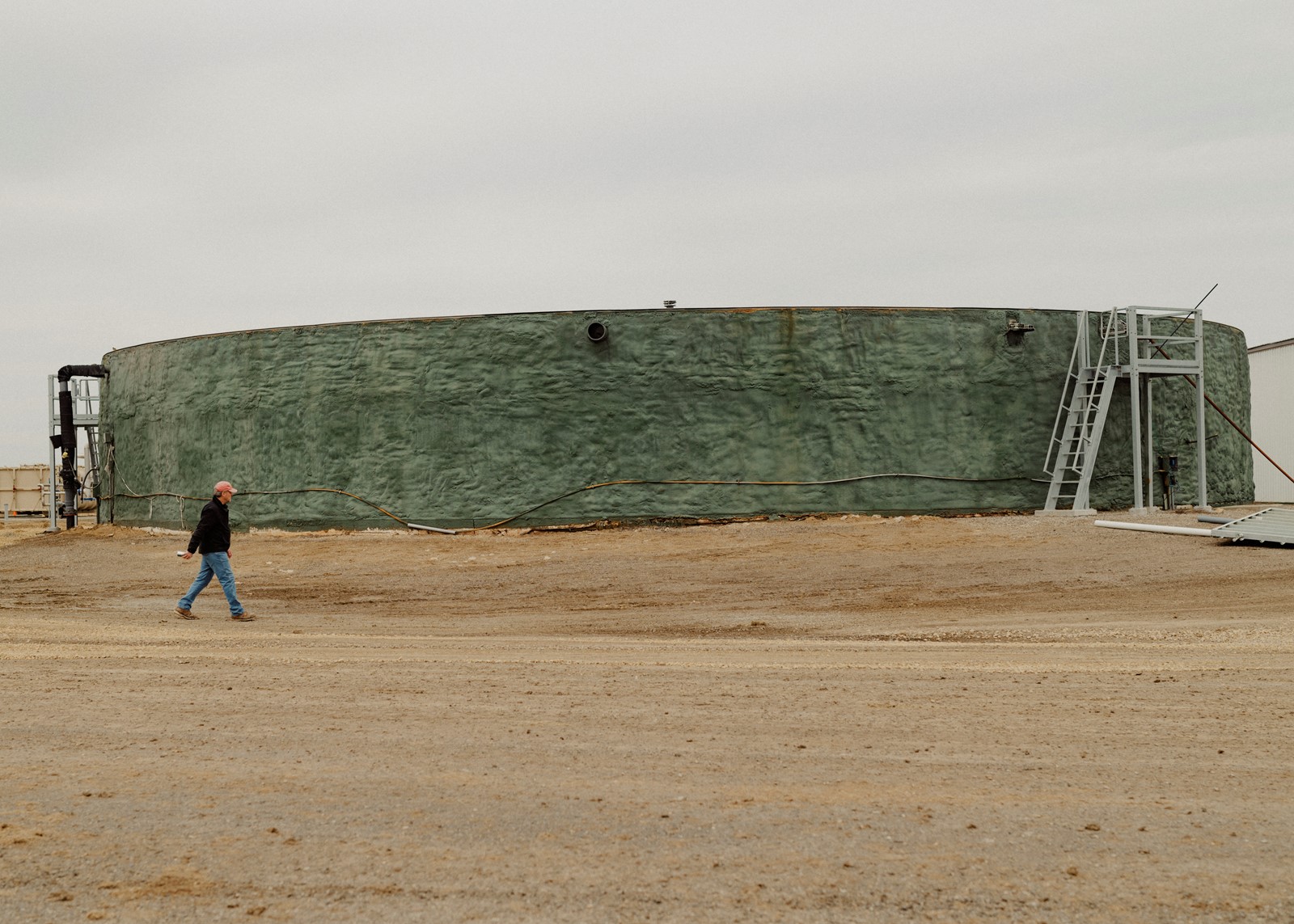
Missouri’s Roeslein Alternative Energy is building six biodigesters at large cattle and swine operations in Iowa and Missouri to produce methane for transportation fuel and electricity. The construction, paid for by the company, is part of an $80 million carbon-reducing demonstration project funded by the Department of Agriculture to produce methane from manure mixed with prairie grasses planted on marginal lands.
The $14 million expansion of an existing biodigester is underway on Bryan Sievers’ cattle farm in Scott County, Iowa. “It’s a new pathway for mixing conservation farming and energy production that farmers will adopt as fast as society accepts it,” he said.
 PREVIOUS ARTICLE

