


Political tensions heat up over vacant seat on high court
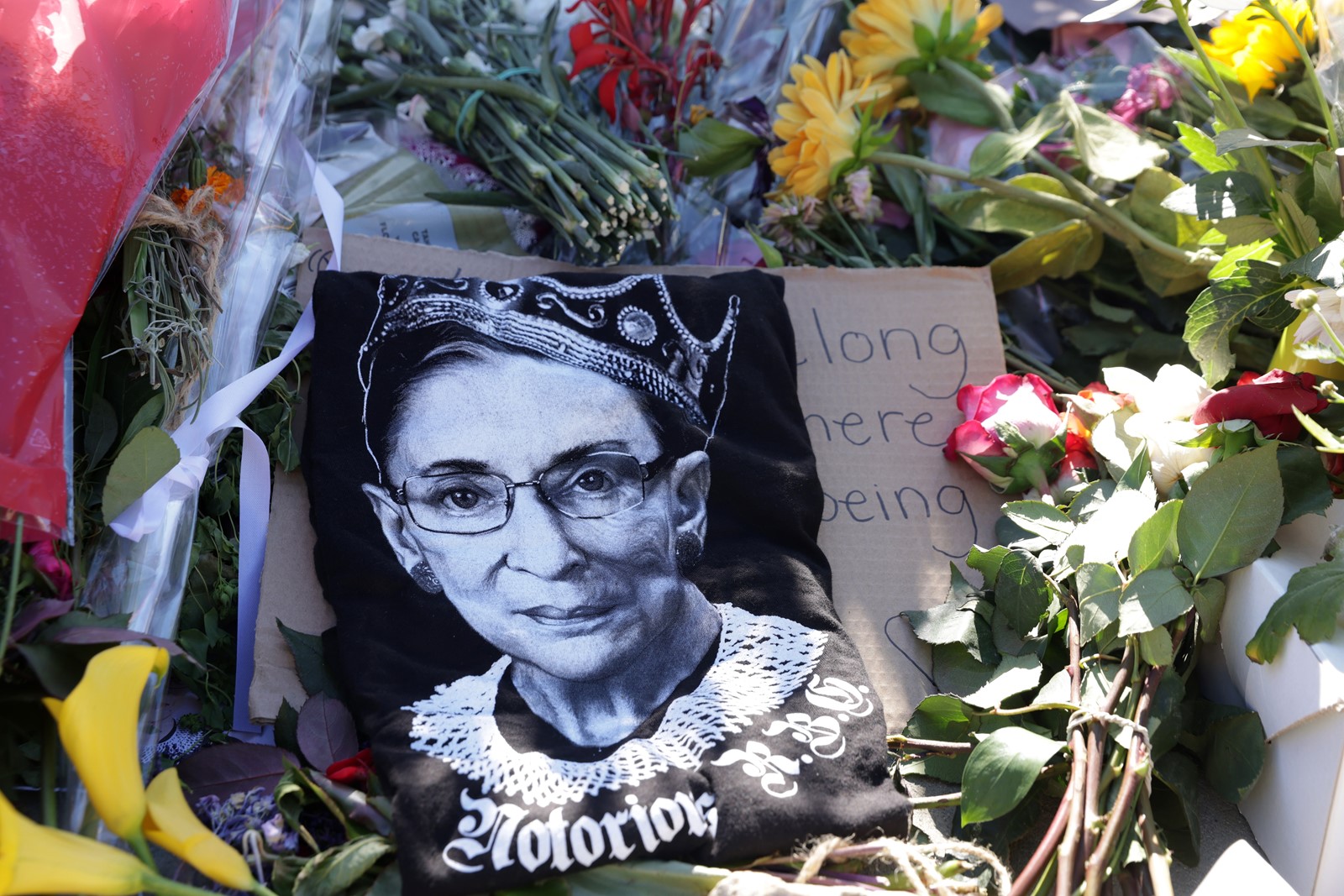


Trump said he is planning to name his pick by Friday or Saturday, ahead of the first presidential debate. Ginsberg’s casket will be on public view Wednesday and Thursday under the portico at the top of the court’s iconic steps in front of the building and later privately at the Capitol. She is to be buried next week in a private service at Arlington National Cemetery.
Democrats, led by presidential nominee Joe Biden, are protesting the GOP rush to replace Ginsburg, saying voters should speak first, on Election Day, and the winner of the White House should fill the vacancy.
Trump dismissed those arguments, telling “Fox & Friends,” “I think that would be good for the Republican Party, and I think it would be good for everybody to get it over with.”
The impending clash over the vacant seat — when to fill it and with whom — has scrambled the stretch run of the presidential race for a nation already reeling from the coronavirus pandemic that has killed nearly 200,000 people, left millions unemployed and heightened partisan tensions.
Democrats point to the hypocrisy of Republicans in trying to rush through a pick so close to the election after refusing to do so for President Barack Obama in February 2016, long before that year’s election. Biden is appealing to GOP senators to delay the vote until after the election.
Ginsburg, 87, died Friday of metastatic pancreatic cancer.
Senate Majority Leader Mitch McConnell is pushing ahead with plans to begin the confirmation process, vowing to vote “this year” on Trump’s nominee. With just over a month before the election, he said the Senate has “more than sufficient time” to handle the nomination.
Trump allowed he would accept a vote after Election Day but made clear his preference would be that it occur by Nov. 3.
Announcing a nominee Friday or Saturday would leave less than 40 days for the Senate to hold a confirmation vote before the election. No nominee has won confirmation that quickly since Sandra Day O’Connor became the first woman to serve on the Supreme Court in 1981.
Protesters are mobilizing for a wrenching confirmation fight punctuated by crucial issues before the court — health care, abortion access and even the potential outcome of the coming presidential election. Some showed up early Monday outside the homes of key GOP senators.
Trump said Monday he had a list of five finalists, “probably four.” He has promised to nominate a woman.
Conversations in the White House and McConnell’s office were increasingly focused on two finalists: Amy Coney Barrett and Barbara Lagoa, according to a person granted anonymity to discuss the private deliberations. Trump confirmed that they are among the top contenders.
Barrett has been a favorite of conservatives, and was a contender for the seat that eventually went in 2018 to Brett Kavanaugh. At the time, Trump told confidants that he was “saving” Barrett for Ginsburg’s seat.
Lagoa has been pushed by some aides who tout her political advantages of being Hispanic and hailing from the battleground state of Florida.
Trump admitted that politics may play a role. Late Monday, he gave a nod to another battleground state, Michigan, and White House officials confirmed he was referring to Joan Larsen, a federal appeals court judge there.
Trump also indicated that Allison Jones Rushing, an appellate judge from North Carolina, is on his short list. His team is also considering Kate Todd, the White House deputy counsel who has never been a judge but was a clerk for Justice Clarence Thomas.
As the Senate returned to Washington on Monday, attention focused on Republicans Mitt Romney of Utah and Chuck Grassley of Iowa for clues to whether Trump and McConnell will be able to confirm Ginsburg’s replacement anytime soon.
Four Republicans could halt a quick confirmation and Trump criticized Republican Sens. Susan Collins of Maine and Lisa Murkowski of Alaska for opposing a vote before elections. Trump warned they would be “very badly hurt” by voters.
Trump went so far as to disparage reports that Ginsburg had told her granddaughter it was her wish that a replacement justice not be confirmed until the inauguration of a new president. Providing no evidence, Trump suggested that Democratic political foes were behind the report, including Rep. Adam Schiff, the House Intelligence Committee chairman who led the chamber’s impeachment probe.
Schiff said Trump sank to a new “low” with that comment. Schiff denied any involvement in Ginsburg’s dying wish but said he would “fight like hell to make it come true.”
 PREVIOUS ARTICLE
