




Since former President Donald Trump’s narrow victory in 2016, the Republican Party has suffered at the ballot box every two years, from the loss of the House in 2018 to the loss of the White House and Senate in 2020 to this year’s history-defying midterm disappointments.
Many in the party have now found a scapegoat for the GOP’s struggles who is not named Trump: the chief of the Republican National Committee, Ronna McDaniel.
But as McDaniel struggles for a fourth term at the party’s helm, her reelection fight before the clubby 168 members of the Republican National Committee next month may be diverting GOP leaders from any serious consideration of the thornier problems facing the party heading into the 2024 presidential campaign.
McDaniel, who was hand-picked by Trump in late 2016 to run the party and whom he enlisted in a scheme to draft fake electors to perpetuate his presidency, could be considered a Trump proxy by Republicans eager to begin to eradicate what many consider to be the party’s preeminent problem: the former president’s influence over the GOP.
Those Republicans, whose voices have grown louder in the wake of the party’s weak November showing, see any hopes of wooing swing voters and moderates back to the GOP as imperiled by Trump’s endless harping on his own grievances, the taint surrounding his efforts to remain in power after his 2020 defeat and the continuing dramas around purloined classified documents, his company’s tax fraud conviction and his insistence on trying to make a political comeback.
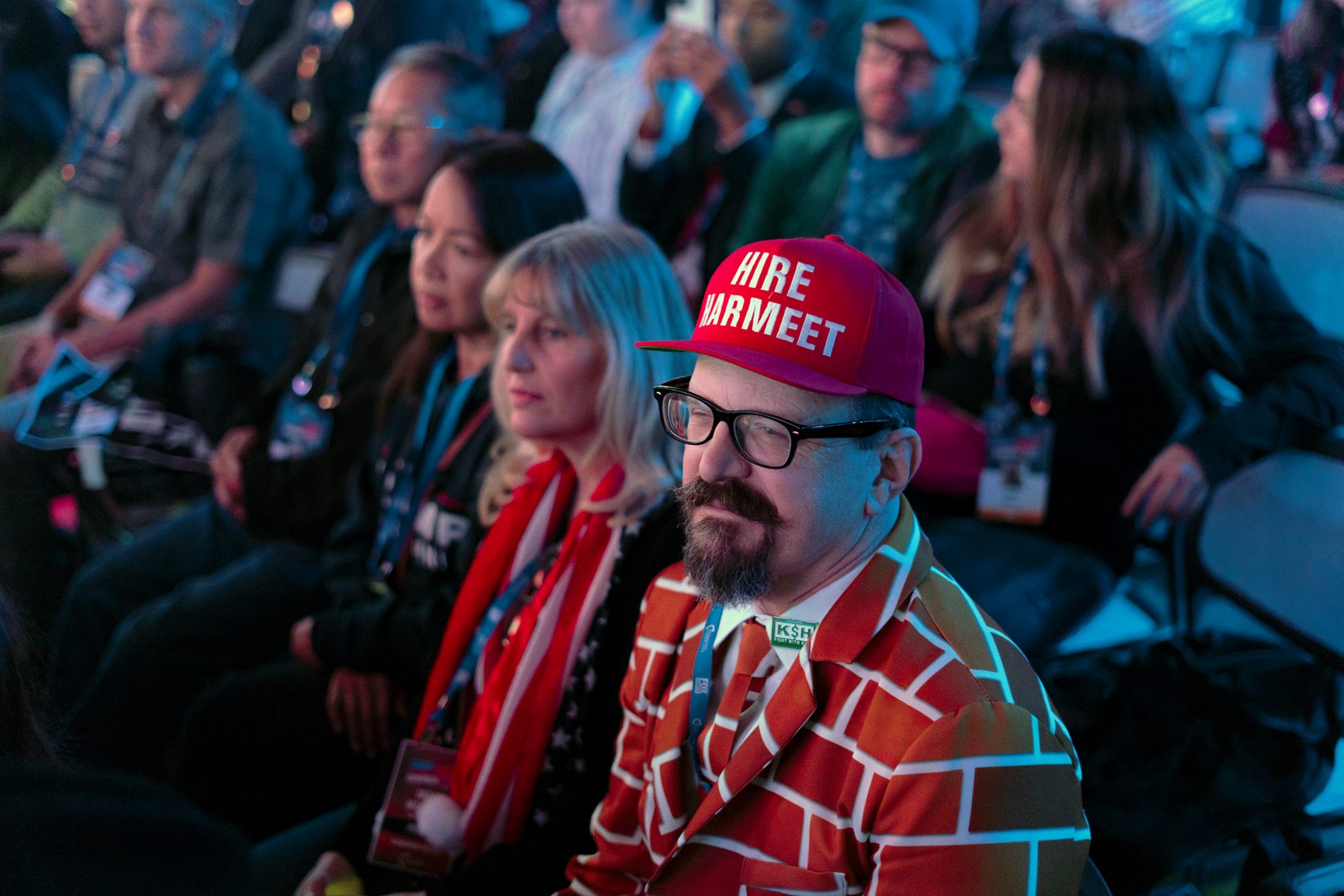
But McDaniel is not facing moderation-minded challengers. Her rivals are from the Trumpist right. They include pillow salesman Mike Lindell, who continues to spin out fanciful election conspiracies, and — more worrying for McDaniel — a Trump loyalist from California, Harmeet Dhillon, who is backed by some of Trump’s fiercest defenders, including Fox News host Tucker Carlson and Charlie Kirk, the founder of Turning Point USA, a youthful group of pro-Trump rightists.
McDaniel has accused Dhillon, who was a leader of the election-denying group Lawyers for Trump in 2020, of conducting “a scorched-earth campaign” against her by rallying outside activists “to put maximum pressure on the RNC members” who will choose the party leader for the next two years in late January in Dana Point, Calif.
“It’s been a very vitriolic campaign,” McDaniel said in an interview, adding: “I’m all for scorched earth against Democrats. I don’t think it’s the right thing to do against other Republicans.”
The candidacy of Lindell, the MyPillow CEO who exemplifies the conspiracy-driven fringe, has put still more right-wing pressure on McDaniel, who refuses to say Joe Biden was fairly elected in 2020. (Lindell’s latest conspiracy theory is that Gov. Ron DeSantis of Florida, Trump’s biggest rival so far for the 2024 presidential nomination, unfairly won reelection in November.)
The circus brewing before the RNC’s Jan. 25 gathering does not bode well for members who believe the party’s troubles stem from Trump.
“The former president has done so much damage to this country and to this party,” said Bill Palatucci, a committee member from New Jersey, who described the RNC election as shaping up to be “a Hobson’s choice.”
“We have to acknowledge that 2022 was a disaster, and we need to do things differently,” he said, adding, “I would prefer and still hope there would be a different option.”
Dhillon, in an interview, suggested replacing McDaniel was a prerequisite for change.
“There may be many reasons for the various losses over the past several years, but what they all have in common is that they occurred under the current leadership, which has promised to change exactly nothing in the next two years,” she said. “The most unifying thing that Ronna could do would be to move on to new challenges, and allow us to unite around a vision that includes much-needed reforms, improvements and investments in a winning future.”
And the forces gathering against McDaniel are multiplying. The Republican Party of Florida scheduled a no-confidence vote on McDaniel in the second half of January. The chairman of the Nebraska Republican Party withdrew his support of McDaniel, citing an “ever-growing divide” among RNC members and “now, even more so, Republicans across the nation.” The executive committee of the Texas Republican Party unanimously passed a nonbinding vote of no confidence in McDaniel, and the Arizona GOP publicly called on her to resign.
Still, the Republican National Committee race is the ultimate inside game; only members get a vote. And Michael Kuckelman, the chief of the Kansas Republican Party and an RNC member, said he still thinks McDaniel will win another term easily.
Dhillon’s pressure campaign is likely bolstering McDaniel’s support among committee members she has befriended over the past six years, he said, and potentially damaging Dhillon’s chances of leading the party in the future. About two-thirds of the committee’s members have said they will back McDaniel’s reelection.
Kuckelman also said McDaniel was being blamed unfairly for losses in key Senate and House contests. “Everybody needs to bring the temperature down a little bit,” he said. “Ronna McDaniel does not pick candidates. Republicans do that in the primaries. Her job is to get the vote out, and she does get the vote out.”
Moreover, Dhillon’s tactics have antagonized some committee members.
At Turning Point USA’s conference last week in Phoenix — where recriminations and sniping at fellow Republicans seemed to be a theme — Dhillon appeared on Steve Bannon’s “War Room” show and took her own shots at the committee she seeks to lead. In the interview, McDaniel boasted of investments the party has made — in community centers to engage voters of color, especially Latinos; in voter registration drives; and in get-out-the-vote efforts. She cited a New York Times analysis that showed that Republican voter turnout in November was robust.
The problem: Many of those Republicans appeared to vote for Democrats.
“We don’t pick the candidate,” she said. “We do not do the messaging for the candidates, right? They pick consultants and their own pollsters. So what does the RNC do? We build the infrastructure. We do the voter registration.”
The committee’s role becomes more pivotal during the presidential campaign, raising money for the party’s nominee and staging the convention, which is set for July 2024 in Milwaukee.
 PREVIOUS ARTICLE
