


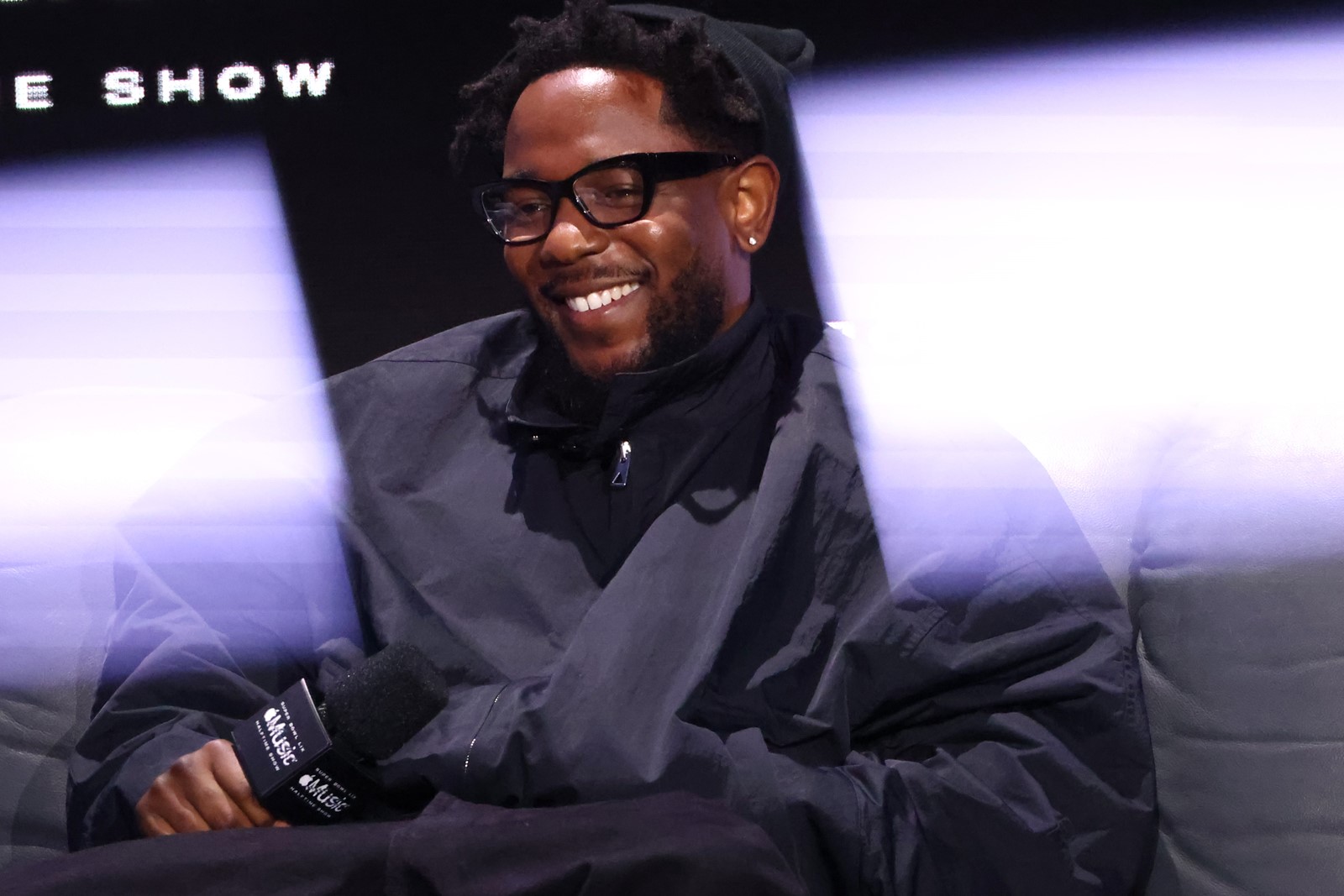


Kendrick Lamar’s smash “Not Like Us” has been a lot of things since its release less than a year ago: a Drake-slaying diss track, a No. 1 single, a West Coast unity anthem, a Kamala Harris rally singalong, a World Series fight song, a bar mitzvah dance floor party-starter.
At the Grammys last weekend, it swept all five of its nominations, including song and record of the year, becoming only the second hip-hop track ever to win in each category, while also taking home trophies for best rap song, best rap performance and best music video.
A week after those victories, “Not Like Us” — with its 1 billion plays on Spotify and at least hundreds of millions more across radio, YouTube and social media — may reach its ultimate peak: a performance Sunday for some 100 million people, live from the Super Bowl halftime stage in New Orleans.
A casual listener — or Super Bowl viewer — may hear an easily digestible crowd-pleaser. A popular rapper, known for knotty introspection, going playful over a spacious, bouncy beat by producer Mustard, punctuated with sped-up stabs of strings and an all-purpose, easily co-opted chant of a chorus: “They not like us.”
In many senses an inescapable, old-fashioned hit, “Not Like Us” was immediately absorbed into the cultural bloodstream, where it has remained ever since, holding strong in the Billboard Top 40 in its 38th week since release. But while the song’s mega-success can by now be taken for granted, it also happens to be incredibly bizarre.
The song’s specifics, and its omnipresence, represent a significant swerve for Lamar, 37, who until recently was known primarily as one of the most revered MCs of all time: a Pulitzer Prize winner with a sterling career whose 2015 track “Alright” was adopted as an anthem of the Black Lives Matter movement.
Yet on “Not Like Us,” he spends five minutes calling Drake, 38, the most popular rapper of the last decade, a pedophile, along with a “jabroni,” a “69 god” and a “colonizer.” The single’s cover art is a photo of Drake’s Toronto home dotted with markers meant to represent the presence of registered sex offenders. (Drake has since sued Universal Music Group, the giant label behind both rappers, for defamation, arguing that the company knew these claims were false but pushed the song hard regardless.)
Across three increasingly intricate verses, Lamar cites obscure members of Drake’s Canadian rap crew by nickname; gives a pocket history of Los Angeles slang and Atlanta’s exports (both musical and otherwise); and makes a punny playground taunt of an unlikely hook that even the Grammy audience of A-listers couldn’t help but rap along with: “Ain’t you tired? Tryna strike a chord and it’s probably A-minoooooooooor.”
Born out of a messy few weeks of back-and-forth with Drake — Lamar’s one-time collaborator and frenemy turned archrival, who made his own tawdry allegations in raps — “Not Like Us” would have been a unicorn of a hit for any artist.
But for Lamar, who has made a career of questioning and reinforcing his own high-minded reputation, the song’s singularity in his catalog raises prickly questions about how he might treat “Not Like Us” moving forward — and especially this weekend, as he prepares to headline the halftime show, the kind of legacy-cementing moment only a handful of musicians can hope to achieve.
Will the diss, which has featured in promos for the Apple-sponsored performance, be the centerpiece of the show, leaning further into mass mockery of Drake? Or will Lamar minimize its role — or even elide it entirely — either out of an abundance of legal precaution, a concession to the event’s corporate partners, or an aversion to sharing the stage, even spiritually, with his enemy?
More generally, what will Lamar’s handling of “Not Like Us” at the Super Bowl mean for the rest of its musical life span, which could easily end in it becoming the defining, most popular and most awarded song of the celebrated rapper’s career?
To lifelong hip-hop fans, even considering these questions borders on the baffling — akin to imagining past vitriolic, subterranean classics like Ice Cube’s “No Vaseline,” Tupac’s “Hit ‘Em Up” or Nas’ “Ether” as inescapable, mainstream hits.
“It’s by far the biggest diss record of all time,” said Charlamagne Tha God, the radio and television host best known for his syndicated morning show, “The Breakfast Club.” “There’s not even a debate about that. It’s bigger than ‘Hit ‘Em Up’ ever was, more culturally relevant than ‘Ether’ ever was — it led to an unprecedented lawsuit from the person that it was targeted at.”
“There’s a difference between hit records and anthems,” he added. “You can think about a lot of hit records, but how many cultural anthems are there that transcend race, the genre of music, region, anything? Not many. ‘Not Like Us’ is a cultural anthem. Ironically, it’s going to end up on Kidz Bop.”
It’s not that Lamar hasn’t had a big song before. Tracks like “Humble” and “All the Stars,” with SZA, who is scheduled to appear at the Super Bowl as a special guest ahead of a joint tour, are both popular and recognizable, each topping 2 billion plays on Spotify.
But it’s worth recalling where Lamar seemed headed before he and Drake goaded one another into battle: deeper inward.
An underground mixtape artist until his lauded major-label debut, “good kid, m.A.A.d city,” revitalized LA gangster rap in 2012, Lamar favored complexity on the jazzy, searching follow-up, “To Pimp a Butterfly,” in 2015, before balancing storytelling and commercial hitmaking on “Damn.,” which went on to win the Pulitzer for music in 2018.
But it wasn’t until the heart of his back-and-forth with Drake, in which Lamar released four diss tracks in five days — culminating in the knockout blow of “Not Like Us” — that the rapper flipped his public persona and reputation as a somewhat reluctant hitmaker.
Elliott Wilson, the journalist and podcaster who previously edited XXL Magazine, called it something of a “career reset — he built mystique, but now he just feels like more ‘man of the people.’”
Lamar, in his first public comments after the song’s release, said in a conversation with SZA for Harper’s Bazaar that “Not Like Us” was about “the type of man I represent,” one who “has morals, he has values, he believes in something, he stands on something. He’s not pandering.”
He added, “I don’t believe I’m an angry person. But I do believe in love and war, and I believe they both need to exist.”
These themes — and the West Coast bounce of “Not Like Us” — carried over onto “GNX,” the album Lamar released in November, which has spawned hits including “Squabble Up” and “TV Off” that share the pugnaciousness of their spiritual predecessor without the Drake-centric details.
Could they stand in for “Not Like Us” at the Super Bowl, maybe after a taste of the diss track’s identifiable beat and unobjectionable chorus? Medleys, after all, are common in the 15-minute slot.
“Kendrick really wins if he ignores Drake during the Super Bowl,” said Too Short, another West Coast rap legend. “If he has to address Drake, I think it’s too heavy on his mind.”
Charlamagne agreed. “The reality of the situation is, he won the battle. ‘The 48 Laws of Power’ teaches you not to go past the mark you aimed for in victory,” he said. “When you win the Grammy, that’s spiking the football. You already got the Super Bowl — that’s spiking the football. I think there is a point where you gotta put it to bed.”
Notably, in his Grammy acceptance speeches, Lamar refrained from even alluding to his song’s subject.
 PREVIOUS ARTICLE
