


CPD union chief forced into runoff
Angelo falls short of 50% threshold, will face runner-up
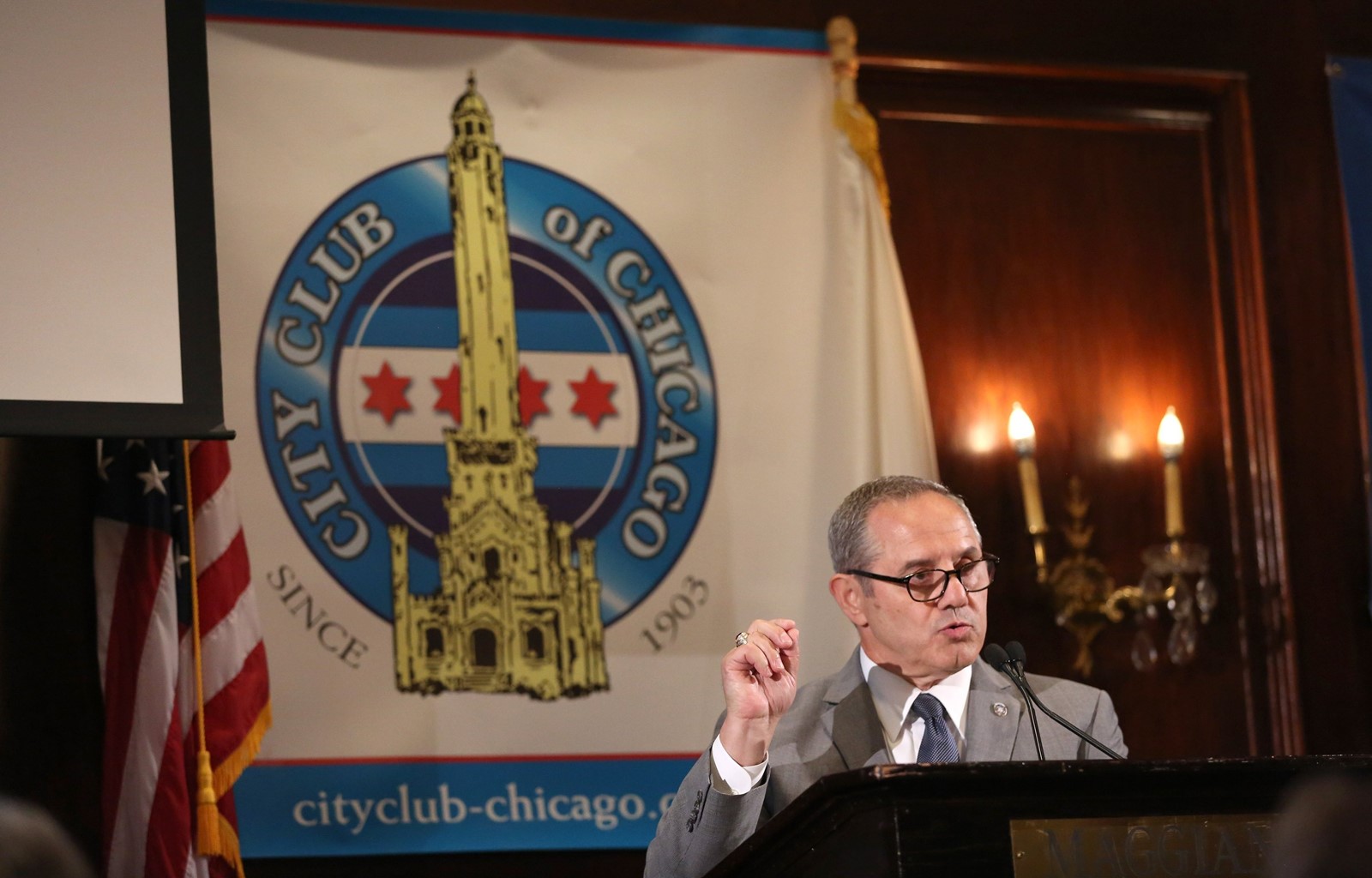


The president of the union representing thousands of rank-and-file Chicago police officers faces a runoff in his bid for re-election after failing to garner more than 50 percent of the vote in a race with five challengers.
Dean Angelo Sr., president of the Fraternal Order of Police Lodge 7, finished first with 34.8 percent but must now go head-to-head with runner-up Kevin Graham, a former FOP trustee who got 24.8 percent. The runoff will be in early April. Both active and retired officers are eligible to vote.
Michael Shields, a controversial former president of Lodge 7, finished third with 19 percent of the vote, according to Anne Kavanaugh, a spokeswoman for the union.
Angelo has been FOP president during a three-year term rocked by the fallout over the court-ordered release of video showing a white Chicago police officer shooting black teenager Laquan McDonald 16 times. That brought increased attention to the conduct of officers, resulting in a sharp drop in arrests and street stops and contributing, some officers think, to the rise in homicides last year to levels unseen in two decades.
A former college professor, Angelo had been on disability leave from the Police Department for nearly a decade until recently because of on-duty injuries to his left knee. He will officially retire from the department in June when he reaches the mandatory retirement age of 63, but he would still stay on as union president if he prevails in the runoff.
Graham is a patrol officer assigned to the Town Hall police district on the North Side who has held posts with the state FOP as well as the Chicago lodge.
Whoever wins the runoff will head the union's negotiations for a new contract with the existing one set to expire June 30. The current contract has come under fire in the fallout over McDonald's fatal shooting.
A task force on police accountability formed by Mayor Rahm Emanuel in the aftermath of the McDonald scandal criticized the union contract for contributing to a “code of silence” that protects bad officers. Negotiations over the next contract, the task force wrote, should focus on removing current provisions that prevent people from filing anonymous complaints and force them to sign affidavits describing police misconduct before investigators look into complaints.
According to a 2015 Tribune investigation, nearly 60 percent of about 17,770 complaints filed against officers during a four-year period were thrown out without being fully investigated because the alleged victims did not sign required affidavits.
The task force also was critical that the contract gives officers 24 hours after a shooting before submitting to interviews, time that could allow them to confer with colleagues. Police also should no longer be allowed to amend their statements after reviewing video or audio recordings, the task force wrote.
Angelo has argued that the affidavit requirement is necessary to protect good cops from false accusations filed anonymously. As for the 24-hour rule, Angelo has said that pales in comparison with a 72-hour requirement at the FBI.
But critics have said the provisions give the police an opportunity to collude and even formulate a favorable version of events after shootings.
 PREVIOUS ARTICLE
