


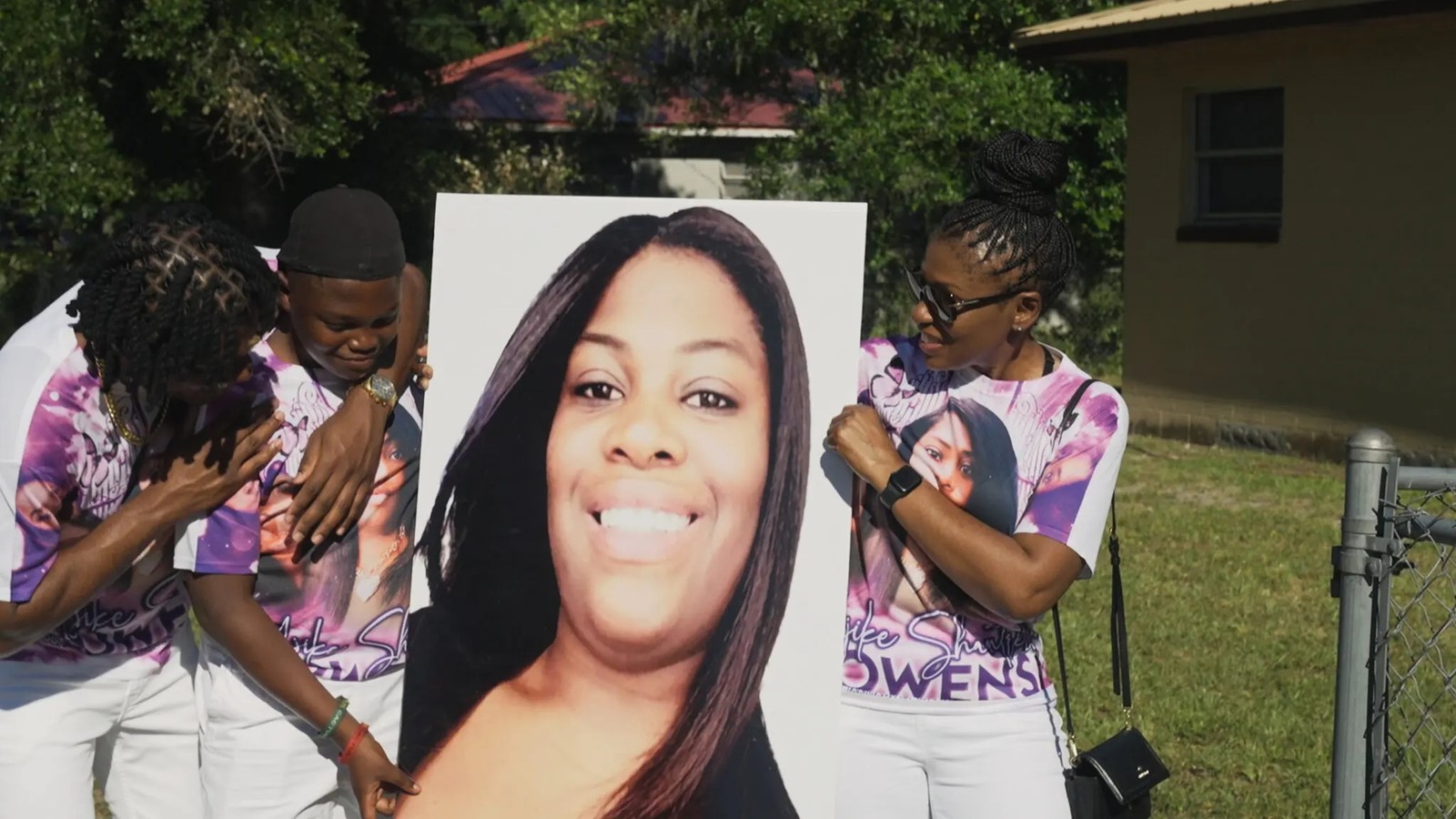


The new documentary “The Perfect Neighbor” couldn’t exist outside of a surveillance society. But that’s the world we live in. So, using mostly police body-camera footage, along with news imagery and videos from home security cameras and an interrogation room, director Geeta Gandbhir reconstructs the story of the 2023 killing of 35-year-old Ajike Owens, a Florida woman who was shot by her neighbor, Susan Lorincz, then 58. Owens was Black. Lorincz is white. And after Lorincz’s arrest, sheriff’s deputies found evidence that she had researched Florida’s “stand your ground” statute, which allows residents to use deadly force if they feel threatened on their own property.
It’s a heart-pounding documentary because we know what happens to Owens from the beginning. For much of the movie, we’re watching the escalation. Owens’ children enjoy playing on property that did not belong to Lorincz but was next to her home. She complains for many months, calling the sheriff over and over again. Because the deputies are wearing body cameras, we get multiple views of their visits along with neighbors’ accounts, as well as Lorincz’s version, which often paints the events in a significantly different light. She represents herself as the victim of unruly and disrespectful children. Eventually, she shoots their mother when Owens goes to confront her.
The point of “The Perfect Neighbor” is to show how devastating and manipulative the effects of “stand your ground” laws can be, giving cover to those whose motives might not, in fact, simply be self-defense. After Owens’ death, Gandbhir shows protesters mourning the loss and questioning law enforcement’s treatment of Lorincz compared with that of Black people in similar situations. And through interrogation-room footage, we listen in on Lorincz’s conversation with authorities, which involves racial slurs and language clearly lifted from the “stand your ground” law as well as Lorincz’s insistence that trauma from her own childhood sexual abuse caused her to feel afraid. There’s no editorializing here, but we can see just how much of what she’s saying is actually true. (Lorincz was ultimately convicted of manslaughter and sentenced to 25 years in prison.) “The Perfect Neighbor” does raise a few ethical issues that, while not precisely the fault of the film, should at least give the audience something to chew on. One is a simple transparency issue: Gandbhir has revealed in interviews that her sister-in-law was best friends with Owens, a connection that probably should have been disclosed.
 PREVIOUS ARTICLE
