


Maple sap events crop up around western suburbs


By now we’re all itching to get out of the house and get back in touch with nature and one of the harbingers of spring is the sap running from maple trees.
You can celebrate this sweet symbol of winter’s nearing end with some upcoming events in the area.
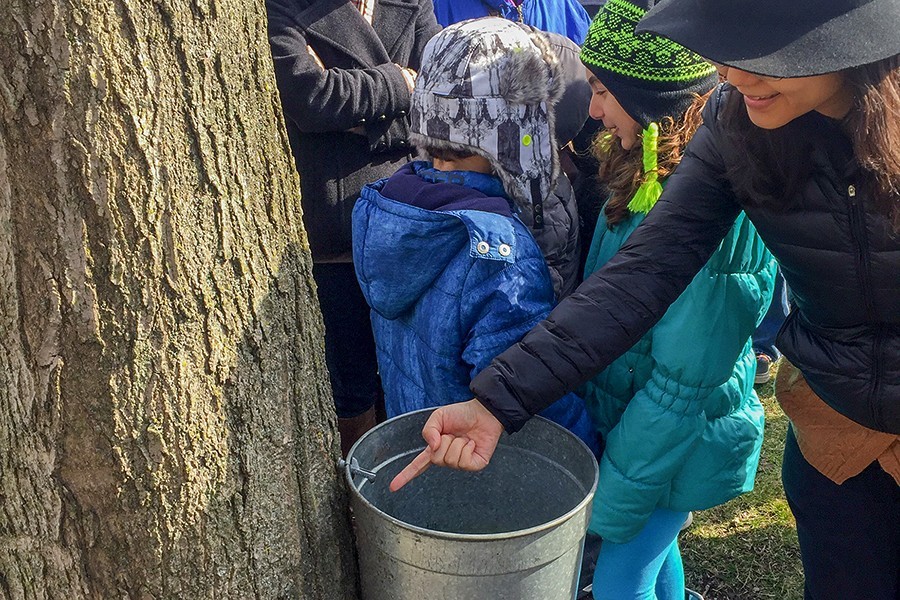
“Maple sugaring is the process of taking maple sap and cooking it down into syrup or sugar,” said Keith McClow, heritage education manager for the Forest Preserve District of DuPage County. “We tap the trees by drilling a hole and putting in a spile.”
A spile is a metal spout that holds a bucket and helps the sap drip into the bucket. The sap is collected, poured into a large pot and cooked over a fire until most of the water is boiled off, he said.
“The sugar in the sap becomes concentrated, and the heat caramelizes the sugars to give maple syrup the brown color,” he said.
It takes approximately 40-50 gallons of sap to make one gallon of syrup.
March is perhaps the most dynamic month of the year, he said. The trees are sending the food they stored in their roots up to their leaves so they can start their annual growth again.
The sap flows best when the nights are freezing and the days are warm.
“Once the night (temperatures) stay above freezing, the sap changes and is no longer used for sugaring,” McClow said.
Kline Creek Farm in West Chicago, the 1890s living-history farm, hosts free drop-in maple sugaring activities from 1-4 p.m. Thursdays through Mondays throughout March.
“Visitors will get to use a drill and place a tap, see the buckets on the trees and learn about how to boil down the sap,” McClow said. “Our visitor center has equipment for sale for anyone who would like to try tapping one of their own maple trees.”
Besides a delicious experience, it can be an eye-opening one as well.
“Visitors will see how nature provides us with many wonderful things like the sap to make syrup and the wood to boil the sap,” McClow said.
At the Red Oak Nature Center in Batavia, the Forest Preserve District of DuPage County has been celebrating Maple Fest since the 1980s, said manager Renee Oakley.
Maple Fest is March 16. Guests will get an overview of what maple tapping is, she said.
“Then they’re taken onto our trails and they kind of see maple tapping through the ages,” she said. “So we do a time walk where we see how the first people, Potawatomies in this case, would tap trees. Then we see how early settlers refined the techniques to modern techniques of today.”
Then guests can head over to Sapwood Corner, where they can test their maple tapping skills.
“At the end of the program, you get to taste syrup and you get to see it go from sap to syrup, so we’ll have evaporators going that are actually taking the sap and evaporating off that water and making sure there’s syrup there,” she said.
Maple Fest runs rain or shine, so dress for the weather, she advised.
At Maple Fest, participants will learn how to tap a tree and get the chance to sample the product. There will be a brief presentation on maple trees before people hike through the woods to learn how people through the years have tapped maple trees and collected the sap. Maple-themed snacks will be available for purchase. Participants are asked to register on the Fox Valley Park District website. Large groups are strongly encouraged to call the Nature Center to set up a private program.
Join a family-friendly syrup stroll through the woods and learn the history of maple tapping. Participants will be able to sample the sap, craft a syrup-inspired snow globe and even make maple-flavored ice cream.
Participants can try tapping with tools from the 1890s, check the collection buckets, watch sap thicken over the fire and try a taste of real maple syrup. All ages. No registration required.
Presented by the Forest Preserve District of DuPage County, this program includes a 75-minute guided tour about maple syrup production from the past to the present. People will learn about sap collection and the role weather patterns play in determining when it is the perfect time to tap. The tour guide will explain the science behind the sugar in the trees. Tours start every 20 minutes. Pre-registration is required.
 PREVIOUS ARTICLE
