




In this remote corner of the world, in a country two-thirds the size of California and one-seventh the population, Kiwis live in a proverbial eye of the hurricane.
Actual hurricanes do lash New Zealand from time to time, albeit less frequently than garden-variety wind and/or rainstorms. Geopolitically, the two-island nation sits largely sheltered from tsunamis buffeting the large continents.
Still, NZ folks gaze beyond the natural wonders all around them. Residents and visitors keep tabs on the state of the world — “The States” in particular. A fellow journalist told me, “When America sneezes, we check to see if we have a cold.”
So, as an American conspicuous by accent and, increasingly, reputation, I field a lot of questions about the U.S. Kiwis gingerly broach POTUS, on the off chance I’m MAGA minus the red cap (most ex-pats I meet lean left); otherwise, they inquire politely yet pointedly about unspooling developments.
Over the past week, for the first time since the bunker-buster strike, Iran reemerged as a topic. I’d seen reports and commentaries suggesting imminence of an attack circa the State of the Union Address. So, I was not blindsided when news of armed intervention broke overnight Sunday NZDT.
Concerned? Absolutely.
Surprised? No.
Relieved? To be down here with Amy right now, yes — but with people I love in Chico, the Bay Area, L.A., Reno, the other Durham (NC) and other spots around North America, not to mention Europe and South America … not so much, no.
I fear for consequences, for the Jenga tower to topple, from a sequence of decisions affecting foundational underpinnings.
Via videos and articles, I see a lot that may not jump out as much to those experiencing their everyday existence. ICE and Epstein saturate attention — understandably so. Energy bills and grocery prices, too. Nexus points are less apparent.
Case in point: supply chains. A series of clips on social media, backed by culls of traditional media, revealed food staples on the verge of scarcity in supermarkets. (The reported list includes cooking oils, butter, peanut butter, avocados and canned beans, fish and tomatoes.)
Factors cited include transportation logistics, power/fuel costs, labor shortages, impacts from severe weather events, impacts of tariff wars and military wars — and interrelationships thereof.
Are you seeing these things? Are you hearing these things?
Like I heard as Disneyland, less far south, it’s a small world after all. Grocery prices are high in NZ, as well. Kiwis face a cost-of living crisis comprising food and housing primarily, but rippling out across retail. The eye of the hurricane isn’t utopia. Still, it’s an oasis.
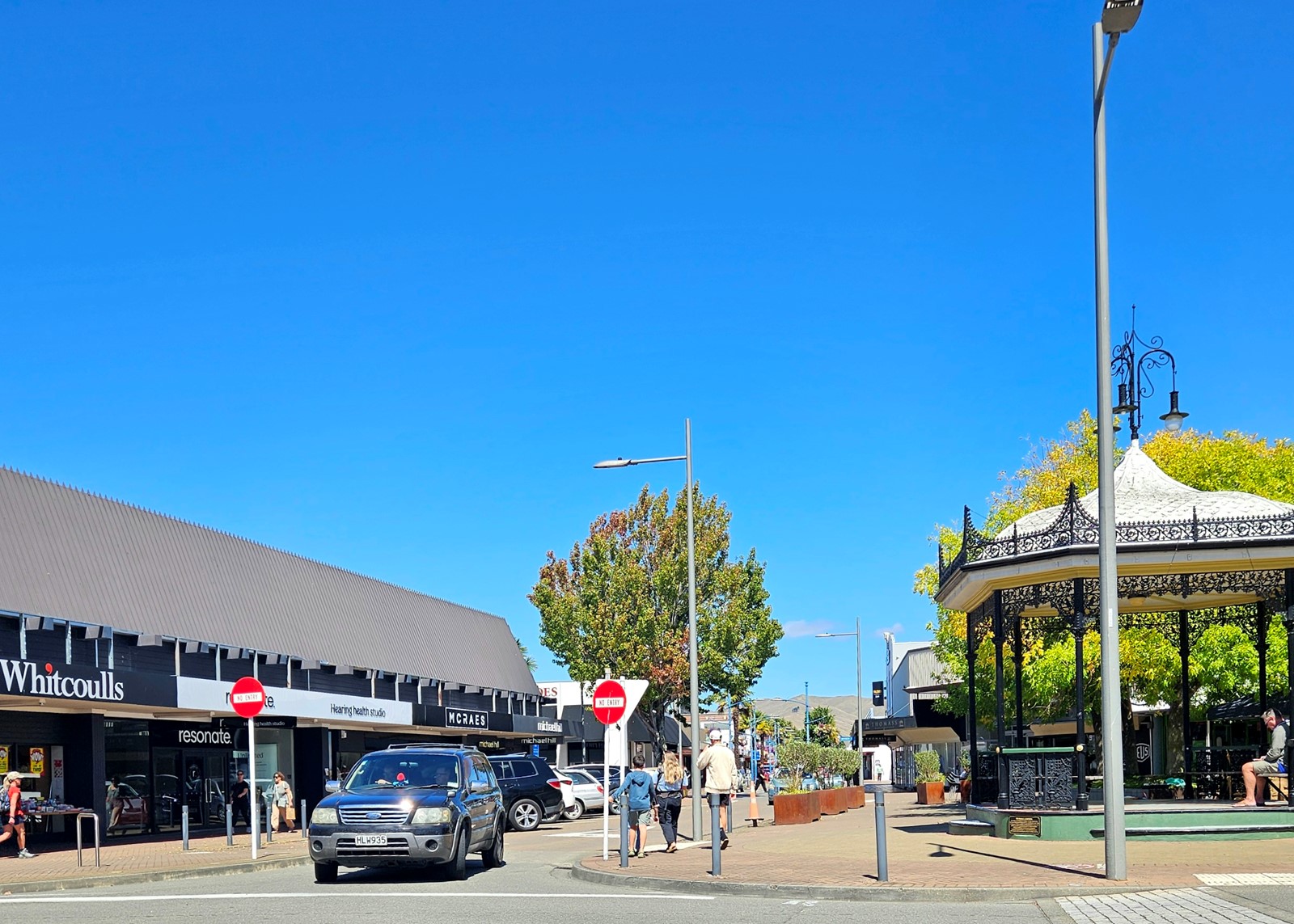
Saturday afternoon NZDT, Amy and I walked with Tiernan to Blenheim Town Centre — akin to Downtown Chico, just smaller and with a small river flowing by the periphery as opposed to a big creek. It’s summertime here; the sun, wholly blue sky and windless warmth belied dark clouds in other places on earth.
Tiernan and I waited as Amy shopped for sandals and seasonal clothes. Passersby who didn’t pass us by stopped to pet the pup and hear about him. One wondered about other dogs we might have, which turned talk to the States, where Onyx and Shayna remain in loving hands.
In quieter moments, with Tiernan standing sentinel for mom to reemerge, I thought about the wintriness where we hail. Here, we’re at safe distance, at least as safe as one can be given the magnitude of the maelstrom. I expect fresh questions … for some, I have no easy answers.
Former weekend editor Evan Tuchinsky is on sabbatical in New Zealand. Reach him at e.m.tuchinsky@gmail.com
 PREVIOUS ARTICLE

