


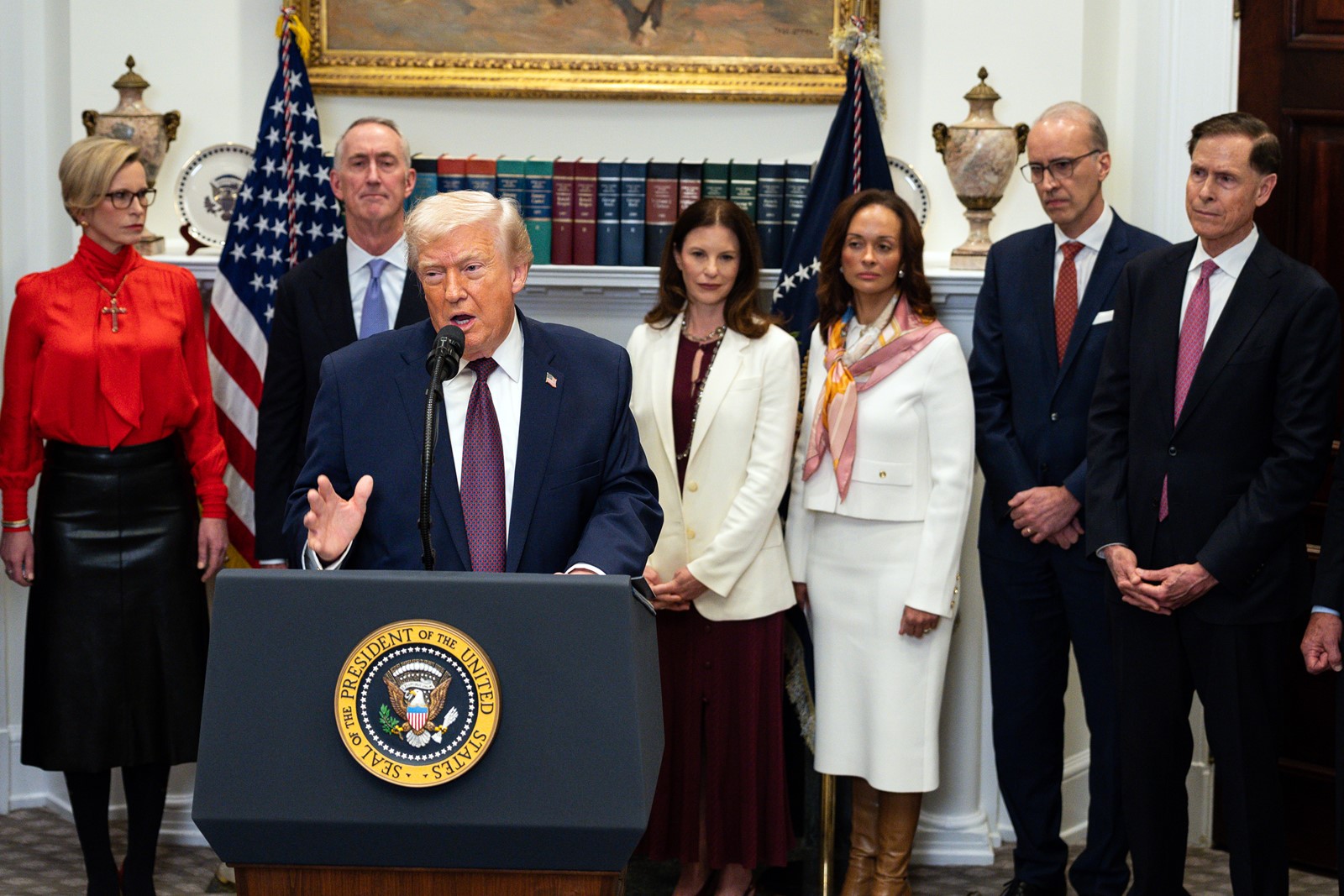


President Donald Trump on Friday announced deals with nine pharmaceutical companies to reduce some drug prices, the latest step in his bid to try to align U.S. costs with the lower drug prices in European countries.
Trump has now reached deals with 14 of the 17 drugmakers to which he sent letters in July demanding that they lower prices. The nine companies participating in Friday’s announcement were Amgen, Boehringer Ingelheim, Bristol Myers Squibb, Roche’s Genentech unit, Gilead, GSK, Merck, Novartis and Sanofi.
Drugmakers have been eager to strike deals with the administration in hopes of avoiding punitive regulatory action that could cut deeply into their profits. Over the past few months, Trump has announced similar agreements with Pfizer, AstraZeneca, EMD Serono, Eli Lilly and Novo Nordisk.
In a White House briefing announcing the deals, Trump and top health officials framed the agreements as part of a focus on affordability at a time when the administration is facing intense scrutiny for not doing more to stem rising prices.
The announcements were made as health insurance subsidies in the Obamacare marketplace were set to expire at the end of the year, which will likely drive up premiums for millions of Americans.
Standing at the podium, the president also took the opportunity to threaten the health insurance industry. Trump said he would call insurance executives to Florida or the White House soon to discuss lowering premiums.
“They have to make less, a lot less,” he said. Stocks of major insurers, including UnitedHealth Group, CVS and Cigna, fell after Trump’s remarks.
“Health plans are doing everything in their power to shield Americans from the high and rising costs of medical care, and we welcome any opportunity to discuss common-sense solutions to lower costs for everyone,” said Mike Tuffin, CEO of AHIP, a major trade group for health insurance plans.
Under the deals announced Friday, manufacturers will offer some of their drugs through websites where Americans can bypass insurance and use their own money to buy certain products. The offerings have focused on drugs often prescribed by primary care doctors rather than more specialized, expensive treatments for conditions like cancer.
To help patients navigate that process, the Trump administration plans to create a site called TrumpRx.gov, which will direct patients to the drugmakers’ own websites. Officials put up a promotional version of the Trump- Rx website this fall and said they plan for it to be operational in January.
Drugs that will be made available in this way include Amgen’s Repatha, for lowering cholesterol, at $239 a month; GSK’s asthma inhaler, Advair Diskus, at $89 a month; and Merck’s diabetes medicine Januvia, at $100 a month.
Many of these drugs are nearing the end of their patent protection, meaning that the arrival of low-cost generic competition would soon have prompted manufacturers to lower their prices.
In other cases, the direct-buy offerings are very expensive and out of reach for most Americans.
For example, Gilead will offer Epclusa, a three-month regimen of pills that cures hepatitis C, for $2,492 a month on the site. Most patients pay far less using insurance or with help from patient assistance programs. Gilead says on its website that “typically a person taking Epclusa pays between $0 and $5 per month” with commercial insurance or Medicare.
The drugmakers also said they would introduce new medicines in the United States at prices comparable to what they ask other wealthy countries to pay.
 PREVIOUS ARTICLE

