




Darren Aronofsky’s latest film opens with a scream of metal and the electronic squeal of feedback, as a fly scuttles along a crack in a subway tunnel wall. It’s an appropriate tone-setter for what is to come — but also a promise of style the film will struggle to maintain.
The premise — an innocent bystander/baseball-washout bartender named Hank (Austin Butler) is thrust by accident into the middle of a mafioso conspiracy he doesn’t understand — is classic Hitchcock, while the details of the plot and overall tone call to mind Tarantino’s “Jackie Brown” (1997) and Schlesinger’s “Marathon Man” (1976). The film feels like it comes from a bygone era, not the pre-millennium of its setting, but the ’70s. It seems born of a time when inner-city crime and corruption were the dominant anxieties of the day and even dumb action fare like “Cleopatra Jones” (1973) knew to make violence scary, turning firearms into unwieldly dragons whose breath ends lives in instants, every blow a potential death sentence.
Even the animated cat over the closing credits feels like the remnants of a Saul Bass opening.
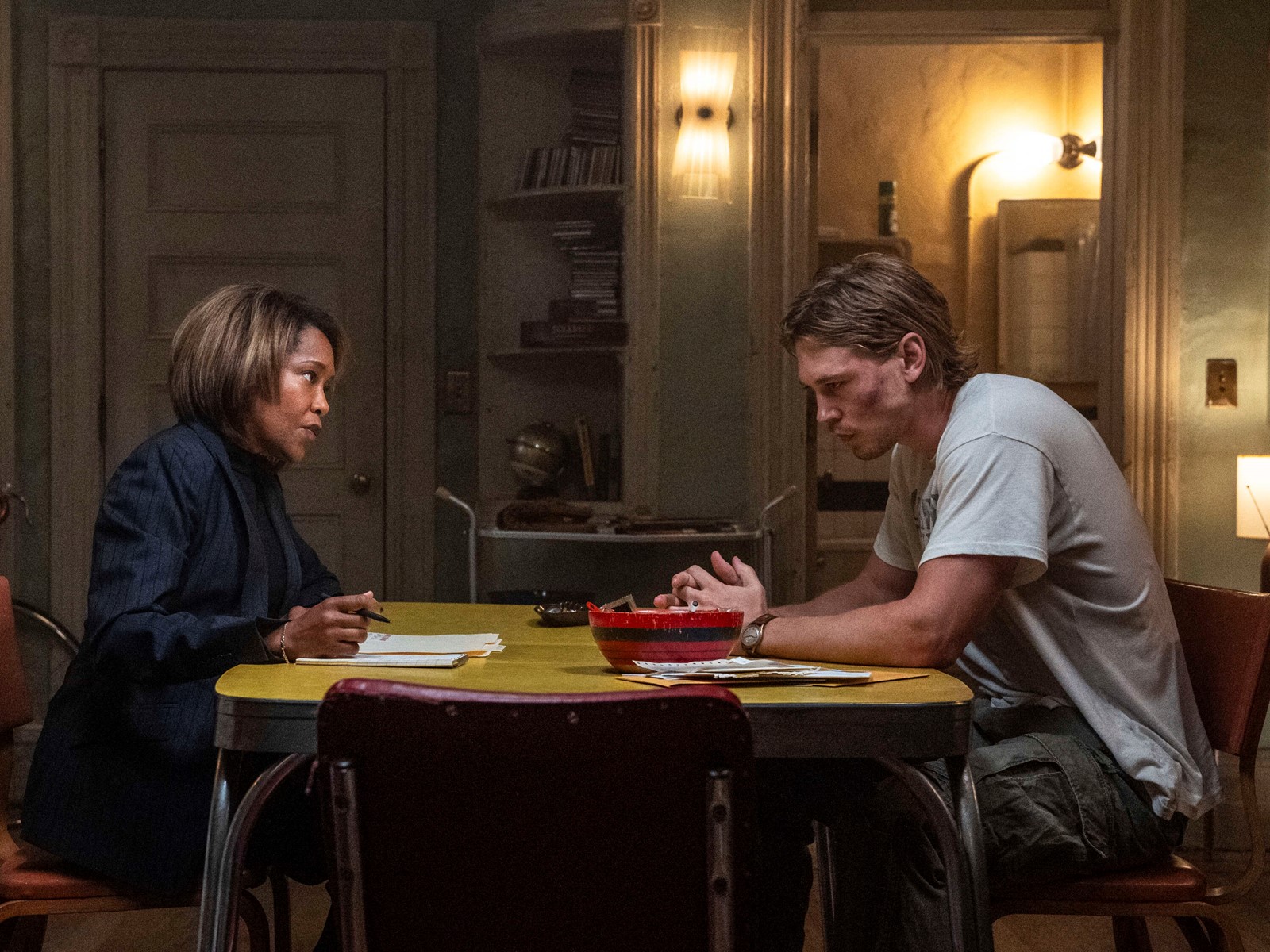
“Caught Stealing” is most at home among the mundane, when its characters are allowed to just talk. Hanks’ sheer normality — from his rowdy Lower Eastside workplace to the bickering of his flatmates — is well-realized, and it is in these pre-incitement scenes of New York nightlife that the film feels the most “punk.” Two Hassidim (Liev Schreiber and Vincent Philip D’Onofrio) argue with their grandmother over whether their new “half-Jewish friend” includes the half that can drive on shabbat. “Police work at its most glamorous,” Detective Elise Roman (Regina King) laughs after a deputy clogs our hero’s crime-scene toilet.
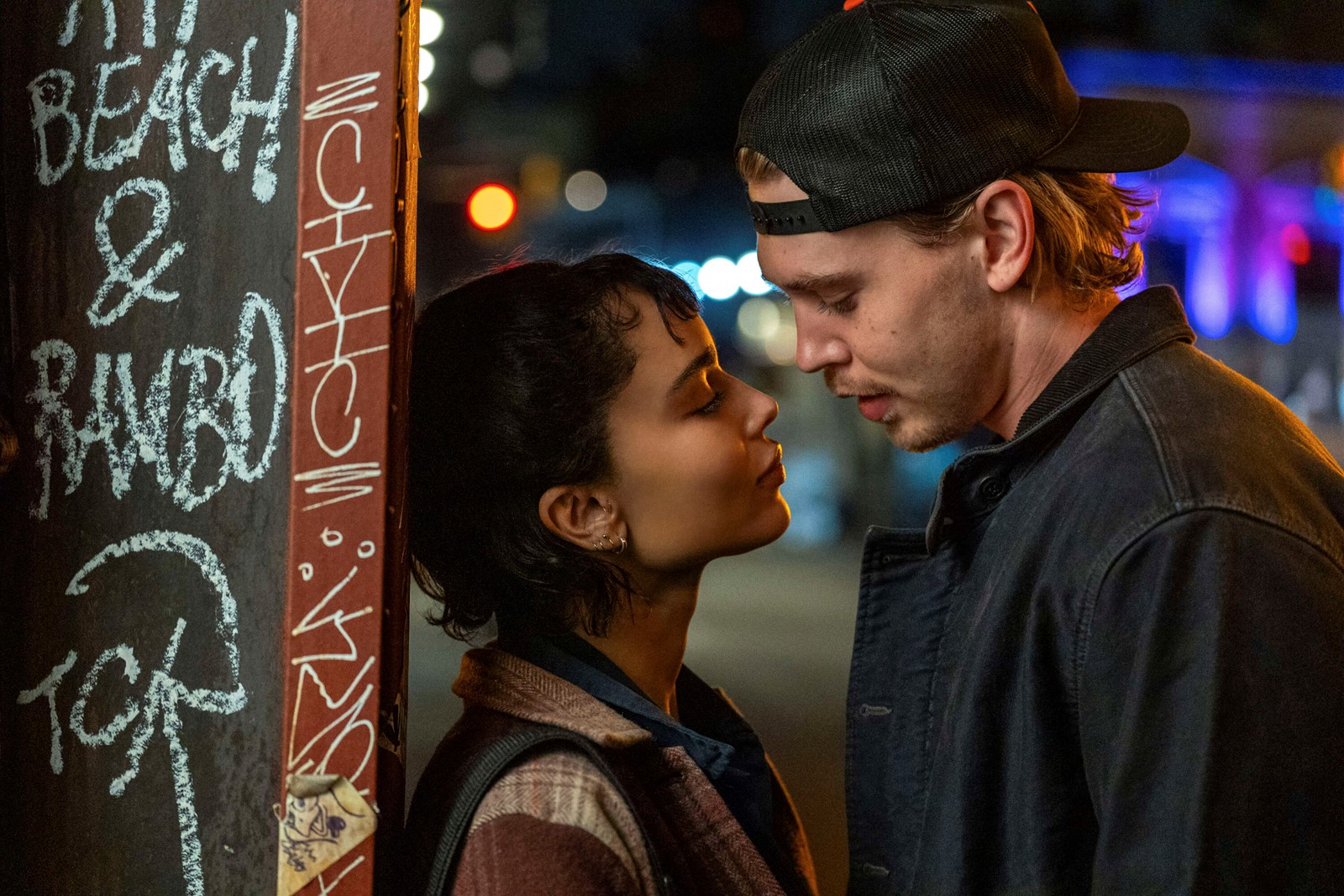
The strongest interactions are those between our lead and his girlfriend Yvonne (Zoë Kravitz), who betrays scriptwriter Charlie Huston’s comic book roots by being pure Lois Lane. She’s a modern-day flapper to contrast our more nebbish leading man. The dialogue between them is snappy, the chemistry strong — so it’s a shame that the plot conspires to keep the two away from each other.
Pitched as a black comedy crime-thriller, the film leans more heavily on the latter. It has an extremely dry sense of humor, based mostly around the small absurdities of human life, even in the lives of vicious gangsters.
And make no mistake, they are vicious.
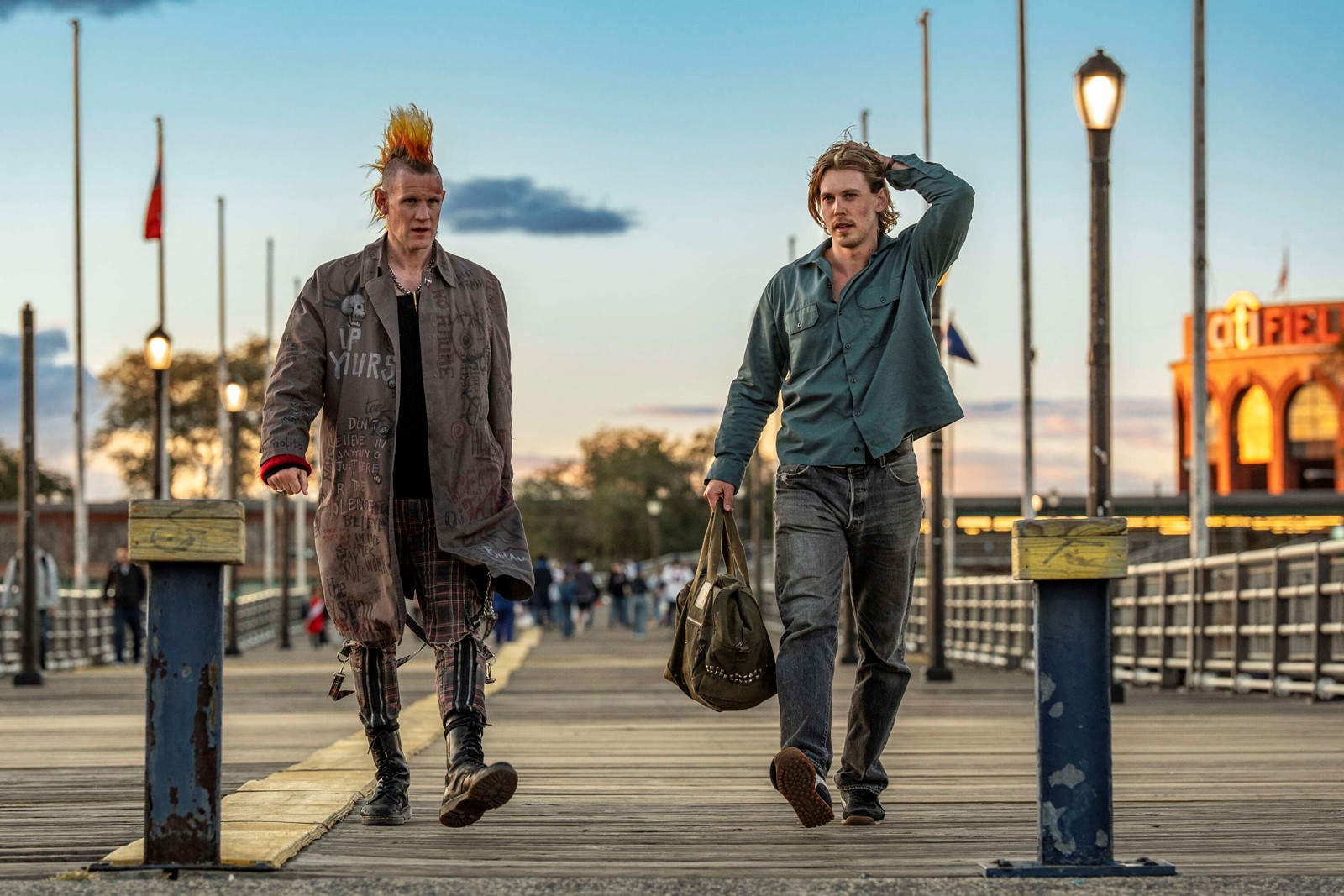
The film establishes immediately that Hank’s neighborhood is the wrong side of the tracks, but under the grunge there’s the sense of a softer heart. The barflies party hard, despite the mayor’s orders, but not destructively. A punk (Matt Smith) talks tough — but could Hank look after his cat? Hank and Yvonne trade disparaging barbs (“Nothing you’re saying right now is sexy,” “I don’t need to say anything to be sexy,” “Then shut up.”) and play hostage with a toy gun as foreplay — but it’s clearly all in jest.
When the hardcore criminals arrive, the difference between people who play at being bad and the people who are bad is stark.
Unfortunately the film wallows more in the latter than the former. It tries to bring humanity to its gangsters, but the violence swallows it up.
“Sad world,” one murderer muses. “Broken world.”
The movie’s first death is sudden and shocking, arguably too much so. As the bodies piled ever-higher, I cared little for the people who died. We never get a sense of the villains’ perspective, as cruel and paralogical as it undoubtedly would be.
Baseball plays even less of a role in the plot than long-distance running did in “Marathon Man.” The cat (Tonic) is a very cute prop but still a prop. Hank is a genuinely interesting character. He is mildly self-centered and majorly self-loathing, is haunted by his sins and in love with lost dreams, and is deeply attached to his mother. His first thought waking from a coma is he hasn’t called her in two days.
But the film lacks the satirical bite of an “Eight Men Out” (1988), the cultivated swagger of a “Ghost Dog: The Way of the Samurai” (1999), or the intricacy of an Elmore Leonard plot. The disparate elements do all come together in the end, but never as cohesive as hoped.
It’s possible the film wanted to be about Hank learning to truly care for somebody outside of himself, akin to “The Three Burials of Melquiades Estrada” (2005), even if that’s just a cat. But if so, Hank was never nasty enough to need such a revelation, the moment of epiphany is missing or lost, and it’s not at all clear by the end that Hank has changed for the better.
The message of the text is that one has to take responsibility for their actions and stop running, but the message of the action is that acting nice with bad men is rewarded with nothing but pain. They don’t care about compliance, they care about results, and if what they want is impossible, they will kill you for it anyway.
Another message is that fear and violence does not work as a tool for control. It can cow a man into obedience, but it can also make him erratic, or galvanize his hatred. The world of gangsters is one ruled by fear, not trust, and when trust breaks down, the bullets start flying. The film climaxes in a baptism of blood, the original sin repeated, this time with intentionality and purpose.
One who is not a murderer, becomes one.
Amusingly, a third message of the film is a PSA. Buckle your seatbelts, kids.
“Caught Stealing” is caught somewhere between “The Man Who Knew Too Much” (1956) and “Reservoir Dogs” (1992), less than the sum of its parts, well-made but not brilliant. While the film’s punk ambitions wane, those in the mood for a crime thriller that is blood-soaked but not mindless, will likely find what they are looking for.
 PREVIOUS ARTICLE
