


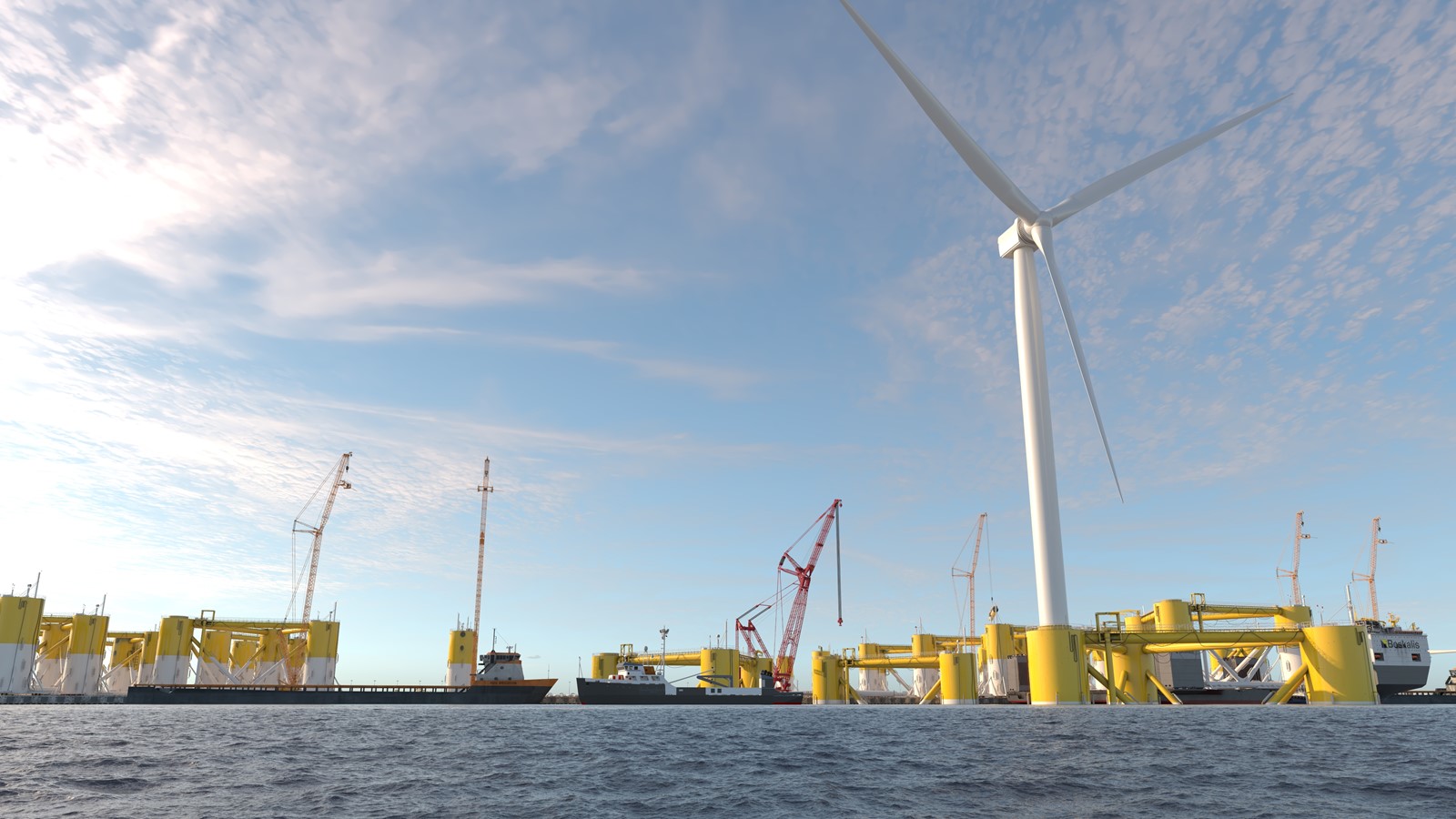


Despite the Trump administration’s announced move to cancel federal funding for offshore wind turbine projects, Port of Long Beach CEO Mario Cordero said Wednesday that the port is pressing forward on its $4.7 billion Pier Wind plan to construct a dedicated terminal where the giant turbines would be constructed.
But the latest move from Washington has prompted an overall uncertainty about the future of ocean wind turbine projects on both coasts.
The Transportation Department on Aug. 29 canceled $679 million in federal funding for a dozen offshore wind projects in what was the latest move by the Trump administration against the reeling U.S. offshore wind industry, according to a report by the Associated Press.
Funding for projects in 11 states was rescinded, including $435 million for a floating wind farm in Northern California and $47 million to boost an offshore wind project in Maryland that the Interior Department has pledged to cancel.
“Wasteful wind projects are using resources that could otherwise go towards revitalizing America’s maritime industry,” Transportation Secretary Sean Duffy said in a statement. “Thanks to President (Donald) Trump, we are prioritizing real infrastructure improvements over fantasy wind projects that cost much and offer little.”
The canceled funding will be redirected to upgrade ports and other infrastructure in the U.S., where possible, the Transportation Department said.
Construction on the Port of Long Beach project was expected to begin as soon as 2027, with the first 200 acres completed in 2031 and the final 200 acres coming online in 2035, according to earlier projections. So far, no federal funding had been earmarked for the project.
Pier Wind would be created on newly built land southwest of the Long Beach International Gateway Bridge. It would span up to 400 acres, bringing with it new jobs for communities around the port, according to officials.
But Trump has long been critical of offshore wind power. And when Duffy announced that $426.7 million approved last year by the Biden administration for such projects would be revoked, that included money that would help build a new marine terminal in Humboldt Bay near Eureka — a project tied to the Port of Long Beach plan — where huge cranes, warehouses and wharfs were to assemble and deploy turbines along the California and Oregon coasts.
The Port of Long Beach and the Pier Wind project plan would provide the turbines for offshore power along the Central and Northern California coastline, far enough away so the towering structures would not be seen from shore. In December, the California State Lands Commission and the ports of Long Beach and Humboldt announced an agreement to advance floating offshore wind energy development off the California coast.
The assembled wind turbines on floating platforms would be towed to installation areas 20 to 30 miles offshore of Humboldt County and Morro Bay. The ports have been identified in the California Energy Commission’s Offshore Wind Strategic Plan as key sites necessary to successfully deploy floating offshore wind in California. The turbines stand as tall as the Eiffel Tower.
The State Lands Commission had worked with both ports over the course of 2024 to structure the partnership to bring the project to fruition.
The Eureka project now stands to lose nearly half a billion dollars in federal funding.
The AP also reported in August that the Trump administration halted construction on a nearly complete offshore wind project near Rhode Island.
Danish wind farm developer Orsted said the Revolution Wind project was about 80% complete, with 45 out of its 65 turbines already installed.
Despite that progress — and the fact that the project had cleared years of federal and state reviews — the Bureau of Ocean Energy Management issued the order on Aug. 22, saying the federal government needed to review the project and “address concerns related to the protection of national security interests of the United States.”
As for Pier Wind, Cordero said in a statement Wednesday that work would continue as planned on the Port of Long Beach terminal.
“The Port of Long Beach is continuing to work on planning, permitting and design of Pier Wind, a project which will support U.S. energy independence and help California meet its renewable energy goals,” he said. “Federal investments in ports support our national economy and security while creating good-paying jobs in manufacturing and construction. Going forward, we will continue our partnership and collaboration with Humboldt and other California ports to develop infrastructure that supports the state’s domestic renewable energy goals and strengthen the nation’s energy independence in alignment with our Green Port Policy.”
The Port of Los Angeles does not have any current plans for a project related to the offshore wind turbine industry.
But Pier Wind, besides creating new green energy jobs in Southern California, also would enable other sectors of the supply chain to create jobs to help make, assemble, operate and maintain offshore wind projects on the West Coast, supporters say.
In October, California Gov. Gavin Newsom signed a bill allowing the Port of Long Beach to streamline the design and construction of the Pier Wind plan.
Assembly Bill 2235, written by Assemblymember Josh Lowenthal, D-Long Beach, would reduce costs and accelerate the timeline to complete what would be the largest facility of its kind in the United States, according to information provided by port officials.
It also would help the state meet its goals for renewable energy sources.
“We now have the ability to plan and build Pier Wind in a way that is smarter, faster and more cost-effective,” Cordero said at the time, thanking Newsom, Lowenthal, Assembly Speaker Robert Rivas and Senate President Pro Team Mike McGuire for getting the legislation approved.
Pier Wind, Cordero said, would “help the state meet climate goals, create jobs and economic opportunities for local communities, and establish a new green energy industry along the West Coast.”
Funding challenges, he said at that time, could be “overcome” by collaborating with partners and the private sector.
Bay Area News Group staff writer Paul Rogers contributed to this report.
 PREVIOUS ARTICLE
