


Panel explains benefits of recovery centers
Will provide resources to those in treatment
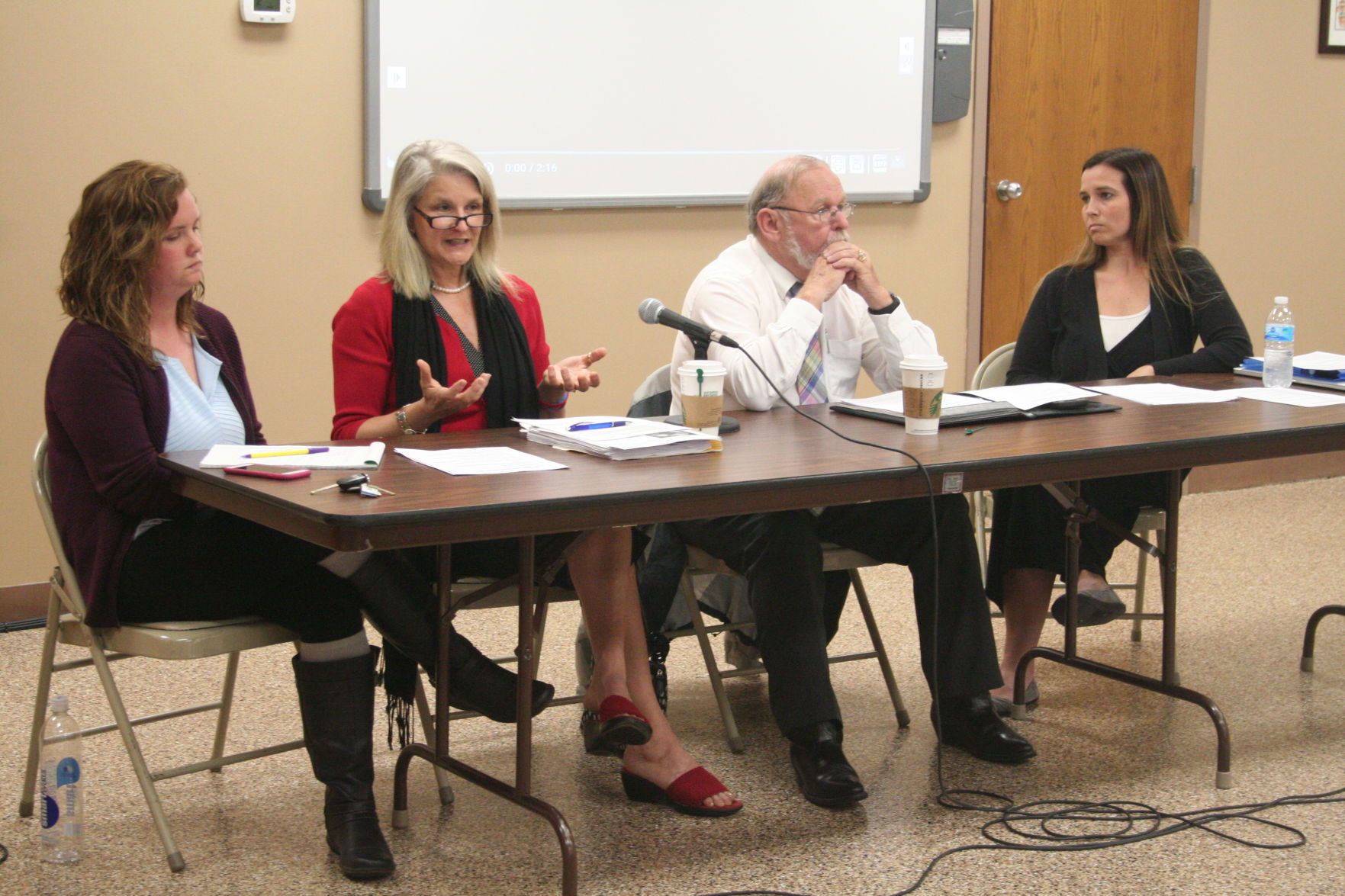
Cindy McQuown (second from left), a local drug addiction counselor, spoke about how the services a recovery center would provide along with the other panelists. Photo by ALLISON WOOD


MEDINA – When a person in recovery from a drug addiction returns home from a treatment center, he or she still needs to have access to resources and friendly faces to help with them stay on the right path.
Board members from the Ohio Citizen Advocates for Addiction and Recovery, an organization advocating for recovery efforts, hosted a question and answer session April 19 about the opening of a recovery center in the county, possibly at the former Medina Steak & Seafood Restaurant on West Liberty Street in Medina. The center would provide activities and resources for those recovering from drug addiction, along with their families and children.
The panel included OCARR Executive Director Sarah Thompson and three local residents who serve on its board, including Cindy McQuown, a counselor with Cornerstone Wellness; Dave Caperton, a peer support specialist at the Medina County Jail; and Stefanie Robinson, who gives talks about addiction and recovery along with working as a recovery coach for the drug court at the Medina County Common Pleas Court.
“We want to promote a sense of hope and healing,” McQuown said, qualities sometimes in short supply for those in stages of recovery.
Thompson said the rate of relapse is about 70 percent and the goal is to reduce this amount by bridging the gap between treatment (addressing active addiction) and recovery, when the person returns to the community.
“Once someone exits treatment, they go back to the same environment,” she said.
The panelists addressed some myths surrounding drug addiction and those in recovery, including the fact that some struggling with addiction may be productive members of society and that recovery from addiction is just a matter of willpower.
“Nobody thought I had a problem,” said Robinson. “I was a semi-functioning addict and alcoholic.”
McQuown said recovery is “more of a process than an event” that takes a great amount of maintenance, including making lifestyle changes.
The concept of a recovery center is fairly new with only a few in the state so far and is different from a treatment center in that nobody is living there, McQuown said. She equated a recovery center to a senior citizen center or the Medina County Achievement Center for developmentally disabled individuals as they serve as a hub to find peers and get access to resources.
For many in recovery, finding new habits and social groups is difficult due to issues with finances, housing and securing stable employment; the panelists said a recovery center could help address these issues and reduce the number of overdoses, relapses and crimes committed. The center would also hold job-training programs and sessions to help obtain employment such as resume writing or GED classes.
The number of overdoses and deaths in the county rose from 128 overdoses and 20 deaths in 2015 to 258 overdoses and 34 deaths in 2016; the county is currently on pace to beat the 2016 numbers, said Veronica Perry, chief probation officer at the Medina County Courthouse, who spoke briefly during the panel.
The probation department has received a $300,000 state grant to establish a recovery center, with hopes of it being at the former Steak & Seafood site.
The panelists said there has been no increase in crime in the areas where the other recovery centers are located; however, a Johns Hopkins University study have shown crime rates are more likely to rise when a business involving alcohol such as bar or liquor store opens, McQuown said.
The recovery center would have a full-time manager and part-time coordinators would also be onsite; the proposed hours would be 7 a.m. to 9 p.m. seven days a week and would be a drop-in facility open to the public. Many of the scheduled activities would be led by peer volunteers who are also in recovery, Robinson said.
The center would also have services for parents of addicts and their children, who are often overlooked but who also need support, Robinson said. In some cases, parents are often raising their grandchildren due to the parent’s death or whose addiction makes them unable to care for their children.
Thompson said another goal of the center would be to host social activities for different ages as it is important to have a little fun while dealing with the seriousness of recovery.
A couple of audience members said during they were anxious about locating the recovery center on West Liberty Street due to other facilities in the area, including Cathy’s House, a halfway house located across the street. The panelists said they did not want to talk about the proposed location specifically, but the goal is to turn the center into an asset and become actively involved with making the neighborhood better.
“The people who want help are not the people you should be afraid of,” Thompson said.
Robinson said she and others are working on establishing how to handle certain crisis situations that arise, including someone trying to bring or sell drugs at the facility and someone coming in that is high on drugs.
Lodi Police Chief Keith Keough said the village now has an outpatient treatment center and calls for service have not increased in the area.
Many local officials were also in attendance, including Common Pleas Court Judges Chris Collier and Joyce Kimbler, Mayor Dennis Hanwell, Medina Police Acting Chief Dave Birckbichler and Perry.
Board members from the Ohio Citizen Advocates for Addiction and Recovery, an organization advocating for recovery efforts, hosted a question and answer session April 19 about the opening of a recovery center in the county, possibly at the former Medina Steak & Seafood Restaurant on West Liberty Street in Medina. The center would provide activities and resources for those recovering from drug addiction, along with their families and children.
The panel included OCARR Executive Director Sarah Thompson and three local residents who serve on its board, including Cindy McQuown, a counselor with Cornerstone Wellness; Dave Caperton, a peer support specialist at the Medina County Jail; and Stefanie Robinson, who gives talks about addiction and recovery along with working as a recovery coach for the drug court at the Medina County Common Pleas Court.
“We want to promote a sense of hope and healing,” McQuown said, qualities sometimes in short supply for those in stages of recovery.
Thompson said the rate of relapse is about 70 percent and the goal is to reduce this amount by bridging the gap between treatment (addressing active addiction) and recovery, when the person returns to the community.
“Once someone exits treatment, they go back to the same environment,” she said.
The panelists addressed some myths surrounding drug addiction and those in recovery, including the fact that some struggling with addiction may be productive members of society and that recovery from addiction is just a matter of willpower.
“Nobody thought I had a problem,” said Robinson. “I was a semi-functioning addict and alcoholic.”
McQuown said recovery is “more of a process than an event” that takes a great amount of maintenance, including making lifestyle changes.
The concept of a recovery center is fairly new with only a few in the state so far and is different from a treatment center in that nobody is living there, McQuown said. She equated a recovery center to a senior citizen center or the Medina County Achievement Center for developmentally disabled individuals as they serve as a hub to find peers and get access to resources.
For many in recovery, finding new habits and social groups is difficult due to issues with finances, housing and securing stable employment; the panelists said a recovery center could help address these issues and reduce the number of overdoses, relapses and crimes committed. The center would also hold job-training programs and sessions to help obtain employment such as resume writing or GED classes.
The number of overdoses and deaths in the county rose from 128 overdoses and 20 deaths in 2015 to 258 overdoses and 34 deaths in 2016; the county is currently on pace to beat the 2016 numbers, said Veronica Perry, chief probation officer at the Medina County Courthouse, who spoke briefly during the panel.
The probation department has received a $300,000 state grant to establish a recovery center, with hopes of it being at the former Steak & Seafood site.
The panelists said there has been no increase in crime in the areas where the other recovery centers are located; however, a Johns Hopkins University study have shown crime rates are more likely to rise when a business involving alcohol such as bar or liquor store opens, McQuown said.
The recovery center would have a full-time manager and part-time coordinators would also be onsite; the proposed hours would be 7 a.m. to 9 p.m. seven days a week and would be a drop-in facility open to the public. Many of the scheduled activities would be led by peer volunteers who are also in recovery, Robinson said.
The center would also have services for parents of addicts and their children, who are often overlooked but who also need support, Robinson said. In some cases, parents are often raising their grandchildren due to the parent’s death or whose addiction makes them unable to care for their children.
Thompson said another goal of the center would be to host social activities for different ages as it is important to have a little fun while dealing with the seriousness of recovery.
A couple of audience members said during they were anxious about locating the recovery center on West Liberty Street due to other facilities in the area, including Cathy’s House, a halfway house located across the street. The panelists said they did not want to talk about the proposed location specifically, but the goal is to turn the center into an asset and become actively involved with making the neighborhood better.
“The people who want help are not the people you should be afraid of,” Thompson said.
Robinson said she and others are working on establishing how to handle certain crisis situations that arise, including someone trying to bring or sell drugs at the facility and someone coming in that is high on drugs.
Lodi Police Chief Keith Keough said the village now has an outpatient treatment center and calls for service have not increased in the area.
Many local officials were also in attendance, including Common Pleas Court Judges Chris Collier and Joyce Kimbler, Mayor Dennis Hanwell, Medina Police Acting Chief Dave Birckbichler and Perry.