


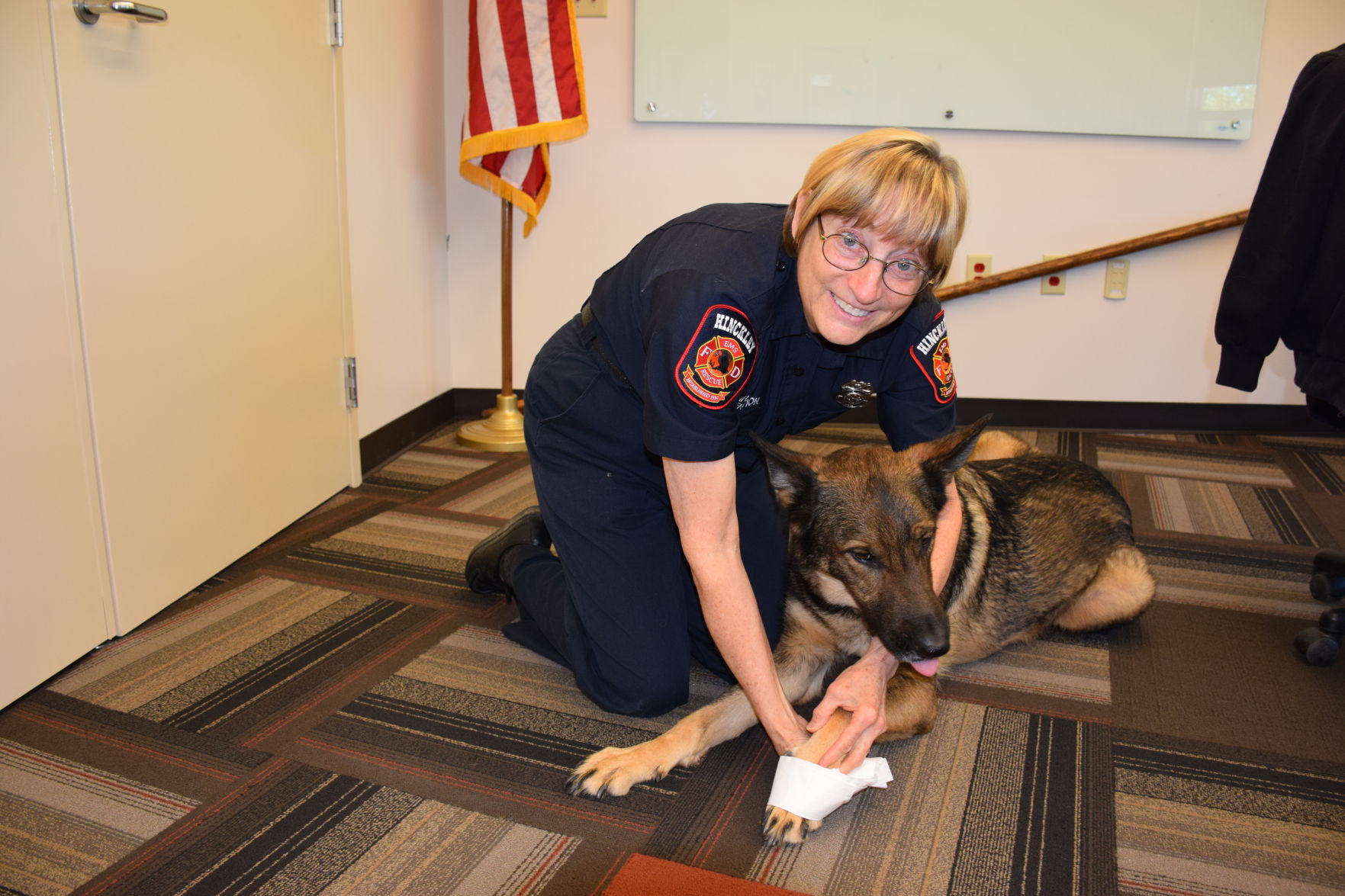


HINCKLEY – Soon the “Dog Days of Summer” will be upon us. Having just completed a class in pet first aid, Hinckley Fire Fighter and Life Safety Educator Lydia Wochna is working to share valuable information on pet safety with students and adults. For students, Wochna visits local classrooms and recently took time to share pet first aid and safety tips with readers.
During the summer months, the biggest concern for pets is heat, especially when owners hike and run with their pets and sometimes leave them in cars, even for a short time.
“When you run with your dog in hot weather, owners need to realize that if they are hot and sweating, their dog is even hotter,” said Wochna. “I like to tell people to imagine that if they are wearing shorts and a T-shirt, for a dog even with short fur, it’s like the dog is wearing a winter coat and snow pants. On hot days, owners should also put their hand down on the pavement to feel the temperature. If the pavement is hot, your dog is going to burn their paws walking on it. I encourage people to walk their dogs in the morning or evening versus a hot afternoon.”
Wochna said if a dog owner is going out in the heat with their dog, to provide ample water. She said if you don’t want to carry a collapsible dog bowl in a back pack, a simple dog bowl can be made out of a two gallon zip-lock bag. By turning the top down, it can be easily filled at a water fountain or from an owner’s water bottle.
Leaving a pet in your car can be dangerous, Wochna cautioned. Even on a day when the temperature is a mild 70 degrees, the temperature in a car can rise to 120 degrees in less than a half hour. Cracking a window open doesn’t stop the temperature from rising, said Wochna “because cars are like glass bowls which heat up quickly.” She added owners shouldn’t allow their pets to hang their heads out of a car window, or sit in the bed of a truck because eye injuries can result.
If a dog succumbs to heat stroke, Wochna said to cool the dog down with cold towels and offer them ice cubes to lick. A dog with heat stroke; signs being excessive panting, drooling, rapid pulse, fever; should be taken to a veterinarian. Panting in a cat, even for a few minutes, can be a strong sign of serious distress.
“Long-haired dog owners, who have their dog’s coats shaved in the summer should also be careful and leave at least one inch of fur to prevent sunburn,” said Wochna. “The fur protects against sunburn and owners should put a pet-safe sunscreen (no zinc oxide) on their pet’s ears and noses if they are going to be out in the sun for a long time.”
Summer is also a time when serious storms and tornadoes can occur. Wochna said she instructs students to have a family plan for storms. That plan should include bringing animals inside if there is time, and going to the center or lowest part of the house. Having pets on a leash or putting them in cages can keep them away from blowing debris as well. An anxious or scared cat can be scooped up in a pillow case and carried down the basement then released.
Another helpful hint for emergency situations is to have pet information (owner’s name, phone number, important medical information,) rolled up and duct taped to a dog’s collar. In case of separation, this allows owners to be found more readily. Wochna also suggested that owners carry a picture of themselves with their pet to help establish ownership.
Summertime also means picnics, and there are many foods that are harmful to dogs that should not be left out where dogs can reach them. Among common foods, medications, plants and other chemicals which are harmful to dogs and cats are; onions, grapes, raisins, chocolate, alcohol, caffeine, homemade play dough, tea, toothpaste, hair products, acetaminophen (Tylenol), ibuprofen (Advil), antifreeze, herbicides, rat poison, lily of the valley, oleander, rhododendron, azalea, yew, foxglove, rhubarb leaves and shamrocks.
Playtime cautions include not using a standard sized tennis ball to play fetch with your dog. Wochna explained that when dogs are hot, their esophagus expands enough to allow a dog to choke on a standard size tennis ball and owners should use oversized tennis ball.
While giving so much valuable information on pet safety, Wochna asked that we also leave one important tip for parents regarding child safety.
“If a child is missing, please check cars all around you, including the trunks,” said Wochna. “As first responders, we hear of tragedies where children hide in cars, including the trunks, and they succumb to heat. If there is a search going on for a missing child, urge everyone to check the inside of their cars and trunks and then lock their cars.”
Wochna said it’s just a matter of time before all first responders have pet first aid training and she will be passing on her training to those in the Hinckley Fire Department.