




Infrastructure, energy, decommission plans, water and constantly-evolving technology were the key issues raised concerning data centers at the Tri-County Summit Friday.
The summit featured commissioners and other officials from Macomb, Oakland and Wayne counties. A panel of experts said data centers are critical but offered guardrails for local communities considering them.
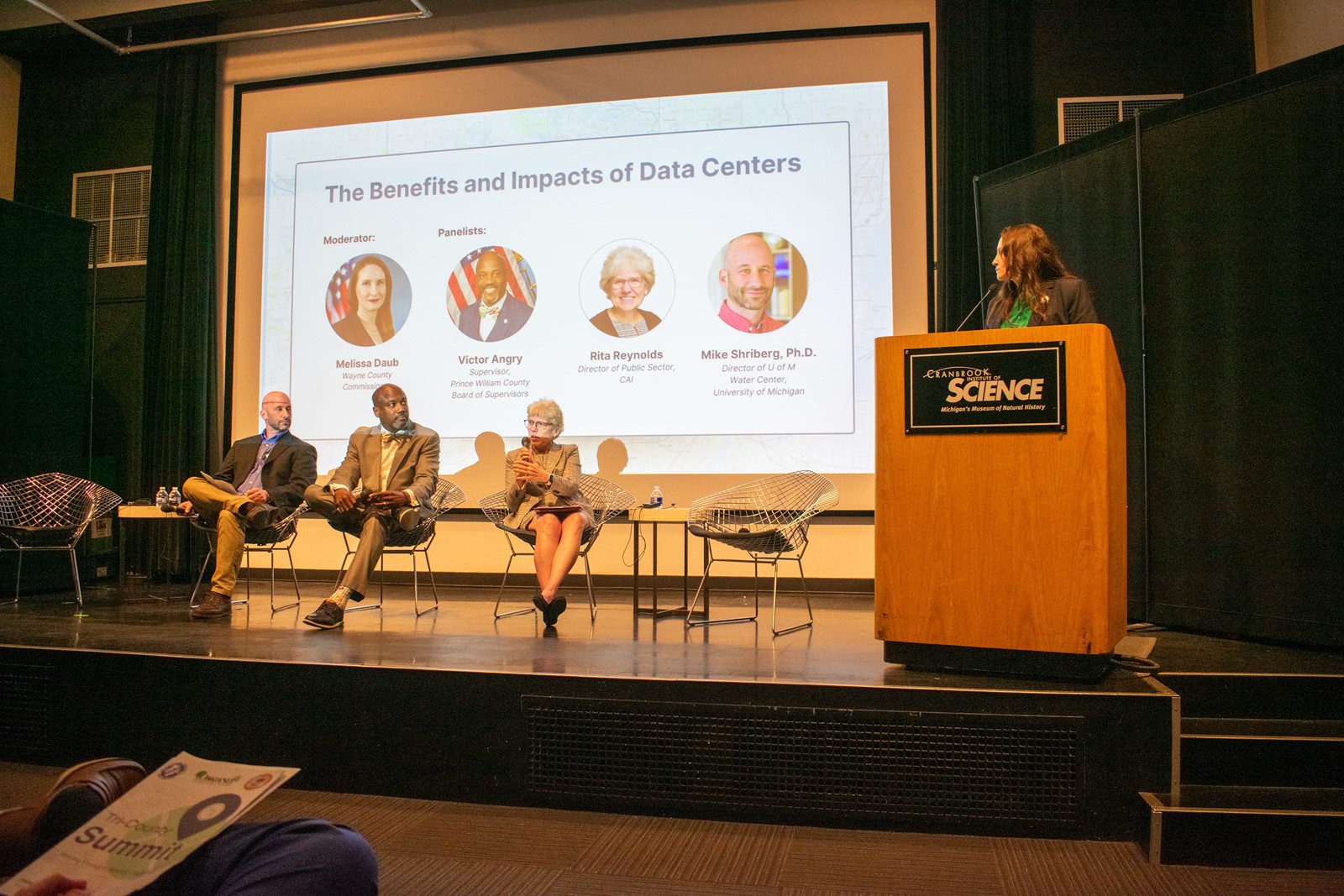
The event kicked off with a panel about clean water action. Then, Melissa Daub, a Wayne County commissioner, moderated a panel about the benefits and impacts of data centers. Local communities in all three counties have grappled with data center proposals of varying scopes.
Daub started the panel by emphasizing the importance of local control when it comes to data centers.
“We want to retain local control, not saying that, you know, data centers are good or bad, but it’s really important that local governments have that say in what goes on in their … communities about data centers,” she said.
Daub said most counties in Michigan don’t have zoning authority over data centers and the responsibility falls on the local municipalities.
Rita Reynolds, the director of public sector for CAI, brought up the importance of municipalities holding fiscal impact studies about data centers before making any decisions, to ensure that the “needs of the residents are being met.”
Reynolds said she sees a lot of “negative but oftentimes inaccurate but incomplete information” about data centers on social media, adding she has worked with elected officials who hold town halls or open forums for residents to learn about data centers.
“Here’s what’s happening: we want to hear concerns, but we want to also share the fact that data centers are here, have been here and they’re not going away,” Reynolds recommended officials say to their constituents.
She said a common complaint about data centers center on noise concerns, but that new technologies are coming out for the generators and the equipment that address the issue. She added data centers will not raise utility costs for consumers.
Reynolds said that many rural areas are still in need of high-speed internet. However, if a data center came in, they would bring fiber optic capability.Reynolds also recommended people go visit a data center.
“I would highly encourage you, if you have the opportunity, go and visit a more recent data center and see how things are equipped, how it works. It just really broadens your understanding,” she said.
Overall, Reynolds said that data centers are becoming a need.
“We’re coming to rely on AI, incredibly, for a number of reasons and we need the compute power. We need the data centers,” she said.
She said it’s important to have a decommissioning plan for the data centers ahead of signing and approval.
“Decommissioning can get really messy and can cause environmental issues and so making sure that that’s in place before approvals are given,” she said.
Victor Angry, the supervisor of the Prince William County Board of Supervisors, sat on the panel from Prince Williams County in Virginia where there are more than 40 data centers proposed, in progress or currently being built. He said that decommissioning is a problem his county is currently dealing with.
He added he deals with misinformation among residents when it comes to data centers.
“When citizens get hold of bad information, it spreads and then you find yourself trying to really get back on top of correcting a lot of fallacies that go on with this industry,” he said.
Angry said it was important to communicate with citizens. He said his county has dealt with that challenge from the beginning.
“The bottom line is communication with the citizens, like you got to tell them everything from beginning, middle to end and I think that’s been the biggest challenge that we found,” he said.
He related citizens expressed data centers were ugly, so they changed the plans to look more like an office building with glass and landscaping. He said citizens were concerned the data centers were taking all of the water, so they proposed a closed-loop system. Two issues they haven’t been able to solve are the noise and the power.
“Our biggest challenge that we’re dealing with right now is solving the energy problem of data centers,” he said.
He added the economic benefits of data centers are that it provides tax revenue and tax relief for residents. He said that data centers provide a lot of construction jobs in their first 15 years. After that time, he said there are much fewer jobs that are permanent.
Mike Shriberg, the director of the University of Michigan Water Center, emphasized his job is primarily research and that his center does not take a position on data centers. He said that one of the biggest issues he’s encountered when it comes to data centers is lack of disclosure.
“Right now, it’s actually really hard to get information on these proposals,” Shriberg said. “Even on the water side, unless a permit is required for direct withdrawal, which is not usually how they work, they usually tapped into municipal systems or other systems, there is no way right now to get the information on water usage and I think that’s a problem. I think community executives should have the right to understand that water usage before making a decision.”
Shriberg also explained how data centers either require large amounts of water or energy. If water is used to cool the systems, then it’s a large amount of water. The other option, he said, is using a dialectic fluid, which has to be pumped around and uses a lot of energy.
“Now, if you’re getting that energy from renewable sources, sources that don’t consume as much water, that trade-off’s a little bit different but most of our energy right now comes from fossil fuels and nuclear,” he said.
Shriberg added it’s best for data centers to go on brownfields that are already zoned for them with excess water and energy infrastructure. Many of the proposed sites for data centers are in rural areas that don’t have water and energy infrastructure for them.
“Democrats and Republicans equally hate data centers being located in their backyards, which isn’t such a surprising finding for those of us in the environmental field. It’s like, you know, who wants industrial facilities in their backyards? People generally don’t,” he said.
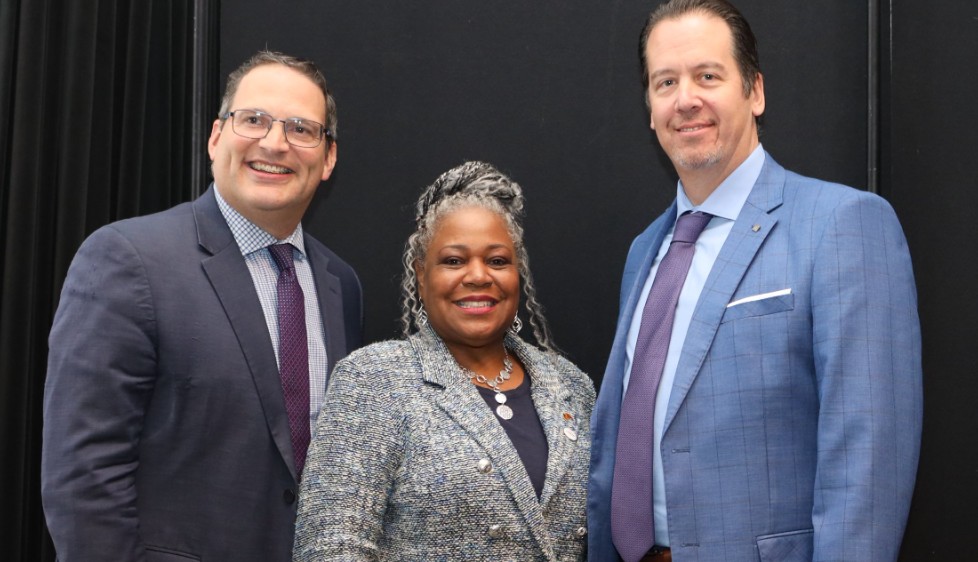
Among those in attendance Friday were Joe Sabatini, David Woodward, Alisha Bell, the board chairs of the Macomb, Oakland and Wayne boards, respectively.

