


Early surveys show preference for three new schools
Online survey drew 948 responses from residents
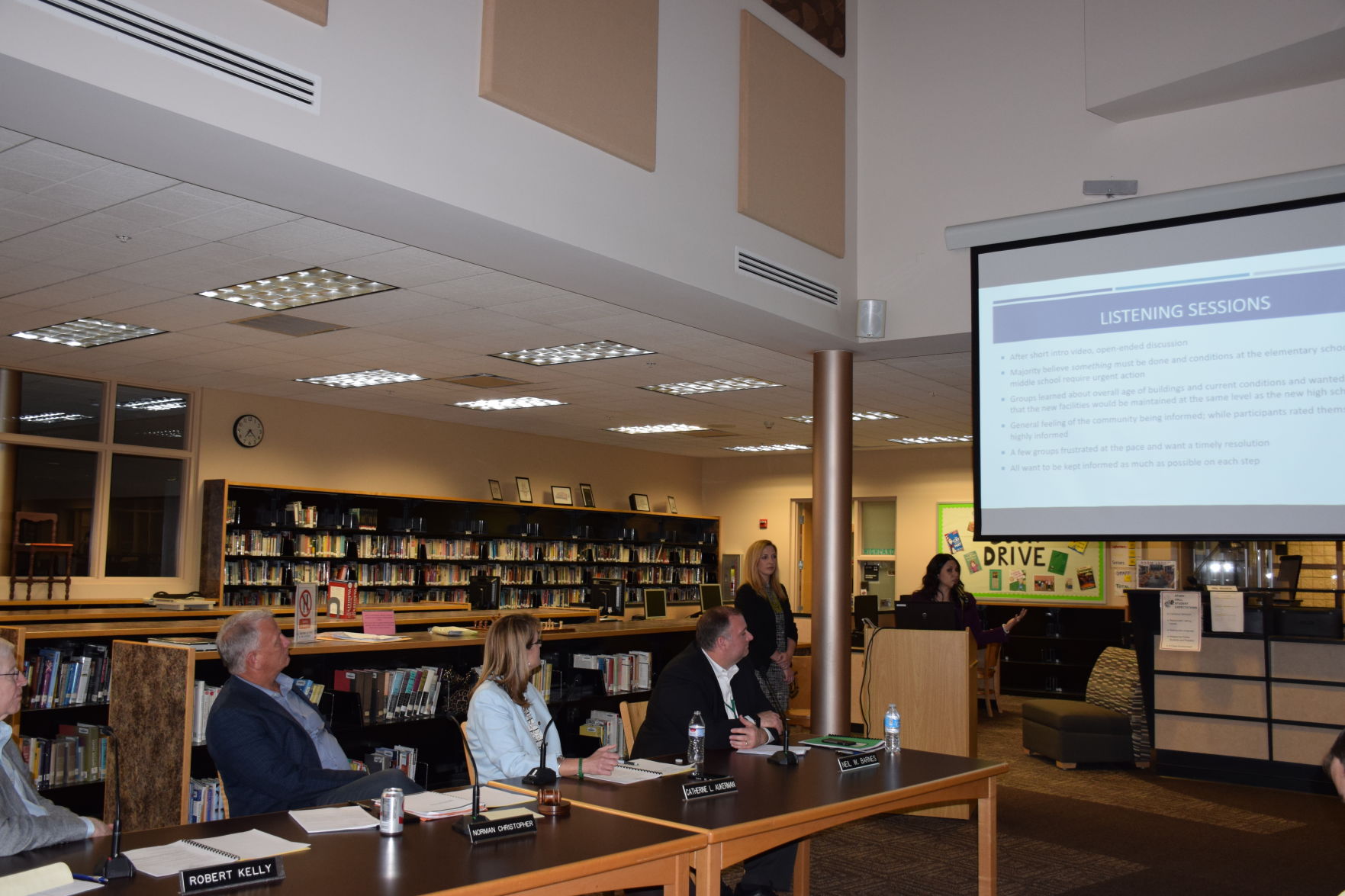
How to address Highland School District’s aging school buildings was the topic of recently conducted online survey and community listening sessions. Representatives from Burges & Burges presented the survey results at the April 17 Board of Education meeting which showed a strong preference for three new elementary school buildings. Photo by CHRIS STUDOR


GRANGER – Early surveys, done online and through community listening sessions, show respondents favor three new elementary schools to address Highland School District’s aging school buildings. The two early surveys are part of the Board of Education’s goal to create a long-term facilities master plan that reflects the needs of the community.
The results of the online and listening sessions surveys were presented to the board at the April 17 meeting by Vanessa Tey Iosue and Caroline Rado, of Burges & Burges Strategists. The company will also conduct a phone survey of registered voters later this month. The online survey drew 948 responses while about 100 people participated in the eight different listening sessions.
The Burges & Burges representatives said the vast majority of survey participants indicated “that something must be done and conditions at the elementary schools and middle school require urgent action.” Granger Elementary School is 88 years old, Sharon Elementary School is 95 years old, Hinckley Elementary School is 68 years old and Highland Middle School is 58 years old.
Burges & Burges conducted similar surveys back in 2014-15 but board members said there wasn’t enough community support at the time to go forward with a plan. While the community seems to be expressing a strong interest in some type of building plan now, board members stressed that they didn’t want to rush the project with board member Bob Kelley stating “we want to do this the right way.” Board members said once a long-term plan is complete, the board would still have to secure funding and upon approval, a building program could take 3-5 years to complete.
While three new elementary schools were the preferred option, the next most popular option was for one elementary school with the thought that significant cost savings would be realized. Some respondents stated that two elementary schools could be a “good compromise.” About 9 percent of those surveyed said they would not support any option.
The majority of the respondents who favored building three new elementary schools said they liked the concept because they believed it would provide improved educational programs and benefits, transportation ease, a better overall building size and help maintain individual community identity. Those who favored two new elementary schools or one new large elementary school saw operating cost efficiencies as the biggest benefit. Renovation of the middle school is also included in the proposals with the idea that significant changes would be made “to give the building a new feel.”
The representatives from Burges & Burges added that 77 percent of those surveyed were parents and that when elections are held about 77 percent of those voting do not have children. Complete survey results can be found on the school district website.
“It’s going to take some time to do things right,” said Kelly. “Please don’t push too hard. Remember if we do build these new buildings they are going to have to last 50 to 60 years. We want to end up with something we can be proud of.”
The results of the online and listening sessions surveys were presented to the board at the April 17 meeting by Vanessa Tey Iosue and Caroline Rado, of Burges & Burges Strategists. The company will also conduct a phone survey of registered voters later this month. The online survey drew 948 responses while about 100 people participated in the eight different listening sessions.
The Burges & Burges representatives said the vast majority of survey participants indicated “that something must be done and conditions at the elementary schools and middle school require urgent action.” Granger Elementary School is 88 years old, Sharon Elementary School is 95 years old, Hinckley Elementary School is 68 years old and Highland Middle School is 58 years old.
Burges & Burges conducted similar surveys back in 2014-15 but board members said there wasn’t enough community support at the time to go forward with a plan. While the community seems to be expressing a strong interest in some type of building plan now, board members stressed that they didn’t want to rush the project with board member Bob Kelley stating “we want to do this the right way.” Board members said once a long-term plan is complete, the board would still have to secure funding and upon approval, a building program could take 3-5 years to complete.
While three new elementary schools were the preferred option, the next most popular option was for one elementary school with the thought that significant cost savings would be realized. Some respondents stated that two elementary schools could be a “good compromise.” About 9 percent of those surveyed said they would not support any option.
The majority of the respondents who favored building three new elementary schools said they liked the concept because they believed it would provide improved educational programs and benefits, transportation ease, a better overall building size and help maintain individual community identity. Those who favored two new elementary schools or one new large elementary school saw operating cost efficiencies as the biggest benefit. Renovation of the middle school is also included in the proposals with the idea that significant changes would be made “to give the building a new feel.”
The representatives from Burges & Burges added that 77 percent of those surveyed were parents and that when elections are held about 77 percent of those voting do not have children. Complete survey results can be found on the school district website.
“It’s going to take some time to do things right,” said Kelly. “Please don’t push too hard. Remember if we do build these new buildings they are going to have to last 50 to 60 years. We want to end up with something we can be proud of.”