




SHARON – The year was 1942. World War II was raging and the United States, which entered the war after the Dec. 7, 1941 bombing at Pearl Harbor, was faced with a severe shortage of pilots.
Officials decided to implement an experimental program to recruit women and train them to ferry military aircraft from factories to military bases and departure points across the country, thus releasing the male pilots for combat duty overseas. More than 25,000 young women between the ages of 20 and 30 answered the call. Just 1,074, all licensed pilots, were accepted and, after four months of additional training, earned their wings.
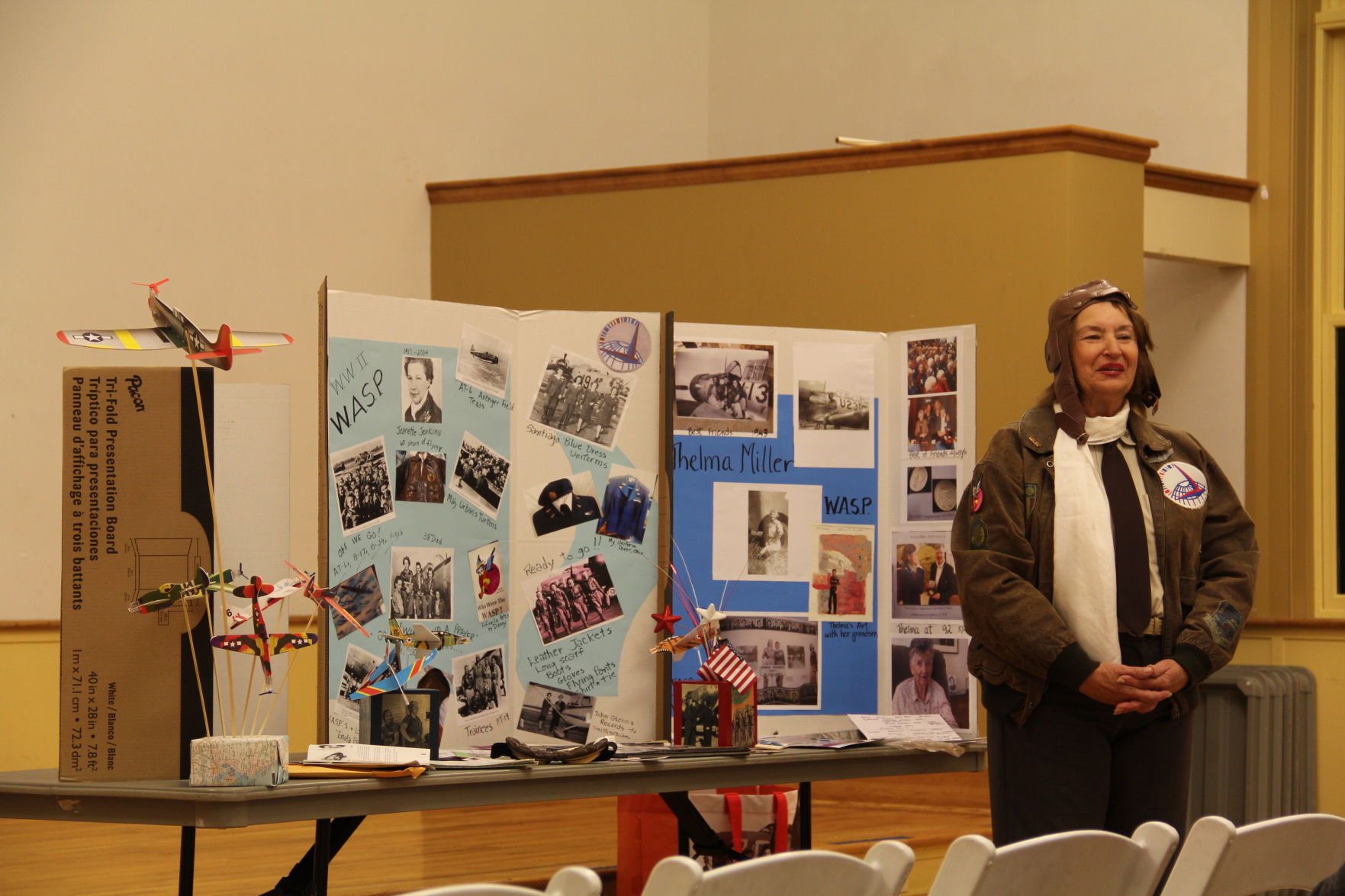
Fast forward to 2016. Enter Kathy Kraus of Medina, an historical presenter who had met Women Air Force Service Pilot (WASP) Jeanette Jenkins, of Dover, Ohio, a number of years ago and was inspired to portray her life as a WASP.
“Her time as a pilot tells the story of the bravery of these women, who are little known in history,” Kraus said.
During a program Nov. 16 at the Sharon Town Hall, Kraus alternated between portraying Jenkins, who passed away in 2002, and acting as a narrator.
Dressed in an authentic WASP uniform, she said the women wore men’s clothing. She said during the two years of the WASP program, the women ferried more than 1,900 planes, including B-29 bombers, and traveled 60 million miles.
Thirty-eight women died while serving as pilots during the war, all in accidents. Since the WASP was not considered military, their bodies were sent home at the expense of their families. Nor was there a flag on their coffins, nor military honors, nor notes of heroism.
In December 1944, WASP was disbanded and the women were sent home.
They were granted military status in 1977; in 1984, each WASP was awarded a WWII Victory Medal and in May 2010, nearly 300 surviving WASPs were on hand in Washington, D.C. to receive the Congressional Gold Medal.
Kraus said, “These women wanted respect, not recognition. They served for God, country and the thrill of it all.”