Public recognition of a forgotten sculptor
This article endeavours to uncover the life and work of the enigmatic Barcelona artist, Josep Piquet Catulí, who was responsible for the Gibraltar War Memorial, on the 150th anniversary of his birth
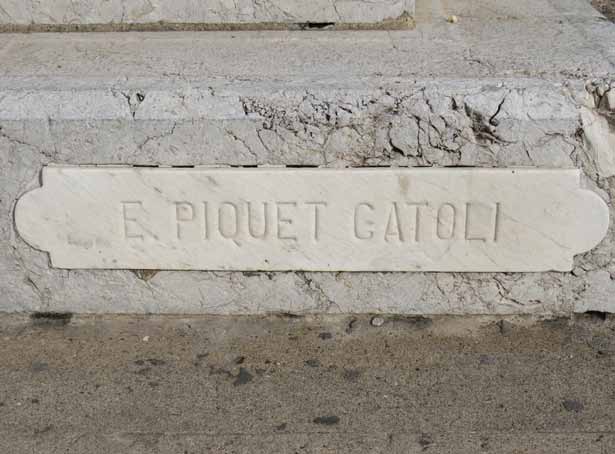
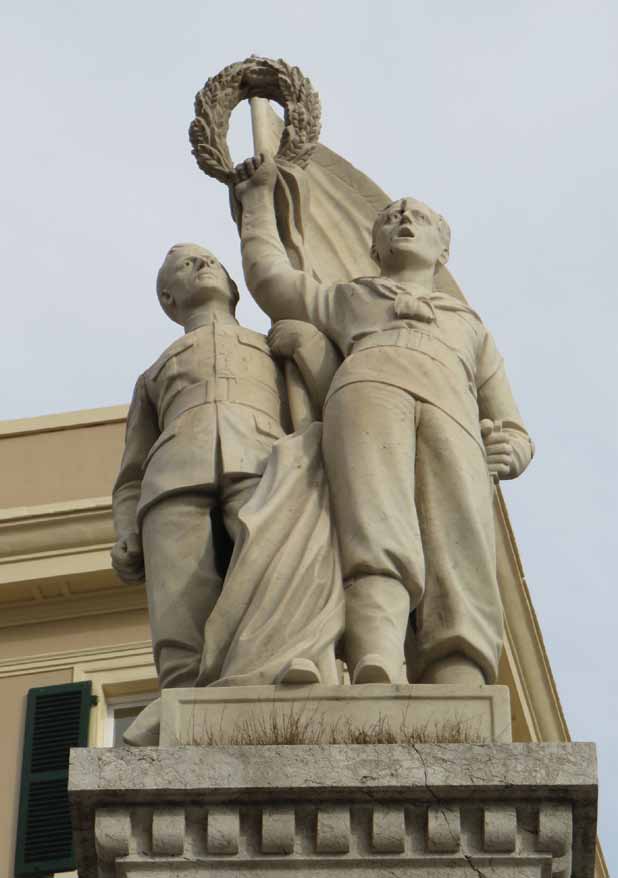


September the 27th of 1923 was a very important date in Gibraltar’s history. The recently appointed Governor, General Sir Charles Monro, unveiled a monument at the Line Wall Esplanade in honour of those Gibraltarians who gave up their lives during the Great War. The monument, raised by public subscription, is surmounted by the sculptural effigy in Carrara marble of a bluejacket and a sailor, holding aloft the Union Jack. The base of the pedestal bears a plaque commemorating the names of the thirteen Gibraltarians who died during this war and, also that of the name of the sculptor – Piquet Catoli.
There is a dearth of information on the Rock regarding the Barcelona-born artist, Josep Piquet i Catulí (his actual name), and this is also the case in his native Catalonia; his name just appearing, as incomplete and inconclusive references, in some 20th century biographical dictionaries and encyclopedias.
Nevertheless, despite the meagre information available, the rather unusual connection of this Catalan artist with one of the Rock’s most iconic monuments, has led me to follow all possible leads in order to find out more details of his life.
Love for Art
According to the Birth Registers available in Barcelona, José Piquet Catulí, son of Josep Piquet, a carpenter, and his wife, Maria Catulí, was born 150 years ago, on July 19, 1869. According to his tutor, it is known that from quite a young age and at school, Piquet showed a deep interest for all things artistic.
During the 1880s, he was apprenticed in the workshop of the renowned Catalan silversmith and sculptor, Rosendo Nobas, and started signing his first portrait busts; at the same time, showing off his considerable drawing abilities in a local art academy.
During the years 1894 to 1897, he was enrolled at the Escuela de Bellas Artes [School of Fine Arts] of Barcelona, where he learnt all aspects of painting, sculpture, engraving and the applied arts, being awarded two travel bursaries for becoming the best pupil.
Whilst undergoing his studies during the latter part of the 19th century, his sculptural output increased and he was also able to participate in numerous exhibitions in Catalonia.
In 1901, he was awarded the third prize medal at the Bellas Artes [Fine Arts Academy] of Madrid for his sculptural group ‘Idilio’, which earned him acclaimed critical commentaries in such magazines as La Ilustración Artística and Catalunya Artística. It must be noted that, at the time, Piquet already run his very own well-known studio in the centre of Barcelona, with a number of workers in his employment. His sculpture ‘Idilio’, apart from receiving awards, positive critical acclaim and an ever-increasing reputation, also ultimately pleased him enormously as it was acquired by the State for one thousand pesetas. The sculpture was originally sent to and deposited in the Museo de Artes Modernas [Museum of Modern Art] of Madrid and in 1914 transferred to the Civil Government of Córdoba, where, in due course, all trace of it was irremediably lost.
From Josep to José
The sculptor’s fine academic output and the bursaries received, together with his participation in numerous exhibitions, reports of critical acclaim and the prizes awarded, doubtlessly marked a certain change in the life of Piquet. This is evident in his sudden decision in 1904 to set up in Seville. It is uncertain whether this came about as a result of some personal contacts established at the time of his scholarship visits or possibly due to the huge demand for religious sculpture in that Andalusian capital, or indeed for any other unknown reason. Be it as it may, during the early years of the 20th century, he resided in the city of La Giralda where it appeared that he immersed himself rapidly within the artistic and commercial elite of that city.
For example, in May 1907, one of his portrait busts was displayed in the shop windows of the Bazar Sevillano. Shortly after this, he was already advertising his workshop in the Calle Pilar, where he was busy creating religious sculptures together with restorations and decorations of all kinds. The presence of Piquet in Seville, doubtlessly, contributed to the resurgence which ensued at the time in the local sculptural art scene. Another proof of his integration within the cultural society of Seville was the fact that in 1914 he was only one of two sculptors, together with fifteen painters, invited by the Circulo de Bellas Artes [Academy of Fine Arts] to donate works of art for a charity raffle in aid of Spaniards repatriated from Africa. Furthermore, two of his plaster portrait busts were exhibited in the Exposición Primaveral [Spring Exhibition] of 1917, organised by the Sección de Bellas Artes del Ateneo [Fine Arts Department of the Athenaeum] of Seville, presided over by the painter, Gustavo Bacarisas.
The Gibraltar Connection
References to Gustavo Bacarisas and José Piquet, in the same time and place in newspapers of the period, might be purely anecdotal, although, it is a fact that within five years, the name of this Catalan sculptor would be engraved at the foot of a monument in Gibraltar commemorating the Great War. Despite a lack of feasible evidence, it is nevertheless possible that there could have been some personal contact between them, possibly of a professional nature. This could explain further the enigmatic connection which ultimately resulted in Piquet working for a time in Gibraltar.
Gustavo Bacarisas Podestá, one of the principal exponents of Sevillian art, was born in Gibraltar on September 23, 1873 to a family which had originally arrived in the British fortress from Minorca sometime in the 18th or 19th centuries. Following a sojourn in Rome and Buenos Aires, Bacarisas, as was the case with Piquet, decided to settle in Seville. Within six years of his arrival, he was elected President of the Fine Arts Department of the Athenaeum and the City Council of Seville had conferred on him the title of Hijo Adoptivo de la Ciudad [Adopted Son of the City].
It could be conjectured that Bacarisas and Piquet, apart from being of a similar age, both having recently arrived in the Andalusian capital and moving in the same artistic circles, would have had, at least, some limited personal contact. It is also very possible, that on this premise, at a time were preliminary arrangements were being initiated in Gibraltar to erect a monument to the War dead, that advice might have been sought from the Rock’s premier artist on the matter. In the circumstances, Bacarisas might well have put forward Piquet’s name as a possible candidate.
It is obvious that Piquet was not the only sculptor contacted as information exists that there were some five other British artists who presented designs, although none of these were subsequently accepted. With the possible advice of Bacarisas, Piquet was finally offered the commission and in the early 1920s he moved to Gibraltar, where the City Council made available a studio and two models to configure the sculptural group.
Return ‘Home’
Following the completion of the works in question which was inaugurated on September 23, 1923 as one of Gibraltar’s iconic monuments, Piquet returned to Seville in order to continue with his decorative and religious sculptures, at the time when these were in great demand, mainly due to the Exposición Iberoamericana [Ibero-American Exposition] of 1929. He was responsible for the sculptural group set on the front façade of the main edifice of the old Cuartel de Zapadores [ Sappers’ Barracks] in Seville.
In 1932, he also participated in the Exposición de Bellas Artes [Fine Arts Exhibition] of Seville.
Piquet also received commissions from other places, apart from Seville.
In the small municipalities of Cazalla de la Sierra and in Constantina, to the north of the capital, he expressed his academic style in the monuments commemorating Los Mártires de la Patria [The Martyrs of the Fatherland].
In 1928, he participated in the restoration of the Antiguo Casino y Circulo Artesanal [Ancient Casino and Arts and Crafts Academy] of San Lúcar de Barrameda.
In 1943, at the age of 74, he was still fairly active and receiving commissions. This is evident in the intention a religious community in Jaén who intended sending him the urn of the Holy Sepulchre for restoration. However, it was not possible to come to a satisfactory decision with the gilder, who at that time was residing in Ciudad Jardín.
Piquet’s work unexpectedly came to an abrupt end in the summer of 1949 when, at the age of 81, he was admitted into the Central Hospital with a fractured skull, from which he never recovered. His death was certified on August 12, 1949 and two days later, his widow, Teresa Ramis Figuerola, and his daughter María, attended his funeral in the San Fernando Cemetery in Seville.
In 1959, his remains were transferred to another tomb and subsequently, without any known reason, his bones were cremated.
The progressive disappearance of any trace of Piquet in the cemetery, perfectly provides an excellent allegory of the gradual lack of awareness of his work in the three different places which, in a personal and professional capacity, marked his life – Barcelona, Seville and Gibraltar.
There is a dearth of information on the Rock regarding the Barcelona-born artist, Josep Piquet i Catulí (his actual name), and this is also the case in his native Catalonia; his name just appearing, as incomplete and inconclusive references, in some 20th century biographical dictionaries and encyclopedias.
Nevertheless, despite the meagre information available, the rather unusual connection of this Catalan artist with one of the Rock’s most iconic monuments, has led me to follow all possible leads in order to find out more details of his life.
Love for Art
According to the Birth Registers available in Barcelona, José Piquet Catulí, son of Josep Piquet, a carpenter, and his wife, Maria Catulí, was born 150 years ago, on July 19, 1869. According to his tutor, it is known that from quite a young age and at school, Piquet showed a deep interest for all things artistic.
During the 1880s, he was apprenticed in the workshop of the renowned Catalan silversmith and sculptor, Rosendo Nobas, and started signing his first portrait busts; at the same time, showing off his considerable drawing abilities in a local art academy.
During the years 1894 to 1897, he was enrolled at the Escuela de Bellas Artes [School of Fine Arts] of Barcelona, where he learnt all aspects of painting, sculpture, engraving and the applied arts, being awarded two travel bursaries for becoming the best pupil.
Whilst undergoing his studies during the latter part of the 19th century, his sculptural output increased and he was also able to participate in numerous exhibitions in Catalonia.
In 1901, he was awarded the third prize medal at the Bellas Artes [Fine Arts Academy] of Madrid for his sculptural group ‘Idilio’, which earned him acclaimed critical commentaries in such magazines as La Ilustración Artística and Catalunya Artística. It must be noted that, at the time, Piquet already run his very own well-known studio in the centre of Barcelona, with a number of workers in his employment. His sculpture ‘Idilio’, apart from receiving awards, positive critical acclaim and an ever-increasing reputation, also ultimately pleased him enormously as it was acquired by the State for one thousand pesetas. The sculpture was originally sent to and deposited in the Museo de Artes Modernas [Museum of Modern Art] of Madrid and in 1914 transferred to the Civil Government of Córdoba, where, in due course, all trace of it was irremediably lost.
From Josep to José
The sculptor’s fine academic output and the bursaries received, together with his participation in numerous exhibitions, reports of critical acclaim and the prizes awarded, doubtlessly marked a certain change in the life of Piquet. This is evident in his sudden decision in 1904 to set up in Seville. It is uncertain whether this came about as a result of some personal contacts established at the time of his scholarship visits or possibly due to the huge demand for religious sculpture in that Andalusian capital, or indeed for any other unknown reason. Be it as it may, during the early years of the 20th century, he resided in the city of La Giralda where it appeared that he immersed himself rapidly within the artistic and commercial elite of that city.
For example, in May 1907, one of his portrait busts was displayed in the shop windows of the Bazar Sevillano. Shortly after this, he was already advertising his workshop in the Calle Pilar, where he was busy creating religious sculptures together with restorations and decorations of all kinds. The presence of Piquet in Seville, doubtlessly, contributed to the resurgence which ensued at the time in the local sculptural art scene. Another proof of his integration within the cultural society of Seville was the fact that in 1914 he was only one of two sculptors, together with fifteen painters, invited by the Circulo de Bellas Artes [Academy of Fine Arts] to donate works of art for a charity raffle in aid of Spaniards repatriated from Africa. Furthermore, two of his plaster portrait busts were exhibited in the Exposición Primaveral [Spring Exhibition] of 1917, organised by the Sección de Bellas Artes del Ateneo [Fine Arts Department of the Athenaeum] of Seville, presided over by the painter, Gustavo Bacarisas.
The Gibraltar Connection
References to Gustavo Bacarisas and José Piquet, in the same time and place in newspapers of the period, might be purely anecdotal, although, it is a fact that within five years, the name of this Catalan sculptor would be engraved at the foot of a monument in Gibraltar commemorating the Great War. Despite a lack of feasible evidence, it is nevertheless possible that there could have been some personal contact between them, possibly of a professional nature. This could explain further the enigmatic connection which ultimately resulted in Piquet working for a time in Gibraltar.
Gustavo Bacarisas Podestá, one of the principal exponents of Sevillian art, was born in Gibraltar on September 23, 1873 to a family which had originally arrived in the British fortress from Minorca sometime in the 18th or 19th centuries. Following a sojourn in Rome and Buenos Aires, Bacarisas, as was the case with Piquet, decided to settle in Seville. Within six years of his arrival, he was elected President of the Fine Arts Department of the Athenaeum and the City Council of Seville had conferred on him the title of Hijo Adoptivo de la Ciudad [Adopted Son of the City].
It could be conjectured that Bacarisas and Piquet, apart from being of a similar age, both having recently arrived in the Andalusian capital and moving in the same artistic circles, would have had, at least, some limited personal contact. It is also very possible, that on this premise, at a time were preliminary arrangements were being initiated in Gibraltar to erect a monument to the War dead, that advice might have been sought from the Rock’s premier artist on the matter. In the circumstances, Bacarisas might well have put forward Piquet’s name as a possible candidate.
It is obvious that Piquet was not the only sculptor contacted as information exists that there were some five other British artists who presented designs, although none of these were subsequently accepted. With the possible advice of Bacarisas, Piquet was finally offered the commission and in the early 1920s he moved to Gibraltar, where the City Council made available a studio and two models to configure the sculptural group.
Return ‘Home’
Following the completion of the works in question which was inaugurated on September 23, 1923 as one of Gibraltar’s iconic monuments, Piquet returned to Seville in order to continue with his decorative and religious sculptures, at the time when these were in great demand, mainly due to the Exposición Iberoamericana [Ibero-American Exposition] of 1929. He was responsible for the sculptural group set on the front façade of the main edifice of the old Cuartel de Zapadores [ Sappers’ Barracks] in Seville.
In 1932, he also participated in the Exposición de Bellas Artes [Fine Arts Exhibition] of Seville.
Piquet also received commissions from other places, apart from Seville.
In the small municipalities of Cazalla de la Sierra and in Constantina, to the north of the capital, he expressed his academic style in the monuments commemorating Los Mártires de la Patria [The Martyrs of the Fatherland].
In 1928, he participated in the restoration of the Antiguo Casino y Circulo Artesanal [Ancient Casino and Arts and Crafts Academy] of San Lúcar de Barrameda.
In 1943, at the age of 74, he was still fairly active and receiving commissions. This is evident in the intention a religious community in Jaén who intended sending him the urn of the Holy Sepulchre for restoration. However, it was not possible to come to a satisfactory decision with the gilder, who at that time was residing in Ciudad Jardín.
Piquet’s work unexpectedly came to an abrupt end in the summer of 1949 when, at the age of 81, he was admitted into the Central Hospital with a fractured skull, from which he never recovered. His death was certified on August 12, 1949 and two days later, his widow, Teresa Ramis Figuerola, and his daughter María, attended his funeral in the San Fernando Cemetery in Seville.
In 1959, his remains were transferred to another tomb and subsequently, without any known reason, his bones were cremated.
The progressive disappearance of any trace of Piquet in the cemetery, perfectly provides an excellent allegory of the gradual lack of awareness of his work in the three different places which, in a personal and professional capacity, marked his life – Barcelona, Seville and Gibraltar.