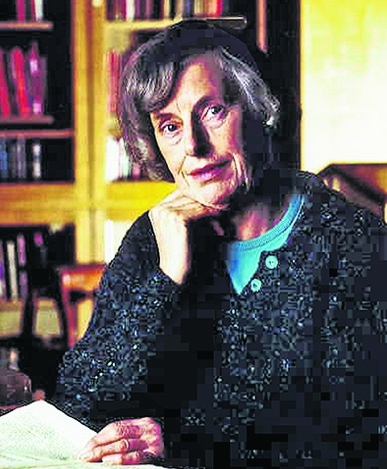
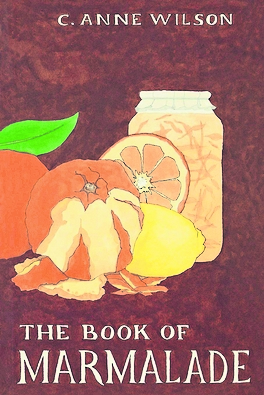


Of all the accolades handed to C Anne Wilson, one of Britain’s first professional food historians, the most unusual was for her history of marmalade, which in 1985 won a prize for its peculiar subtitle.
The Book of Marmalade: Its Antecedents, Its History and Its Role in the World Today, Together With a Collection of Recipes for Marmalades & Marmalade was a scholarly feast from Wilson, who was known for her meticulous research.
“Every few years in the correspondence columns of The Times the argument about marmalade is resumed,” she wrote in the introduction. “It seems almost unsporting to produce a book which will settle the argument once and for all. But the long, complicated story of marmalade and its antecedents has fascinated me for some time.”
The Book of Marmalade traced the 2,000-year history of the popular fruit preserve to early Greek and Roman physicians, who prescribed concoctions of “melomeli”, a quince and honey paste, as a digestive aid. Eventually Portuguese and Spanish sailors brought it to British shores in 1495. It was thought to contain aphrodisiac powers and in the Tudor period prostitutes became known as “marmalade madams”.
Though steeped in rigorous evidence (and detailed footnotes), Wilson’s histories were also known for their recipes, and The Book of Marmalade included 21 historic and modern dishes.
Her appetite for the subject was first whetted in the winter of 1964 when, as assistant librarian in the Brotherton Library at Leeds University, she undertook the task of cataloguing 600 rare books on food and cooking that had been gifted by John Preston, a private collector. She rose to the challenge and condensed her key findings into what became her magnum opus: Food and Drink in Britain from the Stone Age to Recent Times (1973), an impressive socioeconomic history of culinary culture.
It covered fishing during the prehistoric period — through “funnelshaped basketwork weels or traps, drag-nests or lime-bast or nettle fibre held between two boats” — through to the development of manufactured foods such as margarine. Illustrations included the milking of a cow during the medieval period. It also featured old recipes for, among others, “spinee”, a thickened cream confection: “Take the flowers of the hawthorn, clean gathered, and bray them all to dust, and temper them with almond milk, and allay it with amidon, and with eggs will thick, and boil it. And mess it forth; and flowers and leaves laid above on.”
Wilson’s later works included A Book of Fruits and Flowers, published in 1984, and Water of Life: A History of Wine-distilling and Spirits from 500BC to AD2000, which was released in 2006.
She started the Leeds Food Symposium in 1986, an annual conference inspired by the Oxford Symposium that was founded seven years earlier by the food writer Alan Davidson and the social historian Theodore Zeldin.
Like Wilson’s books the symposium, held first in Leeds and then York, combined the practical with the scholarly: there were talks from food experts and museum curators, as well as butchers and fruit growers. The first one was themed “Banquetting Stuffe” and included culinary examples (which the crowd could taste) from late medieval and renaissance feasts, such as gingerbread houses and sugar paste playing cards. Other themes covered were: “Crunch . . . Historic Biscuits” and “Sausages and Boars Heads”.
Constance Anne Wilson was born in east Gower, near Swansea, in 1927. She was always known by her middle name. Her father, Rowland Wilson, was a professor of mathematics at the Swansea University and her mother, Constance (née Laycock), had been a maths graduate at Cambridge University but gave up her teaching post when she married.
Both were originally from Yorkshire.
Growing up by the sea, Anne liked to dive from the rocks and swim to the bay, and she kept up an annual tradition from her childhood of paddling in the water on Christmas Day. At Swansea High School for Girls she was shy and studious and in 1945 went up to Girton College, Cambridge, to study classics, where she thrived. After university she began training as an almoner but the work did not suit her introspective nature.
She took a job as a secretary with the Society of Genealogists in London instead. After another secretarial position at the BBC, she completed a twoyear diploma at the London Institute of Archaeology under Sir Mortimer Wheeler. In the evenings she studied for a qualification in librarianship.
She moved to Leeds in 1961 and served as librarian for classics, archaeology and ancient history, then later art and music, until her retirement in 1992.
In later years Wilson played clarinet for an amateur orchestra in Leeds. She was a self-effacing, private person who only divulged information about herself when absolutely necessary. She never married — her great love affair was with books. Her sister Caroline survives her.
After its publication, The Book of Marmalade inspired an annual marmalade competition, held at Dalemain Mansion in the Lake District, which still continues to showcase the book every year.
C Anne Wilson, food historian and librarian, was born on July 12, 1927. She died on January 8, 2023, aged 95
Email: obituaries@thetimes.co.uk