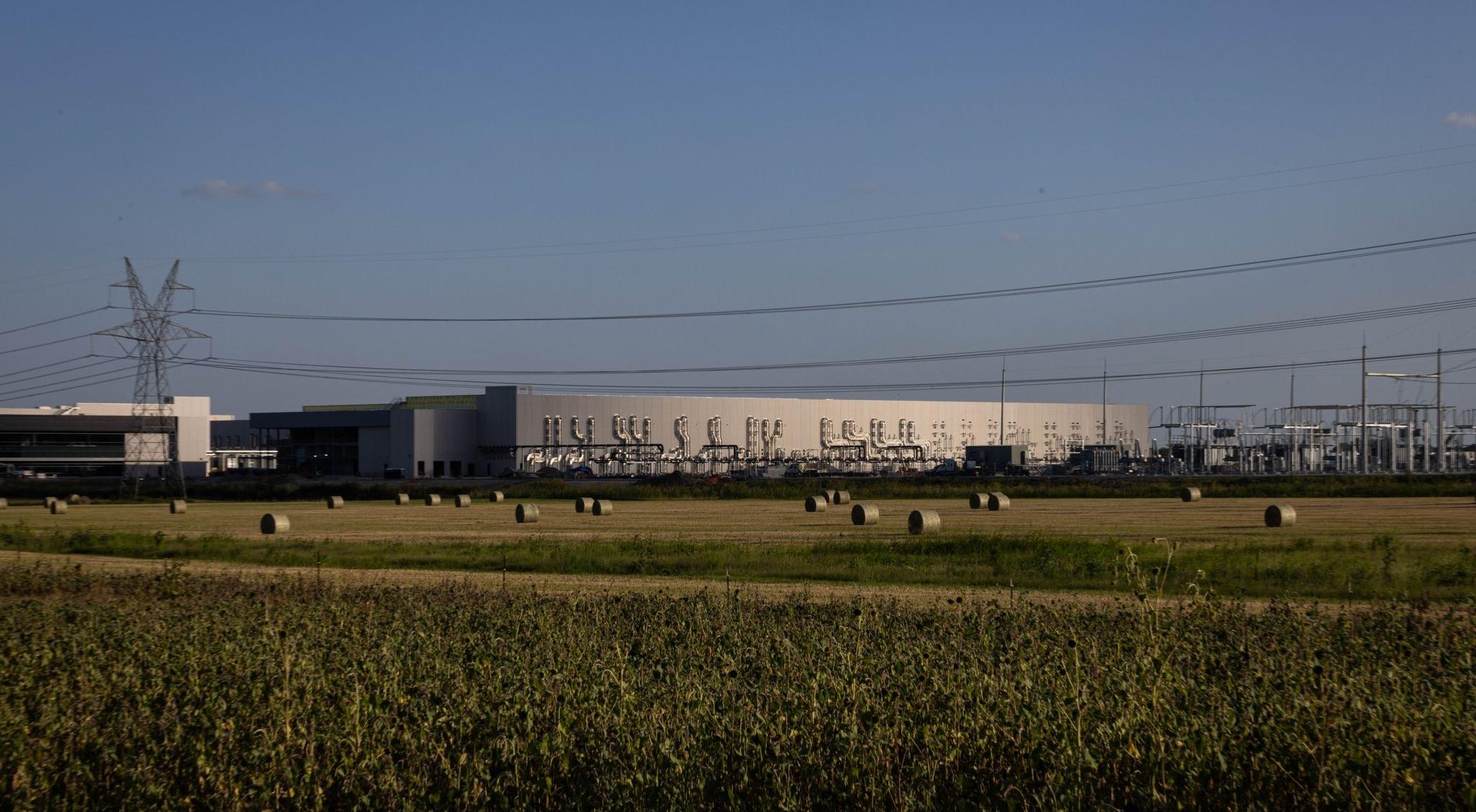



A couple of years ago, when Williamson County Commissioner Terry Cook tried to form a local groundwater conservation district, the overwhelming reaction was: “Don’t tell me what to do with my land, my water.”
“We got nowhere,” she said.
Then came the data center boom. Now, as rural and suburban areas like Cook’s see an explosion of interest from developers of the massive computing centers, many are scrambling to form the voter-approved districts, which manage aquifers and issue permits for groundwater withdrawals.
Groundwater supplies the state with half of its water, and nearly all drinking water in rural Texas comes from below ground. But in areas without groundwater conservation districts, or GCDs, landowners are free to pump without limits or disclosure.
That lack of oversight may be a draw for some data center developers. Nearly a quarter of the 630 data centers planned, under construction or operating in Texas are in areas without groundwater conservation districts, according to a Hearst Newspapers analysis.
The analysis found that nearly 100 data centers operating or under construction are in areas not covered by GCDs. An additional 61 are planned in these areas, as of Oct. 15.
Communities across the state are now rushing to create these districts in order to have some control over groundwater.
“There’s been a huge increase in interest,” said state Rep. Cody Harris, a Palestine Republican and the chairman of the committee that oversees groundwater regulation.
There are 98 groundwater conservation districts in Texas, covering 70% of the state. Adam Foster, the executive director of the Texas Alliance of Groundwater Districts, counted at least 10 active efforts to form new districts across the state, including a proposed district spanning 17 counties in Northeast Texas.
Foster said the growth of data centers across Texas has been the “main driver” of efforts to form new GCDs, as communities worry that the large computing centers will drain their aquifers.
But it’s hard to know how much groundwater the projects plan to use. This summer, Harris oversaw a contentious committee hearing during which lawmakers lambasted data center operators for ignoring requests by state agencies to answer questions about how much water they use and where it comes from.
Unless companies respond to that survey, there’s no way to know how much groundwater data centers are consuming. Even within GCDs, developers can purchase water directly from a municipality without filing a permit.
Rule of captureGroundwater in Texas is governed by a 120-year-old doctrine known as rule of capture, which gives landowners an almost absolute right to pump groundwater below their property, no matter how that pumping affects their neighbors.
But GCDs have some power to step in. These districts model the amount of available water in an aquifer over the coming 50 years and issue permits for large users.
New districts have to be approved by voters and are usually first formed through legislation. The Texas Commission on Environmental Quality can also create districts in response to community petitions or by designating an area as a priority for groundwater management.
The state’s newest groundwater district is likely to be in East Texas’ Houston County.
Last year, locals there grew alarmed when they heard about a plan by Kyle Bass, a Dallas businessman, to drill dozens of wells and pump nearly all of the area’s available groundwater for export to areas “south of Waco and… north of Dallas-Fort Worth.” Bass hasn’t said what he plans to do with the water, and he hasn’t said it’s for data centers.
Hundreds of people showed up to a meeting last year of the Neches and Trinity Valleys Groundwater Conservation District to protest Bass’ permit application.
But that district covers only Anderson and Henderson Counties. In Houston County, landowners had nowhere to turn. Under the rule of capture, Bass could pump as much water as he wanted.
“That project triggered ... concern is an understatement,” said Amber Stelly, the general manager of the Consolidated Water Supply Corp., a utility that provides water to unincorporated Houston County.
County commissioners quickly convened a committee to investigate forming a groundwater district, and this year, they petitioned TCEQ for its creation. The state agency considered the petition in a public hearing in September but has yet to rule.
“In the past, a groundwater district was opposed, and the very people that opposed it then are very much in favor of it now,” said Jim Lovell, Houston’s county judge.
Data centers plannedCook wasn’t aware of an active effort in Williamson County to form a GCD. The suburban county sits mainly over the Trinity Aquifer, a prolific groundwater source that extends through Central Texas. There are eight data centers planned in the county, with three already operating and one under construction.
In Northeast Texas, 17 counties have banded together to create one massive groundwater conservation district. Gregg County Judge Bill Stoudt said the effort began after Harris approached him and other local leaders, warning that East Texas’ abundant water supplies were under threat.
The effort was catalyzed by Bass’ project, Stoudt said, but local officials are concerned about export projects more generally.
The 2026 regional water plan for the Dallas area identifies four East Texas counties for future water supply, noting that in areas without a GCD, “there are no pumping regulations or limitations.”
According to Hearst’s analysis, 63 facilities are planned or operating in Dallas County, which isn’t covered by a GCD. Most of the water used by North Texas cities comes from rivers and reservoirs, but groundwater from the Trinity Aquifer supplies many rural communities in the county.
‘A huge issue’This year, Foster of the groundwater districts alliance told lawmakers that he surveyed groundwater district managers to understand their concerns around data centers.
Of those who responded, 84% said they had already received inquiries from data center developers, had an active permit application for a facility or expected to get one soon.
Several districts noted that the water required for power plants to generate electricity for data centers was substantial and “could create a huge issue” if not accounted for, Foster said.
A survey by the Texas Water Development Board does not ask data center developers about their indirect water use, which includes power generation.
Many districts noted that construction-related water use could be substantial. “It’s a lot of water over a short period of time, and when they don’t foresee that in the planning process, that can cause problems for a district,” Foster said.
During a special session last year, Harris filed legislation that would have effectively overturned the rule of capture. He said he intends to revisit the issue when the Legislature convenes again in January.
“I think it’s going to be a difficult task to change the rule of capture, but we at least need to talk about it,” he said.