This gorilla gives me impostor syndrome
Could he impress the ultimate alpha?
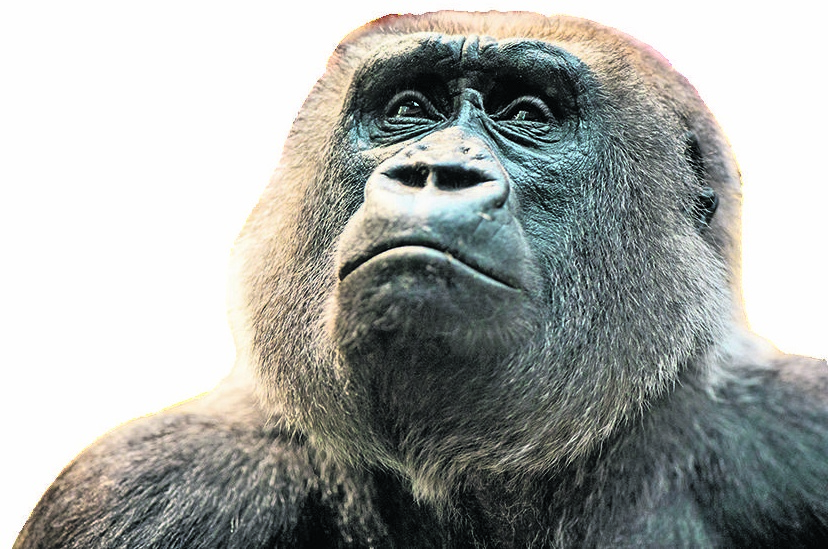


Kiburi the silverback gorilla arrived at London Zoo last month — a dark mass of almost impossible muscle topped with a cross-looking face. I say “cross-looking”, but that’s just me ascribing human emotions to a gorilla.
Actually he was surprisingly chilled.
And as well he might be, because in many ways it was a moment of optimism, holding out the prospect of future baby gorillas and a small win in the battle for survival of an endangered species.
All the same, the coming of Kiburi caused me a familiar angst. Silverbacks recognise hierarchy and leadership, and are pretty keen on their own authority. The last time London Zoo had a silverback it would get furious every time it saw the zoo’s director general, sensing a rival. This, of course, could only burnish my predecessor’s authority.
Now there’s a new gorilla and a new zoo chief — me. What if Kiburi turns out not to be the slightest bit bothered by me? The truth behind my ever-present impostor syndrome will then have been exposed by an insufficiently angry primate.
Gorillas are pretty open about their feelings. Animals — like humans — have strong and not-always-rational opinions. One of our spider monkeys apparently once took a strong and irrational dislike to a keeper. The poor woman was made to feel unwelcome every time she went into its enclosure, and the monkey resisted every hand of friendship that she offered. Eventually she went off on maternity leave, and when she came back a year later the spider monkey still hated her.
Animal animosity may be new to me, but managing sensitive relationships is not. Strangely, for a man who can get quite anxious, I spent most of my career in Whitehall and was our man in Tel Aviv for five years. It’s a paradox in many ways — people who are a bit driven seek out jobs that test their comfort levels.
And I think I did a useful job in the Middle East, then later as a senior civil servant in the Department for Digital, Culture, Media & Sport and as head of digital transformation for the NHS. But the quiet life it wasn’t.
Things could have gone another way. My degree was in philosophy and theology, but one summer I spent several months in a dry coastal forest in Tanzania on an ecological expedition. It was there that I conceived a fascination with social insects — a fascination I have never lost — and I spent my time correlating termite damage against tree species across a thousand specimens. In 1993 I published the ensuing research paper in a moderately respectable scientific journal. When I started dating my wife I proudly showed her my paper on termite feeding preferences. She neither ran away nor feigned any actual interest. We got married, had two daughters and they liked termites too.
My diplomatic career has had traces of this fascination for wildlife throughout. On my first posting, in the Philippines, I arranged for Prince Charles, as he was then, to be given a tarsier — a tiny lemur-like primate with huge eyes — to highlight its threatened status. (He did, of course, give it straight back.) In Iran I used to visit the turtle-hatching projects on the island of Qeshm, where hundreds of the creatures were saved through their eggs being collected and moved to protected beds. In Israel we took in Sophie, a labrador who didn’t make the grade as a guide dog — she once climbed up on the dinner table at the ambassadorial residence to steal bread roll from a former Israeli prime minister.
Animals’ opinions, like ours, can be strong and not always rational
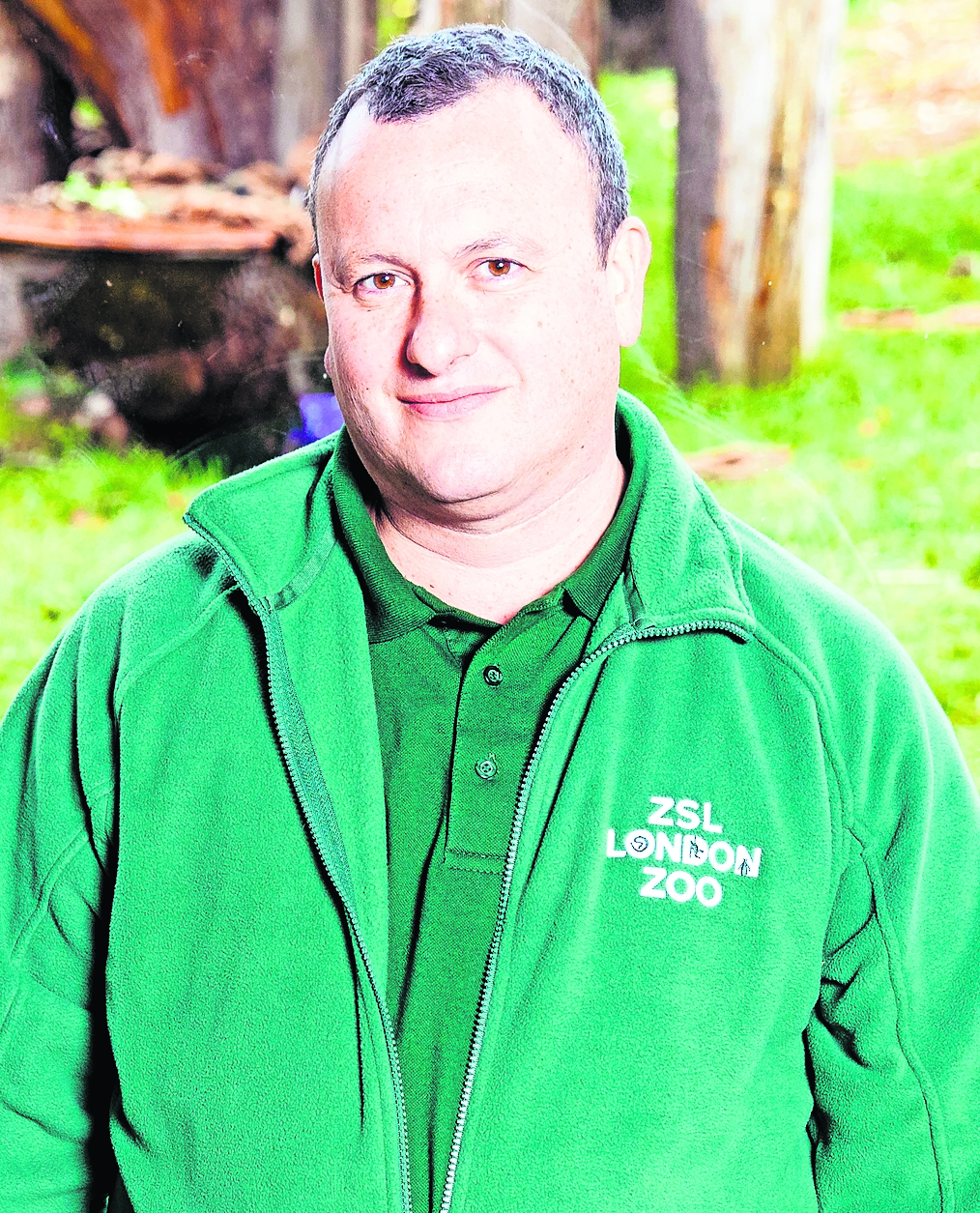
Since Israel I have spent a relatively animal-light and stress-heavy few years in Whitehall, in charge of cyber-security strategy and digital policy, and several more with the NHS leading its digital transformation — the NHS Covid pass was built by me and my team. And now I have become a zookeeper, or to be precise, the director-general of the Zoological Society of London (ZSL).
It is a job I have coveted for decades. When a friend and fellow ambassador was appointed to the role a few years ago, any joy I felt for him was obliterated by a sharp jealousy that he had got my job.
And now I’ve got my job, alongside Kiburi, though my role is less precisely defined, because the zoo does so much. We are the world’s oldest scientific zoo (as I never tire of telling people, whether they want to know or not) and we also run Whipsnade Zoo. And we have an Institute of Zoology with 140 scientists doing research in conservation, along with a global network of conservation teams and projects.
There is plenty to stress about. For example, zoos need to reinvent themselves for each new generation and make the case for why keeping animals in captivity is not only acceptable but a key part of conservation. I also need to raise money for essential modernisation — being the world’s oldest anything means possessing ancient buildings, which are also protected; what do you do with a gorgeous grade I listed penguin enclosure that you can’t possibly put penguins in? In a way, that is the most stressful thought of all — I have taken over an incredible enterprise with a place in the hearts of the British people and I need to ensure that it thrives.
In a small laboratory in one of our science buildings I found the eel woman, who studies eels collected from nearby rivers. She isn’t wild about me calling her “the eel woman”, but she is letting me do so as she recognises that what she is doing is for the greater good.
She observes her eels as they climb different ladders, to test which ones work best; the eels only get one go before being returned to the river.
This is all filmed by digital cameras, with their passage analysed by computer. It sounds like the maddest of projects, but it serves an important purpose. The law requires that eel ladders — basically ramps — are installed at barriers to their migration, yet we have a poor understanding of which ones work and which ones do not; this project should tell us the answer and help us to assist the eels in their passage upstream.
Just before I arrived at ZSL, one of our Sumatran tigers gave birth to three cubs. With only about 300 of the species left in the wild, the breeding programme is critical to their survival. The global studbook is coordinated by one of our team.
Sadly only two of the cubs survived, but they are exquisite, and spend their days playing and sleeping. In the evening I go down and watch them.
Do I miss my old life? I suppose I miss the car and driver, the house with a flag, the unearned respect that ambassadors get. Sometimes I am even wistful for the shenanigans and politics of Whitehall. But then I get to watch tiger cubs play.