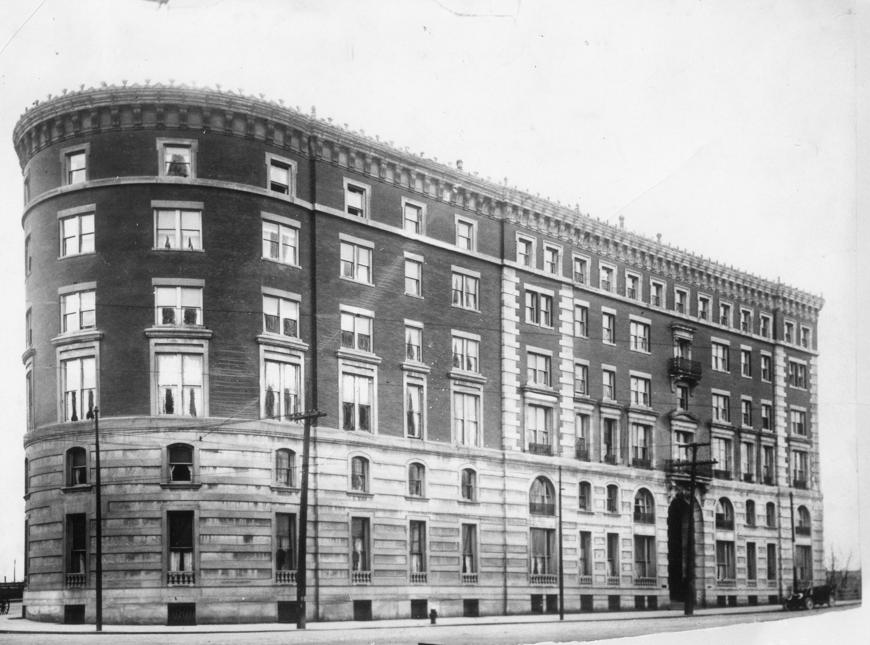


The excitement was building in Boston as September blurred into October 1925. A castanet-wielding splash of international flavor was coming to town. After a $60,000 renovation, the posh Hotel Buckminster was set to open a Spanish-style dining room and lounge. The new restaurant was modeled after “certain rooms in the House of El Greco,’’ The Boston Daily Globe reported, going into rich detail about the decor. Famed Spanish dancer Señorita Arosa would entertain at the opening, along with the brave toreador Ramiro.
In its salad days, this is how the Hotel Buckminster was known, as a place of sophistication and glamour. The hotel, which had lost its sparkle in recent years, unceremoniously shuttered last month, another victim of the pandemic that has decimated the country’s hospitality industry. The announcement was made on the hotel’s now-defunct Facebook page, saying the hotel had closed for the safety of staff and guests.
“We will be canceling all existing reservations moving forward. We do not have plans of reopening in the future at this point in time. We thank you for your patronage,’’ Trina Nolan, the hotel’s manager, wrote.
The Buckminster, located in a flatiron building at the intersection of Beacon Street and Brookline Avenue, opened at the turn of the 20th century in a barren stretch of Boston then called Governor’s Square. Fenway Park was more than a decade away from opening, and as late as the 1910s, the grand, six-story, Beaux Arts-style Buckminster sat in a nearly barren patch of the former mud flats with few other buildings in the vicinity.
“It wasn’t just a hotel,’’ said Boston historian Anthony Sammarco, “it was a luxury hotel. It was so impressive that it spurred on much of the development of what eventually became Kenmore Square.’’
But the Buckminster, which was designed by one of Boston’s most respected teams of architects, quickly became known for something else. In 1919, the hotel was where the plan was hatched to rig the World Series. Joseph “Sport’’ Sullivan, a Boston bookmaker and gambler, and Arnold “Chick’’ Gandil, first baseman for the Chicago White Sox, crafted a scheme for the White Sox to lose the World Series to the Cincinnati Reds. It was, according to the Globe’s Dan Shaughnessy, “the greatest professional sports scandal in American history.’’
The plot, which involved paying eight players from the White Sox $80,000 to blow the series, could have been hatched anywhere. But it happened in a room at the Buckminister, securing the hotel a place in sports history. There is even a plaque in the lobby commemorating the scandal.
Here’s a quick explanation of the Black Sox scandal, in case you somehow managed to get through life without hearing it: White Sox players were notoriously underpaid, and the eight players who were in on the con were happy to split $80,000 for losing the World Series. The loss would benefit bookies and also stick it to the team’s miserly owner, Charles Comiskey.
Legend has it that first baseman Gandil and burly bookie Sullivan sealed the deal to rig the Series in room 615 at the Buckminster. But not everyone is in agreement on that. (For a full dive into the scandal, check out “Eight Men Out: The Black Sox and the 1919 World Series’’ by Eliot Asinof.) David Allen Lambert, chief genealogist at the New England Historic Genealogical Society and a Fellow of the Massachusetts Historical Society, said there is no official record that the plan was hatched in room 615, or even within the walls of the Buckminster.
“For all we know, they could have made the agreement at a bar down the street,’’ Lambert said. “I would love to see the hotel registry to see what room Gandil was staying in.’’
The question of exactly where the deal was made has been raised many times. Even the date of the agreement is disputed.
“During the baseball season, a lot of people ask where the Black Sox scandal happened,’’ Ed Sheppherd, the hotel’s then-front desk manager, told the Associated Press in 2005. “But the only people that would know what room they were in have long since passed away.’’
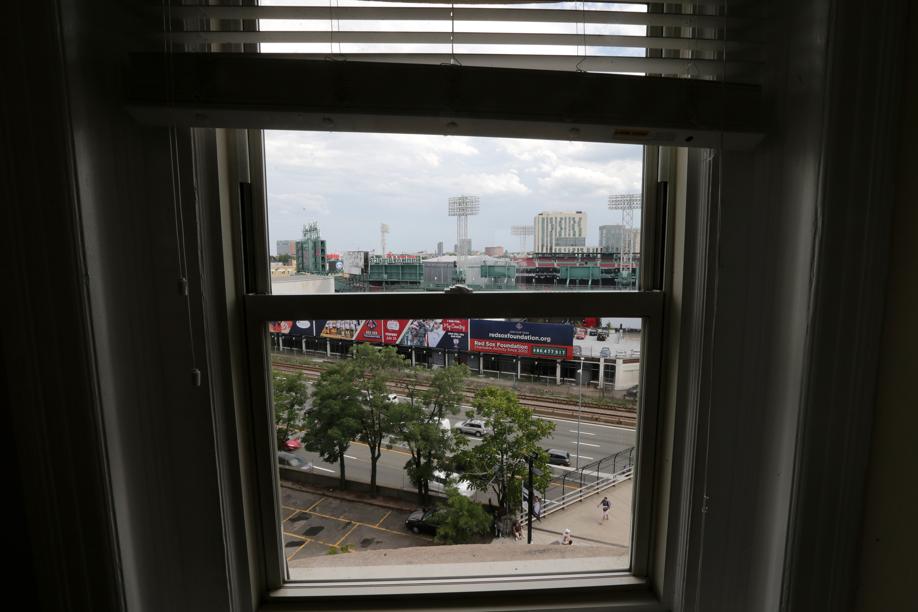
Even without the smudge of the scandal, Lambert said, the Buckminster would have hosted the greats of baseball given its proximity to Fenway Park. Take away the baseball, and the Buckminster still enjoyed a storied history filled with intrigue, celebrities, and even war stories. According to a story in the Globe dated Aug. 19, 1942, the Army took over the hotel during World War II for “military purposes.’’
“There was once an Italian prisoner-of-war camp, which was near Columbia Point in Dorchester, and there were so many prisoners that they actually used a portion of the Hotel Buckminster to house the Italian prisoners of war,’’ Sammarco, the historian, said. “Although I’ve never been able to confirm this.’’
The hotel recaptured its elegance after the war with the opening of Storyville, a 1950s nightclub that attracted big names, such as Louis Armstrong, Billie Holiday, and Sarah Vaughan. According to Sammarco, who is working on a book about Kenmore Square, the club had a remarkably diverse audience for the era. It was so upscale that legend has it Ted Williams was denied entry one evening because he wasn’t wearing a tie.
There was also music in the basement. Radio station WNAC located its studios there in March 1930, and remained there for decades. Before Uno Pizzeria & Grill occupied the front of the Buckminster, Howard Johnson’s was in that space.
“It was so strategically located that everybody wanted to be in this building,’’ Sammarco said.
Then the 1960s came along.
The Hotel Buckminster changed hands several times in its history. It even changed names. But the biggest change came in 1966, when the Buckminster, which was then called the St. George, became a dorm. Grahm Junior College bought the hotel and renamed it Leavitt Hall. Grahm wasn’t exactly the Harvard of junior colleges, and it lost its accreditation before going bankrupt in the late 1970s.
By 1980, the bloom was off the rose. The once-revered Buckminster had become a rooming house, and former guest rooms were outfitted with kitchenettes. In the mid-1980s, the owner was accused of driving up rents in an effort to force tenants out so he could convert the building to condos.
Fast forward to the 1990s and 2000s, and the Buckminster was once again a hotel. But things had changed. Suites that once housed visiting celebrities were chopped up into smaller rooms. It was essentially a budget hotel with a great lobby in a good location. Last year it was featured in a Globe travel story with the headline “Boston on the cheap,’’ a far cry from the 1925 opening of the Spanish Room.
In the history of the Buckminster, COVID-19 will be yet another chapter. Whether it’s restored to its former glory and reopened as a hotel or converted to condos, the Buckminster will do what it has always done best, anchor an ever-changing neighborhood in an ever-changing city.
Christopher Muther can be reached at christopher.muther @globe.com. Follow him on Twitter @Chris_Muther.