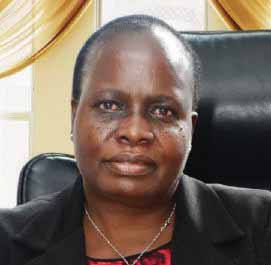


The EastAfrican engages Rose Auma Omamo, the General Secretary of Amalgamated Union of Kenya Metal Workers, and the national chairlady of Central Organization of Trade Unions-Kenya (COTU-K) womens Committee on the impact that ILO Convention C190 will have in the fight against GBV in East Africa.
What is the current status/level of domestic abuse in both formal and informal social and work settings?
Violence against women remains a major threat to both the formal and informal social work settings in Kenya. Lack of jobs has put both women and men into precarious conditions for purposes of survival, paving space for sexual harassment, sexual exploitation and abuse. Again, domestic violence against women tends to increase during every type of emergency, including epidemics and pandemics such as Covid-19. Older women and women with disabilities are likely to have additional risks and needs. Women who are displaced like stranded migrant workers in countries of destination, refugees, and those living in conflict-affected areas have particularly been most vulnerable.
Violence against women is highly prevalent for live in workers such as domestic workers and those whose nature of work involves night shift. Intimate partner violence has also become a common form of violence during this period of Covid-19 pandemic. Most women have been beaten by their husbands and many have lost their lives due to domestic violence and substance abuse. Early pregnancies and marriages have also been realised during this period.
What impact will the ratification of ILO Convention C190 have in the fight against domestic abuse?
Since the Convention recognises the right of everyone to a world of work free from violence and harassment, including gender-based violence and harassment, and domestic violence, the ratification will help governments in East Africa to put up measures that will be taken in case of domestic violence. The ratification of C190 will help countries to pick on relevant articles on domestic violence and domesticate.
What are trade union women leaders doing to help protect formal and informal women and girls in social and economic settings from sexual abuse and harassment (universities, workplaces, home)?
Even though there exists national policies addressing sexual abuse and harassment such as those concerning occupational safety and health, equality and non-discrimination, trade union women have done a lot to curb GBV in the society. For instance, women trade unionists have carried out campaigns against gender based violence and sexual harassment at work places. They have also lobbied governments to ratify C190 because it is only through ratification that we can eliminate violence and harassment. Women within trade unions have also conducted education for formal and informal workers on GBV and sexual harassment. It is worth to note that there exists a Committee of Gender Champions, whose genesis is the work of women in trade unions. Committee of Gender Champions comprises of personnel who have been trained to handle disputes on GBVand sexual harassment at work place. Women trade unionists have also worked hard to ensure that women are part of negotiations for development of Collective Bargaining Agreements with clauses that protect women and girls from sexual abuse and harassment at work place.
What impact will the ILO Convention 190 have in the fight against FGM?
Female Genital Mutilation (FGM) in Kenya, although widely practiced, is illegal. Many girls have suffered FGM and the government has been at the fore-front in fighting against FGM.
Looking at the definition of violence and harassment in C190, it is very clear that FGM is unacceptable and therefore, this Convention will help in the fight and hopefully once ratified and domesticated, FGM will be no more.
How does the Convention help protect women and girls who face cultural alienation in the face of running from FGM?
The Convention provides that victims of gender-based violence and harassment in the world of work have effective access to gender-responsive, safe and effective complaint and dispute resolution mechanisms, support, services and remedies. Therefore, FGM victims are not left out. C190 also provides mitigation procedures that can be used to protect girls who run from FGM. It also provides legal, social, medical and administrative support measures for complainants and victims; that can be used in the case of FGM victims.
What impact will the ILO Convention 190 have on forced marriages, child/ early marriages?
Forced/early and child marriages in Kenya, widely practiced in some cultures in Kenya are illegal. Many girls have had their education and future prospects go into waste in early and child marriages even though the government has been fighting the vice.. Looking at the definition of violence and harassment in C190, it is very clear that forced marriages, early and child marriages are unacceptable and therefore, this Convention will help in the fight and hopefully once ratified and domesticated, child marriages will be a thing of the past.
ROSE AUMA OMAMO
Rose Omamo is the General Secretary of Amalgamated Union of Kenya Metal Workers.
She is the National chairlady of Central Organization of Trade Unions-Kenya (COTU-K) womens Committee. Apart from being the National Chairlady, Rose is also an executive board Member of Central Organization of Trade Unions-Kenya. Rose is an elected member of Organization of African Trade Union Unity (OATUU) Women Commission in charge of information.
She is also an elected member of International Trade Union Confederation (ITUC) Africa Women Committee. She represents ITUC Africa in the Africa, Caribbean Pacific European Union (ACP-EU) follow up Committee.