PICTURES RISHI RAGOONATH


Venezuelan labour has slowly been transforming the agriculture and dairy industries operating in the southwestern peninsula.
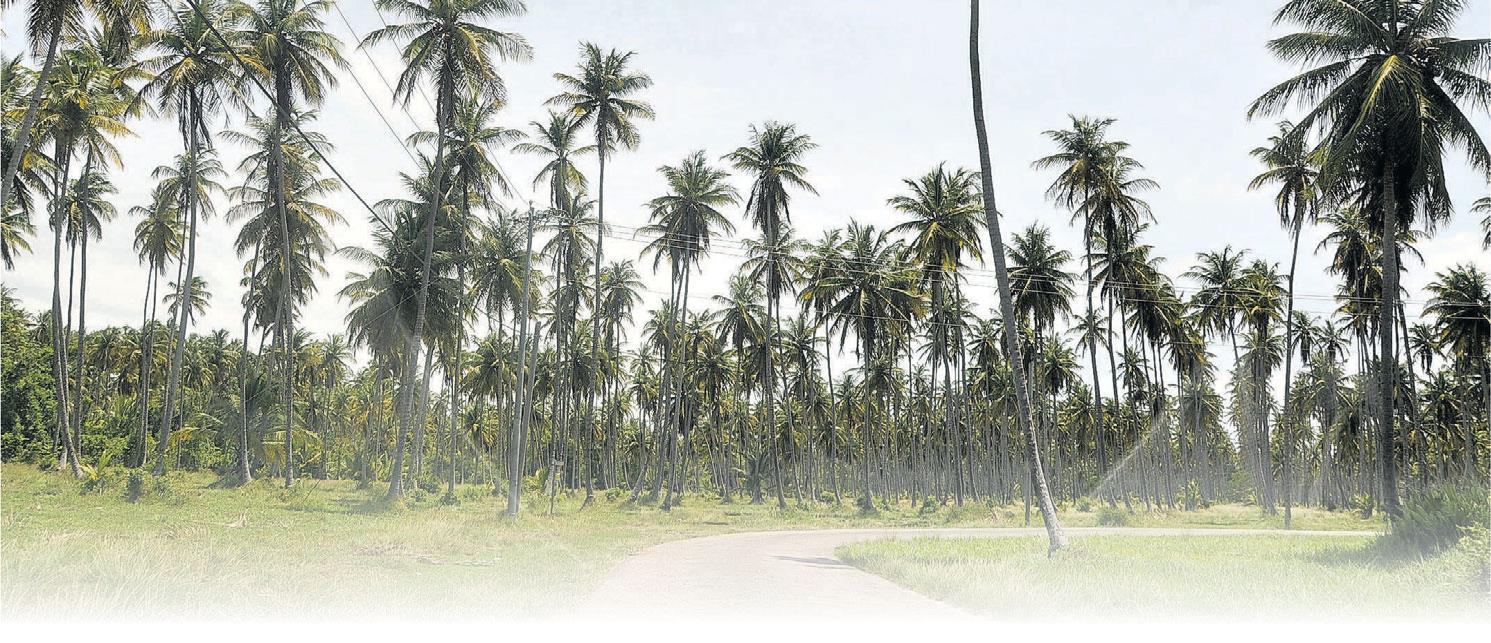
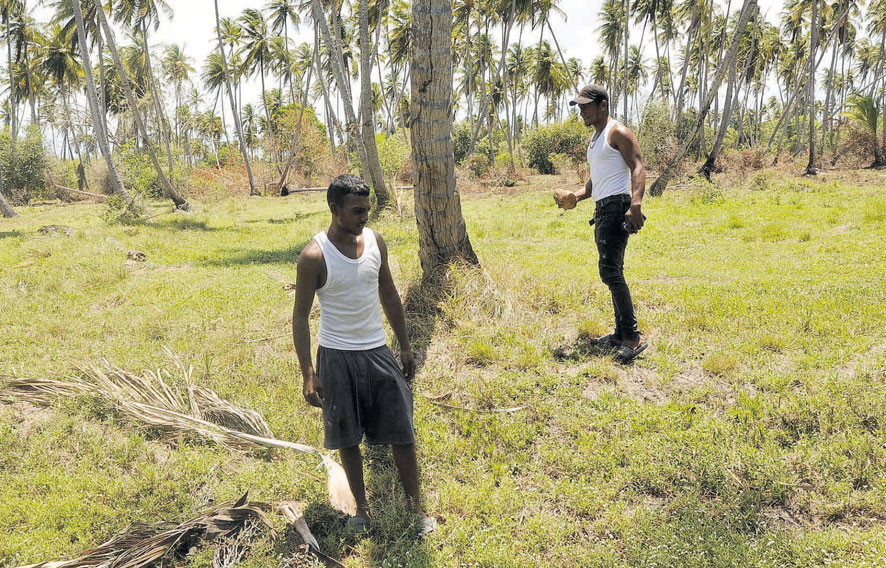
In Chatham, Venezuelans work on small scale watermelon and small crop farms. In St Quintin, Constance and Columbia estates, they work in the coconut fields, collecting, cleaning and grating coconut for the manufacture of coconut oil and other products.
There are over 10 coconut oil producers in the peninsula and most of them use Venezuelan labour.
In Icacos, small groups of Venezuelans work with dairy farmers in beef production. They take the animals out for grazing and even assist as domestic helpers.
During a recent tour of the peninsula by Guardian Media, teams of Venezuelans were seen inside houses, on the streets and on the estates.
Among those hiring the foreigners was Andrew Toolsie, the manager of Deochand Ramdhanie coconut plantation.
Ramdhanie, a former drug dealer now turned a real estate businessman gained notoriety in September 1998 when he escaped from the Princes Town police station and fled to Tucupita, Venezuela where he was arrested by Venezuelan police and the United States Drug Enforcement Agency, a month later.
During an exclusive interview, Toolsie said the Venezuelans may be the key to saving the dying agriculture estates of the peninsula.
He said the century-old coconut estates had fallen into ruin because of acute labour shortages and this was why some landowners were now ploughing down estates to make way for real estate development.
At least 700 acres of estate lands have already been cleared.
These include 100 acres in Granville, 250 acres at Gal far Es tate, 15 acres at Ica cos, 100 acres at Bam boo De vel op ment, 150 acres by Bho la’s de vel op ment at Per sever ance Es tate, and 100 acres at Co lum bia Es tate in Fullar ton.
With the recent influx of Venezuelans coming into T&T, Toolsie said more Venezuelans have been seeking work. Most leave the peninsula but a few choose to stay.
He noted that Venezuelans have assisted greatly in collecting coconuts for processing, cleaning the fields and doing construction work.
“We have had labour shortages in the past but now the Venezuelans are working legally for us,”
Toolsie said. He added, “They are mainly coconut collectors. The locals don’t want to do that kind of work again. We have over 100 acres of land and we have about five Venezuelans working.”
Asked whether their salary was comparative to what is paid to Trinidadians, Toolsie said yes.
“We pay them the same as Trinidadians. They stay the three months go back to Venezuela and then come back to Trinidad.”
Meanwhile, at Sandy Point coconut processing facility, the owner Alfredo John Williams said the Venezuelans could very well be the ones who transform the industry. Admitting that he has employed about six Venezuelans over the past two months, Williams said he is careful to hire only those who are here legally.
He also said they were eagerly awaiting the time when Venezuelans can finally work on the estates.
“There is a lot of work to be done. There is work for everybody,”
Williams said. He denied that Venezuelan labour had turned around the fortunes of the coconut estate owners.
“Coconut industry is dying because of the red palm mite but we are still getting some profit out of it because we make coconut oil here,” Williams explained. He also agreed that Venezuelans were good workers. Once registration is completed, Williams said Venezuelans with no criminal record will be given the opportunity to work in T&T for a year.
Saying people must be sympathetic to the plight of Venezuelans, Williams said, “We need to offer help to them. We need to find a way to revitalize agriculture in the peninsula because youths are going astray.” He said there was no community centre or sporting facilities in Icacos.
“People are too idle. If we can get a community centre or some kind of activity to help our young people, this will be a better place,” he said.
Junior Narcis, who moved to Icacos from Carapaichaima said he was not opposed to utilizing Venezuelan labour to revitalize agriculture. Narcis said, “I learn this job when I got here and just like me, other people could learn too.”
Alexsi Soomai, the Venezuelan who was sweeping the yard, said he has been living in Trinidad for 55 years. He said his grandfather was a Trinidadian and he came here to live years ago. Soomai said both Trinidadians and Venezuelans could work together for the benefit of the agriculture industry.
Meanwhile, Icacos resident Stallone Ramkissoon said too many Venezuelans were being stigmatised and exploited even though they contribute favourably to agriculture.
“People take advantage of the Venezuelan people. Some of our locals don’t want to work so stop fighting down the Venezuelans.
It has work for everyone,”
Ramkissoon said. He added that the Venezuelans work all day in the scorching sun for $100 a day. Trinidadians are paid between $250 to $300 a day.
Meanwhile, councillor for Cedros Shankar Teelucksingh predicted an increase in exploitation of Venezuelan people once the registration process is complete. From May 31, the government will embark on a registration process and Venezuelans without a criminal record will be allowed to work for a year.
Insisting he was hoping to see a complete revitalization of agriculture in the peninsula, Teelucksingh said, “I want to know what structure the Ministry of Labour and Agriculture will be putting in place so that we can benefit from the high level of labour and expertise we will be getting from the Venezuelan people,”
He added that the research teams in the Ministry of Agriculture must identify the categories in the labour market where Venezuelan labour was needed.
Saying proper controls and systems should be put in place to regulate labour, Teelucksingh said, “I foresee more exploitation of the Venezuelan people if proper systems are not put in place.” He also added that T&T citizens will be put at a disadvantage if proper structures were not put in place.
Contacted for comment, Agriculture Minister Clarence Rambharat said labour shortages were a problem identified in the agriculture sector.
“In my first year as Minister, I had 200 visits, meetings and discussions with farmers, farming groups and other stakeholders.
They identified land tenure as their number one issue and I made it my number one priority.
They identified labour shortages and the low productivity and poor attendance among local workers as their second priority,” Rambharat said.
He added, “ Since then some farmers have been able to secure short term work permits for workers from Africa, Guyana, Cuba and Venezuela.
They said the African and Venezuelan workers have worked well- Venezuelans not as skilled but very reliable and trainable.
However, the work permits are for short periods.”
Rambharat said it was for that reason that he supported the intuitive for the free movement of Agricultural Workers from Caricom and more recently for the exemption of Venezuelans who are in T&T from work permit requirements—subject to registration and background checks.
“The farmers are confident that a reliable supply of labour will improve farm productivity and alongside land tenure will allow them to improve their farms- drainage, water storage, physical amenities and farm security,” he added.