KEVIN SHERRINGTON
The wrecking ball Niland’s ‘triumphant’ life and fulfilling final chapter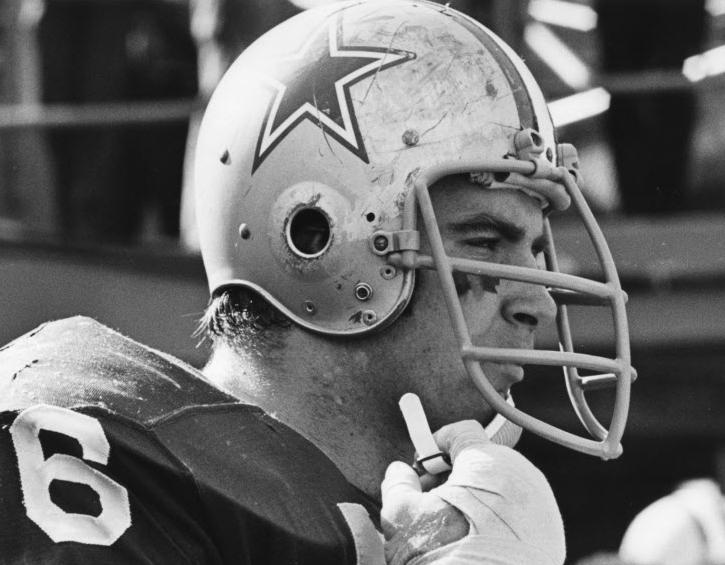



Of all the legendary linemen in all of the Cowboys’ hallowed history, only three drew more first-team All-Pro or Pro Bowl honors than John Niland. Fifth pick of the ‘66 draft out of Iowa. Left guard on the Cowboys’ first Super Bowl champion. From left to right in front of Roger Staubach in that Super Bowl season it was Ralph Neely, Niland, Dave Manders, Blaine Nye and Rayfield Wright, the first great offensive line in the organization’s long history of such.
Niland was its wrecking ball in the late ‘60s and early ‘70s, on the field and off.
The latter might have accounted in no small part for the fact that, two years after helping the Cowboys to their first Lombardi Trophy, the game’s greatest pulling guard, still in his prime, was gone, dumped in a deal to the Eagles at 31.
One of the reasons for the split reportedly was the acrimonious nature of contract talks between Niland and management. Tex Schramm took it personally anytime someone asked for a raise. He liked it even less if you were trouble, and Niland was trouble.
“Johnny Nightlife,” his teammates supposedly called him.
He was in many respects no different from many of his teammates when it came to drugs, alcohol and womanizing, but there was something that set him apart. An edge. He’d carried it since childhood. The adopted son of an alcoholic who worked as a bartender when he worked at all back in Amityville, N.Y., Niland could recount chilling stories of his father. Fights. A knife whistling past his face and sticking in the wall. The beatings his mother took.
Hugh Niland was his only son’s role model for all the wrong reasons.
“I turned out to be just like my dad,” John Niland told a reporter who called him up in 1994 after the former player called in to a local sports talk station to talk about O.J. Simpson’s arrest. He’d recognized something in the portrait emerging of Simpson. He saw in himself a flicker of the same rage. He’d visited it upon his first wife, Iree, and some of the dozens of women he cheated with.
Everything he did, it seemed, only fed the fire.
“When you inject all these products — the drugs, the alcohol and the adrenaline drug of sport, if you will — I was a basket case,” he said in ‘94. “I would play damn well on the field, but I also came home to a normal environment and I was an abnormal person.”
If the Cowboys won, he said, the job was to come down from his high in time to get ready for the next game.
And if they lost?
“So if my wife said anything [to make me angry],” he said, “I’d just pick up the stereo and throw it through the plate-glass window. If she made me angry in a persistent way, it was like another game. Here we were at home playing a game and, damn it, I was going to win.”
From the living room, he moved to the kitchen.
“One time I broke every dish in the cabinet.”
One night in the fall of ‘73, in what he’d later term a psychotic episode spurred by a bad trip on acid, Niland ran barefoot and bare-chested through his neighborhood in the middle of the night, knocking on doors, looking for his wife. After a neighbor called police, several responding officers were required to subdue a man who’d gone toe-to-toe with the likes of Nick Buoniconti and come out on top. The cops took him to Parkland, where he underwent a psychiatric evaluation before they released him to his employer.
If the Cowboys didn’t know all the stories about Niland, they knew enough. Most pro sports teams in those days lived by a simple motto. We will tolerate you until we can replace you.
Once Gil Brandt drafted Herb Scott in the 13th round of the ‘75 draft and Tom Landry determined he was good enough to play left guard as a rookie, the Cowboys decided they’d had enough of John Niland.
He played one season in Philadelphia before blowing out his knee in training camp the next year. He retired before the ‘76 season started. He was 32. Bright and well-spoken, he’d carved out several side hustles as a player. He was better prepared than most of his teammates to make the transition from football.
His personal life only got worse, instead.
The final strawThis is how bad it got: In 1983, between his divorce from Iree and the death of his mother, he was charged with theft of a suitcase full of his girlfriend’s jewelry before the charges were eventually dropped; arrested twice in two months for drug possession; indicted for cocaine possession; declared bankruptcy.
Not everything made it to a police blotter. The same year, he got into a fight with one of his girlfriends and hit her on the head. A couple of inches higher, he later told a reporter, and “I would have killed her, that’s how hard I hit her. I’m just grateful I didn’t.”
The final straw came in 1987, when he was found guilty of submitting false information to obtain a $300,000 loan. Served 11 months of a two-year sentence at a minimum-security facility in Big Spring.
Where had it all gone wrong?
“The difference between John and a child,” Brandt once said of Niland’s life after football, “is that somebody’s there to watch over a child.
“John didn’t have anybody.”
Even as he professed his innocence to The New York Times in the summer of 1990 after his release from prison, Niland conceded that lock-up was good for him. Gave him space to read and reflect on where he’d been and where he was going. He’d professed to be a born-again Christian years earlier, but he hadn’t exactly walked the walk. By all accounts, the stint in prison changed him. God did, he would testify. He made his penance. His first wife came to love him like a brother. He went through state-mandated drug counseling. Got a steady job. Married his hairdresser, Shaughn.
They remained coupled until his death Saturday at 82 after a long, debilitating bout with dementia.
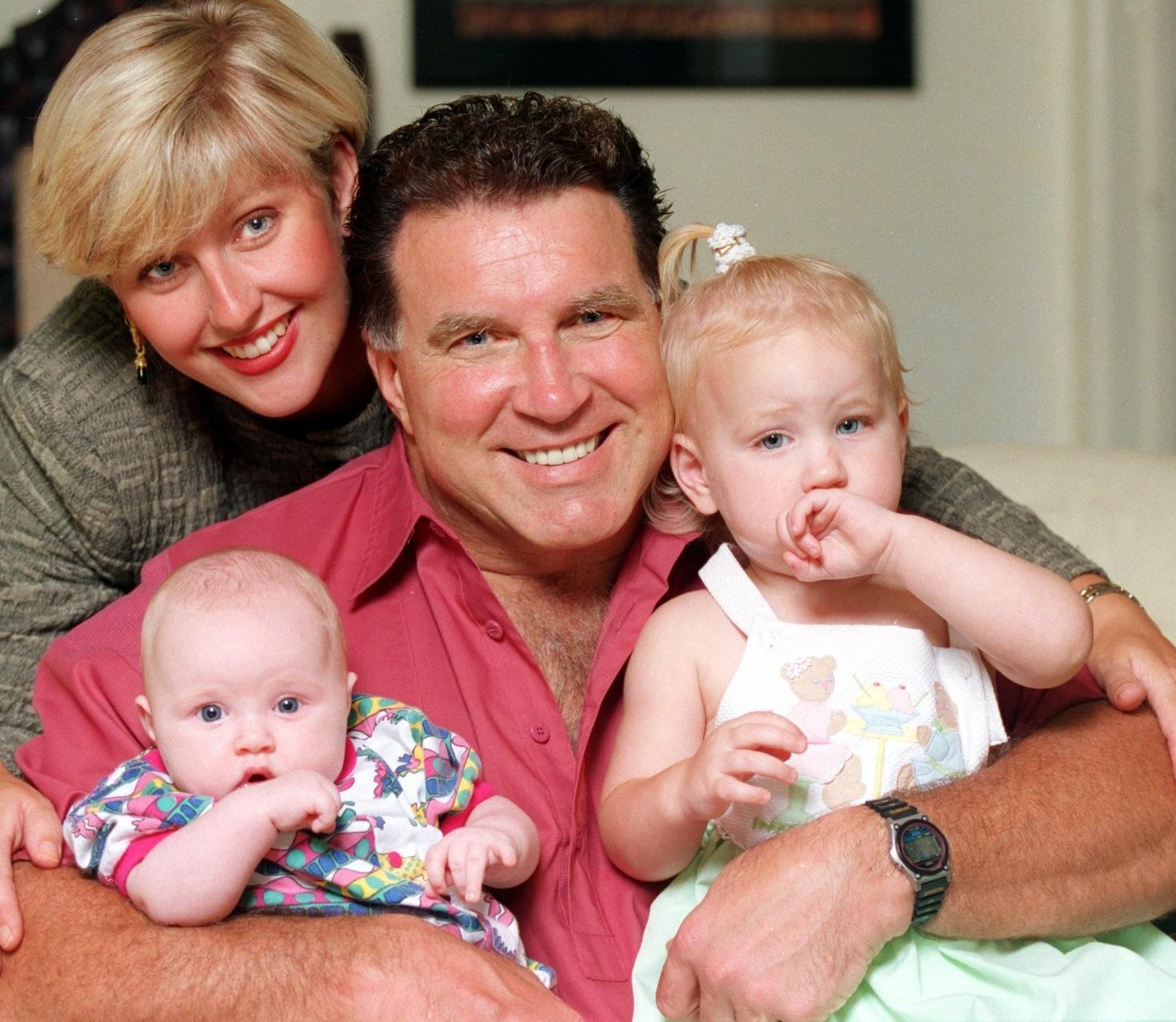
His daughters, Haven and Jordan, thought the world of a man who’d once terrified women around him.
“He was the best dad,” Haven told our Calvin Watkins. “He was so wonderful. I mean, he was really bigger than life. He taught me so many amazing things. He taught me that nothing is that serious.
“The things that really matter are family and your faith and just being kind to other people.”
Living with CTENiland’s second act in life wasn’t all roses. Dementia often left him confused and angry. His family blames CTE. They donated his brain to Boston University’s CTE Center, which studies chronic traumatic encephalopathy in male and female victims of repeated head trauma.
Cliff Harris, a Cowboys teammate in the ‘70s, saw Niland occasionally at his annual golf tournament to benefit Type 1 diabetes research. Niland was different then from the man he remembered.
“I’m really glad he got squared away in the end,” Harris said. “The life of a pro football player. ... The image is one thing. The other side of the equation is what’s going on with family, friends and your faith. You have to be able to manage all those things. Niland was struggling at times, I think. He became a man of faith, and it straightened him out.
“Glad to know that happened for him.”
As Brad Sham, the voice of the Cowboys, told me Monday, Niland confronted his demons, and if he didn’t stand them up like he did Bill Stanfill or Manny Fernandez back in ‘73, he could at least call it a draw.
“Ultimately,” Sham said, “the story of his whole life is a triumphant one.”
May the same be said of us all.