Perfect ricotta gnocchi
Here are some tips for making it at home — it’s easier than you think
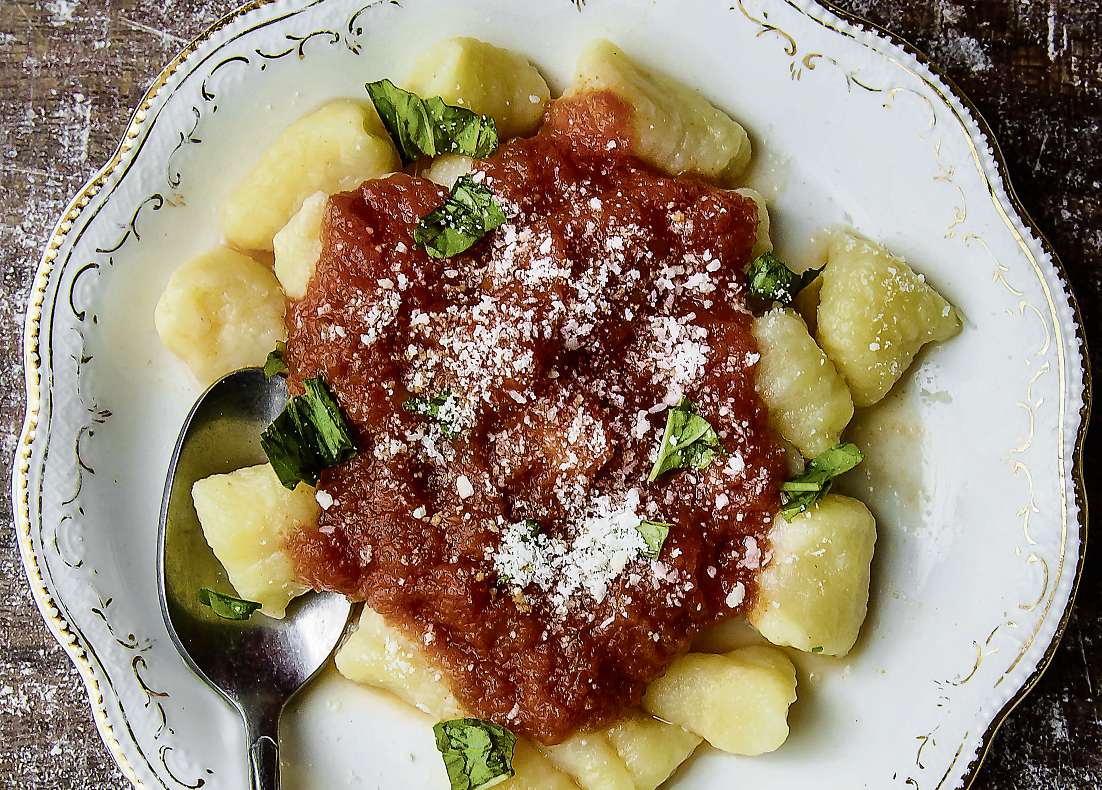
Ricotta gnocchi, shown with tomato sauce, is light and fluffy and easier to make than other types of gnocchi.
Rebecca White/Special Contributor
Rebecca White/Special Contributor


Homemade ricotta gnocchi may not be an average weeknight dinner, but with a little practice it can become a regular part of your meal rotation. And don’t worry, I was once like you, intimidated by the idea of combining cheese and flour in a delicate way that then requires rolling and cutting. It seemed … unattainable.
But these “little lumps” are quintessential Italian cooking. There are three varieties of gnocchi: potato, semolina (alla Romana) and ricotta. Even though the ingredients vary, there is a continuity that runs through each type: that the end result should be light and airy.
All three gnocchi require different techniques. Potato and ricotta gnocchi are similar because both are rolled into a nugget of sorts and cooked in salted boiling water.
Both indicate doneness when they float to the top of the water.
However, semolina gnocchi preparation is similar to polenta. The semolina is boiled with milk until thickened, then it’s poured out onto a surface to set. The gnocchi are then cut out of the semolina, placed into a baking dish, topped with cured meats, butter and cheese, and then baked.
These Italian morsels are beloved classic recipes that are served with the simplest of sauces, from browned butter and sage to the most decadent, Bolognese.
While all three gnocchi can be undertaken by a home cook, if you’re looking for the version that is most likely to result in resounding success, ricotta gnocchi is the way to go.
Light and pillowy, ricotta gnocchi is superior to its counterparts not just because of its fluffiness but also because of the ease of construction.
Ricotta gnocchi is significantly easier to make. There is no potato peeling, boiling or mashing involved like one must do with potato gnocchi. There is no constant stirring and hoping that the milk is cooked long enough to result in a semolina that sets and bakes correctly.
Ricotta gnocchi is a simple fivestep process that will quickly make you feel like a regular nonna.
Here are the steps to ricotta gnocchi:
■ Dry the ricotta.
■ Combine the ingredients.
■ Roll the dough into ropes.
■ Cut the dough into little lumps.
■ Cook the gnocchi in boiling water.
The following lessons were not all acquired on my first try. It took about three times for me to gain an ease and confidence with the dough. I had some help from a few trusted friends: J. Kenji LópezAlt, the scientist and food expert behind the Serious Eats website; Marcella Hazan, the goddess of all things Italian, and her Essentials of Classic Italian Cooking; Emiko Davies, author of Florentine, a true Italian inspiration; and the entertaining and educational Italian nonnas behind Pasta Grannies. Here are a few things I’ve learned: The less moisture the better. The more flour you add, the denser the gnocchi will become. Davies states that “too much flour will contribute to unpleasantly chewy gnocchi.” While she is referencing potato gnocchi in her explanation, this concept is also applicable to ricotta gnocchi. That is why removing moisture from the ricotta is the most important step.
Take the time to properly remove as much liquid as possible from the ricotta. Recipe after recipe directs cooks to drain the ricotta by placing it in a sieve for a few hours to strain out the liquid. But there is a more efficient approach. López says to line a plate with three to four paper towels and then spread the ricotta evenly onto the paper towels with a spatula. Using three more paper towels, blot the ricotta dry. This method results in dried ricotta in minutes, versus hours. When finished, gently scrape the dried ricotta into a bowl.
Weigh the ricotta to ensure proper dryness. Use a scale to accurately weigh the ricotta when finished. This will guarantee a dried ricotta that will require less flour.
López suggests reducing 12 ounces of whole milk ricotta to 8 ounces. Take the 8 ounces of ricotta and combine with 3 1 ⁄2 cups of flour and remaining ingredients, Parmesan and egg yolks.
Don’t worry about kneading the dough. As Pasta Grannies says, “Knead the dough just long enough to incorporate everything thoroughly. Then stop. You’re not trying to make pasta or bread here.” I chanted this quote in my head repeatedly while rolling the dough. It made me feel more relaxed with what I was creating.
Channel your PlayDoh years. While forming long ropes of gnocchi dough, I kept thinking back to my childhood when I would spend hours rolling out ropes of PlayDoh. I witnessed my children do the same. Thinking back to these moments made this portion of the cooking process seem like old hat.
Think rustic. Don’t worry about fancy indentions in the dough. This will come with more practice. I have yet to master the ridges simply because I want to focus on creating the perfect gnocchi bite. Ridges will come with time.
Cut evenly. Cutting the gnocchi into similar sizes helps to even out cooking time. A bench scraper significantly helps with this.
Freeze what you don’t cook. While there may not always be leftover gnocchi, I recommend setting aside a handful or two to place in the freezer. Ricotta gnocchi freezes easily, and you can quickly create a large stash in the freezer by saving some from each practice batch.
Get saucy. Hazan states that “gnocchi take well to many sauces, but three particularly happy choices are Tomato Sauce With Onion and Butter, Pesto and Gorgonzola Sauce.” I also tend to serve gnocchi with sauces, but there are times when I want more substance and go a bit rogue, say Gnocchi With Spicy Broccolini and Parmesan. But if I were forced to eat gnocchi with only one sauce, it would be with Hazan’s most beloved Tomato Sauce With Onion and Butter.
Rebecca White of Plano blogs at apleasantlittlekitchen.com.
But these “little lumps” are quintessential Italian cooking. There are three varieties of gnocchi: potato, semolina (alla Romana) and ricotta. Even though the ingredients vary, there is a continuity that runs through each type: that the end result should be light and airy.
All three gnocchi require different techniques. Potato and ricotta gnocchi are similar because both are rolled into a nugget of sorts and cooked in salted boiling water.
Both indicate doneness when they float to the top of the water.
However, semolina gnocchi preparation is similar to polenta. The semolina is boiled with milk until thickened, then it’s poured out onto a surface to set. The gnocchi are then cut out of the semolina, placed into a baking dish, topped with cured meats, butter and cheese, and then baked.
These Italian morsels are beloved classic recipes that are served with the simplest of sauces, from browned butter and sage to the most decadent, Bolognese.
While all three gnocchi can be undertaken by a home cook, if you’re looking for the version that is most likely to result in resounding success, ricotta gnocchi is the way to go.
Light and pillowy, ricotta gnocchi is superior to its counterparts not just because of its fluffiness but also because of the ease of construction.
Ricotta gnocchi is significantly easier to make. There is no potato peeling, boiling or mashing involved like one must do with potato gnocchi. There is no constant stirring and hoping that the milk is cooked long enough to result in a semolina that sets and bakes correctly.
Ricotta gnocchi is a simple fivestep process that will quickly make you feel like a regular nonna.
Here are the steps to ricotta gnocchi:
■ Dry the ricotta.
■ Combine the ingredients.
■ Roll the dough into ropes.
■ Cut the dough into little lumps.
■ Cook the gnocchi in boiling water.
The following lessons were not all acquired on my first try. It took about three times for me to gain an ease and confidence with the dough. I had some help from a few trusted friends: J. Kenji LópezAlt, the scientist and food expert behind the Serious Eats website; Marcella Hazan, the goddess of all things Italian, and her Essentials of Classic Italian Cooking; Emiko Davies, author of Florentine, a true Italian inspiration; and the entertaining and educational Italian nonnas behind Pasta Grannies. Here are a few things I’ve learned: The less moisture the better. The more flour you add, the denser the gnocchi will become. Davies states that “too much flour will contribute to unpleasantly chewy gnocchi.” While she is referencing potato gnocchi in her explanation, this concept is also applicable to ricotta gnocchi. That is why removing moisture from the ricotta is the most important step.
Take the time to properly remove as much liquid as possible from the ricotta. Recipe after recipe directs cooks to drain the ricotta by placing it in a sieve for a few hours to strain out the liquid. But there is a more efficient approach. López says to line a plate with three to four paper towels and then spread the ricotta evenly onto the paper towels with a spatula. Using three more paper towels, blot the ricotta dry. This method results in dried ricotta in minutes, versus hours. When finished, gently scrape the dried ricotta into a bowl.
Weigh the ricotta to ensure proper dryness. Use a scale to accurately weigh the ricotta when finished. This will guarantee a dried ricotta that will require less flour.
López suggests reducing 12 ounces of whole milk ricotta to 8 ounces. Take the 8 ounces of ricotta and combine with 3 1 ⁄2 cups of flour and remaining ingredients, Parmesan and egg yolks.
Don’t worry about kneading the dough. As Pasta Grannies says, “Knead the dough just long enough to incorporate everything thoroughly. Then stop. You’re not trying to make pasta or bread here.” I chanted this quote in my head repeatedly while rolling the dough. It made me feel more relaxed with what I was creating.
Channel your PlayDoh years. While forming long ropes of gnocchi dough, I kept thinking back to my childhood when I would spend hours rolling out ropes of PlayDoh. I witnessed my children do the same. Thinking back to these moments made this portion of the cooking process seem like old hat.
Think rustic. Don’t worry about fancy indentions in the dough. This will come with more practice. I have yet to master the ridges simply because I want to focus on creating the perfect gnocchi bite. Ridges will come with time.
Cut evenly. Cutting the gnocchi into similar sizes helps to even out cooking time. A bench scraper significantly helps with this.
Freeze what you don’t cook. While there may not always be leftover gnocchi, I recommend setting aside a handful or two to place in the freezer. Ricotta gnocchi freezes easily, and you can quickly create a large stash in the freezer by saving some from each practice batch.
Get saucy. Hazan states that “gnocchi take well to many sauces, but three particularly happy choices are Tomato Sauce With Onion and Butter, Pesto and Gorgonzola Sauce.” I also tend to serve gnocchi with sauces, but there are times when I want more substance and go a bit rogue, say Gnocchi With Spicy Broccolini and Parmesan. But if I were forced to eat gnocchi with only one sauce, it would be with Hazan’s most beloved Tomato Sauce With Onion and Butter.
Rebecca White of Plano blogs at apleasantlittlekitchen.com.