

On July 15, Dallas’ city manager, Kimberly Bizor Tolbert, authorized a contract with a Virginia-based law firm worth up to $100,000. Which you — and, probably, the Dallas City Council — didn’t know about, because it was done as an administrative action, which is where city staff has long hidden its Secret Business under the guise of “efficiency.”
This contract is with Hunton Andrews Kurth LLP “to provide legal services and representation to the City of Dallas in connection with potential sports and entertainment related real estate and economic development initiatives.” Which could mean anything. Something Wings-flavored or Mavs-hued, maybe? Or possibly Star-scented?
Feel free to speculate wildly. Might as well. City ain’t saying.
When I found the Tolbert-signed document Aug. 11, I sent a one-sentence email to the city’s chief communications officer asking for an explanation. No big deal. And no response. So I texted twice that afternoon to make sure he’d seen the email. No response. I followed up via email Sept. 2: “Any answer yet?” Guess not. Because, all together now: No response. Still.
Which is how I often cooled myself during the long, hot summer — on Dallas City Hall’s cold shoulder. My media-mates, too, in our newsroom and across the city.
A simple question goes inexplicably unanswered. An open records request goes long-unfulfilled. Or, as this newspaper’s Editorial Board has twice reported — in May and again in August — a lawsuit gets filed because city officials, including Tolbert, don’t want you to know how much of your money they’re spending on their travel.
Before T.C. Broadnax and Tolbert moved into the city manager’s office, reporters could just ask department heads about the doings of their departments to collect answers we could then share with readers who, I’ve often found, like to know where their money’s going. The city once distributed to the media a 92-page directory of every employee’s phone number and department — the mayor’s, even. It was called Direct Lines.
It once wasn’t a Big Freaking Deal when mayors and city managers spoke to reporters. Quite the opposite: Mike Rawlings, Tom Leppert, Laura Miller and most of their predecessors knew that explaining the job and their positions to the people who elected them came with the title.
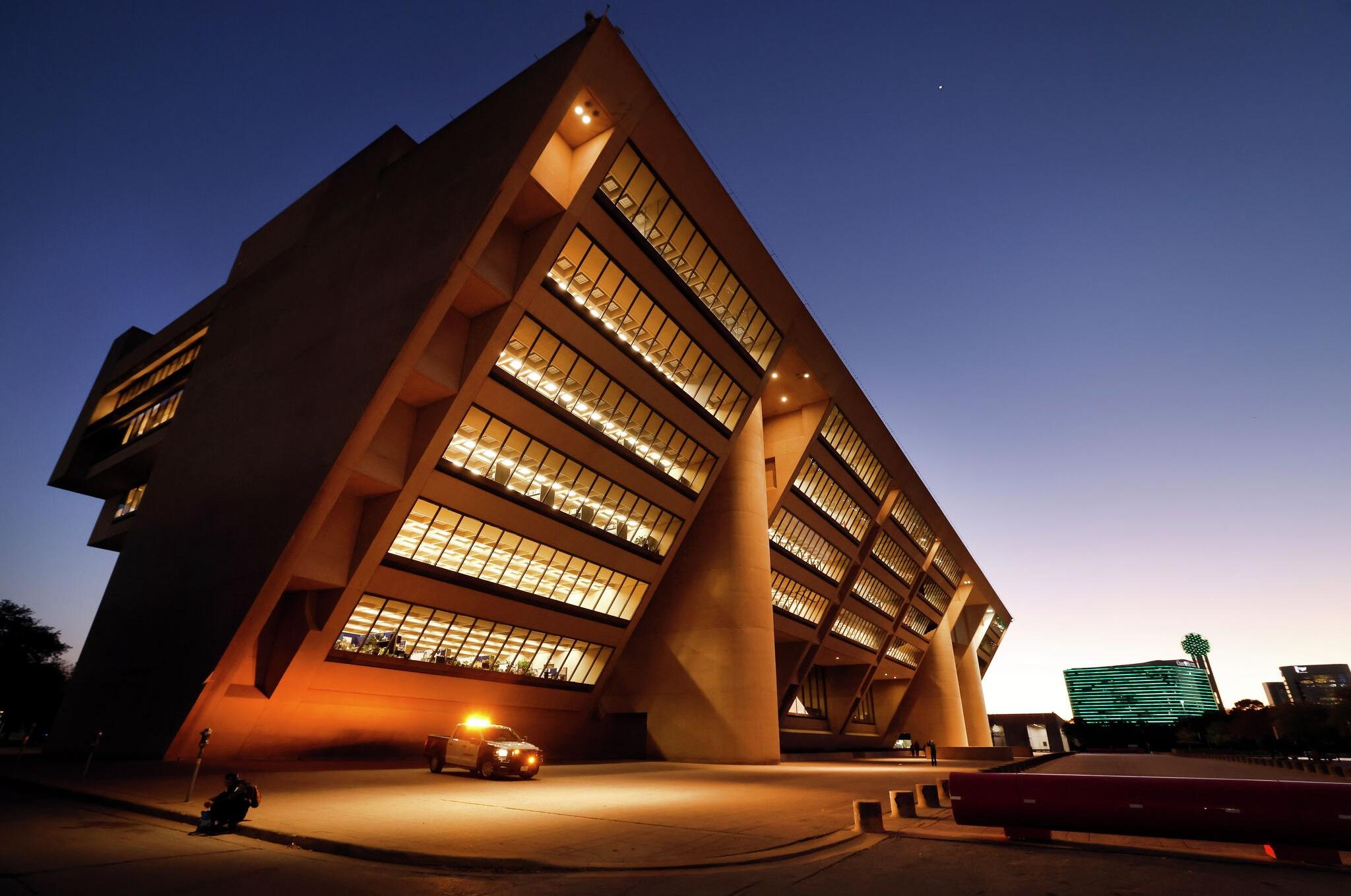
Now you have to go through the comms office, which might provide a statement — if you’re lucky — but is usually as transparent as a poured-concrete City Hall. Or, just as often, no matter how reasonable the request, you’re told to file an open records request instead.
Which is how we got to that lawsuit about travel expenditures making the rounds again thanks to a WFAA-TV (Channel 8) story that ran at the end of last week. But this is an old story: City of Dallas vs. Ken Paxton was actually filed in Travis County in March, after the attorney general’s office ordered the city to produce the docs requested first by our Editorial Board last year. And it’s becoming an increasingly familiar tale.
In recent weeks I’ve heard from several people and groups about the city’s refusal to produce documents requested through the city’s Open Records Center. In two cases, I was told, the city failed to produce those documents after demanding and securing payments in advance.
That’s another way Dallas City Hall makes sure you don’t see that which should be public record. Last spring I asked for emails to and from council members, the mayor and Hunt Realty executives concerning the proposed alignment of the new convention center. Before I ever saw a single document, I received a $675 invoice to “locate, compile and reproduce over 2,000 emails” that would likely wind up in the AG’s office.
But that’s a bargain compared to what the city demanded from Preserve Preston Hollow, the group fighting the proposed redevelopment of the southwest corner of Preston Royal, which is set to finally go to the council next month.
On June 15, attorney Austin Smith sent a lengthy open records demand that asked for numerous documents, including “all emails, correspondence, memoranda, meeting notes, text messages, calendar entries, presentations, reports, and other communications between City of Dallas employees, officials, commissioners, or consultants.” It was a big ask, four pages worth of stuff.
It would have been understandable had the city requested an extension beyond the 10 days it has, by law, to respond to open records requests. Instead, the city told Smith it would take more than 100 hours to assemble the requested documents — and that it would cost $2,600. To which Preserve Preston Hollow said: Fine, here ya go.
In a July 8 letter, an assistant city attorney named Brady Flanery sent a missive to the AG’s office requesting to withhold draft documents and attorney-client communications. Nonetheless, Flanery wrote that “the City has identified responsive records to this request and will make the majority of the responsive information available to the requestor.”
Except what the group got back were just a bunch of documents already publicly available, including the zoning request and a traffic study. There were also photos of the intersection and the foundation where an office complex once stood until it was destroyed by the October 2019 tornado.
In a statement sent to The News, Smith said the city “failed to produce a single email, even though public comments acknowledge such emails exist.”
“Instead of being transparent, the City has systematically obstructed our efforts by broadly asserting attorney-client privilege and seeking protection from the Texas Attorney General,” he wrote. Smith alleged, too, that the city’s attorneys “are using administrative processes to shield routine factual communications from public view.”
Even council-appointed members of city advisory boards aren’t exempt from the heavy hand of the City Attorney’s Office.
In August, Kathryn Guerra — the Paula Blackmon-appointed chair of the Environmental Commission — asked for economic incentives and internal communications related to proposed data centers on West Mockingbird Lane (the Equinix DA12 Campus) and on the Market Hall site on North Stemmons Freeway, where Crow Holdings brought in CleanArc to develop its own data center campus. Guerra told me Monday she was on a fact-finding mission, as the commission’s in the midst of drafting a comprehensive data center policy that will eventually go to the council.
“Now, folks might argue the economic incentive aspect might be outside the purview of the commission’s work,” Guerra said. “But I think when you’re asking for the city’s tax dollars in exchange for what we receive from data centers — pollution, at the end of the day — it’s something that should be considered in a holistic policy recommendation to the council.”
Guerra’s job at the nonprofit government watchdog Public Citizen requires her to file a lot of open records requests, and she said Monday that Dallas is among the worst offenders when it comes to fulfilling such requests. Because it holds back far too much. And it charges way too much.
She said she was told it would cost $200 to sort through some 500 emails related to her request, well above the $30-$60 she said most other agencies regularly charge.
“I guess budget deficits aren’t going to solve themselves,” she said.
So she paid a $100 deposit, which resulted in city attorneys again asking Paxton’s office on Sept. 1 for permission to withhold the requested information.
“Now, if they had said, ‘Hey, economic development is a deliberative process that’s not subject to open-record disclosures at this point, and we’ll provide you the information once we’re ready to make a recommendation,’ fine,” Guerra said. “But they didn’t say that. They said, ‘We’ll take your money, and then refer it to the attorney general.’”
You have to admit: That’s one heck of a business model.
Robert Wilonsky is Dallas Morning News editorial columnist.