


The Falkland Islands could produce significantly more oil than expected by the end of the decade under $3 billion plans to accelerate drilling at the Sea Lion field (Emily Gosden writes).
Israel’s Navitas Petroleum, which is leading development of the field, is acquiring a second production vessel that could pump 125,000 barrels of oil per day and said it expected the first output from this vessel by 2030.
That would add to planned production of 55,000 barrels per day from its first production vessel, which is aiming to deliver the islands’ maiden oil output in March 2028.
Navitas owns 65 per cent of Sea Lion with the remainder owned by the London-listed Rockhopper Exploration, which discovered the oilfield in 2010.
Rockhopper yesterday said it was suspending trading in its shares on London’s junior Aim market while it worked on a planned equity raise to fund its share of the $125 million vessel acquisition and other development costs.
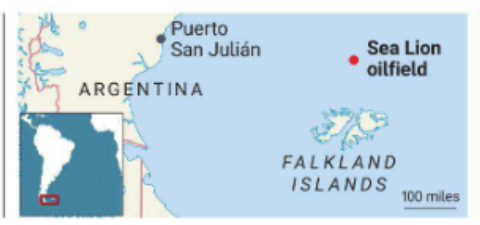
Sea Lion lies 136 miles north of the Falkland Islands, in the South Atlantic Ocean, and is thought to contain the equivalent of about 900 million barrels of oil. The field lies about 1.6 miles beneath the seabed, in water depths of almost 1,500 feet.
The Falkland Islands government will take a 9 per cent royalty on revenues from the field and then 26 per cent corporation tax on profits, promising a significant new source of wealth for the islands, which are a British overseas territory.
Argentina, which invaded the Falklands in 1982, still asserts sovereignty over the islands it calls Las Malvinas.
Javier Milei, Argentina’s president, said in April that it would “act decisively in the face of unilateral and illegitimate activities that seek to advance over resources that belong to Argentines”.
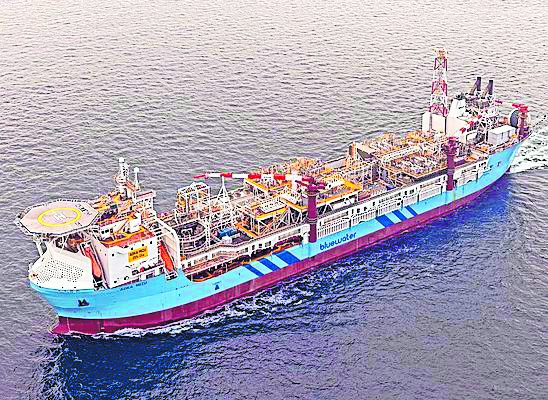
In December Navitas and Rockhopper took their final investment decision to proceed with developing the first phase of the northern area of the field, targeting 170 million barrels of oil using the Aoka Mizu floating production, storage and offloading vessel (FPSO).
This first phase is estimated to cost $1.8 billion to first oil and $2.1 billion total.
Rockhopper raised $142 million in December to fund its equity share of the first phase.
The Aoka Mizu FPSO is also expected to be used for a second phase of the northern part of the field, which could yield a further 149 million barrels of oil.
Navitas has now agreed to acquire another FPSO, called OSX1, for $125 million, to develop the central area of the Sea Lion field. A spokesman for Navitas said this area could yield the equivalent of 403 million barrels of oil.
The vessel will require upgrading and adapting, bringing total costs for the FPSO to about $1.15 billion, it said, while the total development budget for the first phase of the central area was expected to be about $3 billion.
Aside from the FPSO acquisition, Navitas flagged a further $65 million of costs by the end of 2027, before a final investment decision planned for the first half of 2028.
Rockhopper said that a forthcoming report was expected to show that the net present value of its share of the field had increased by about 35 per cent, from $2.2 billion at present, in light of the expanded development plans, and current oil price assumptions.