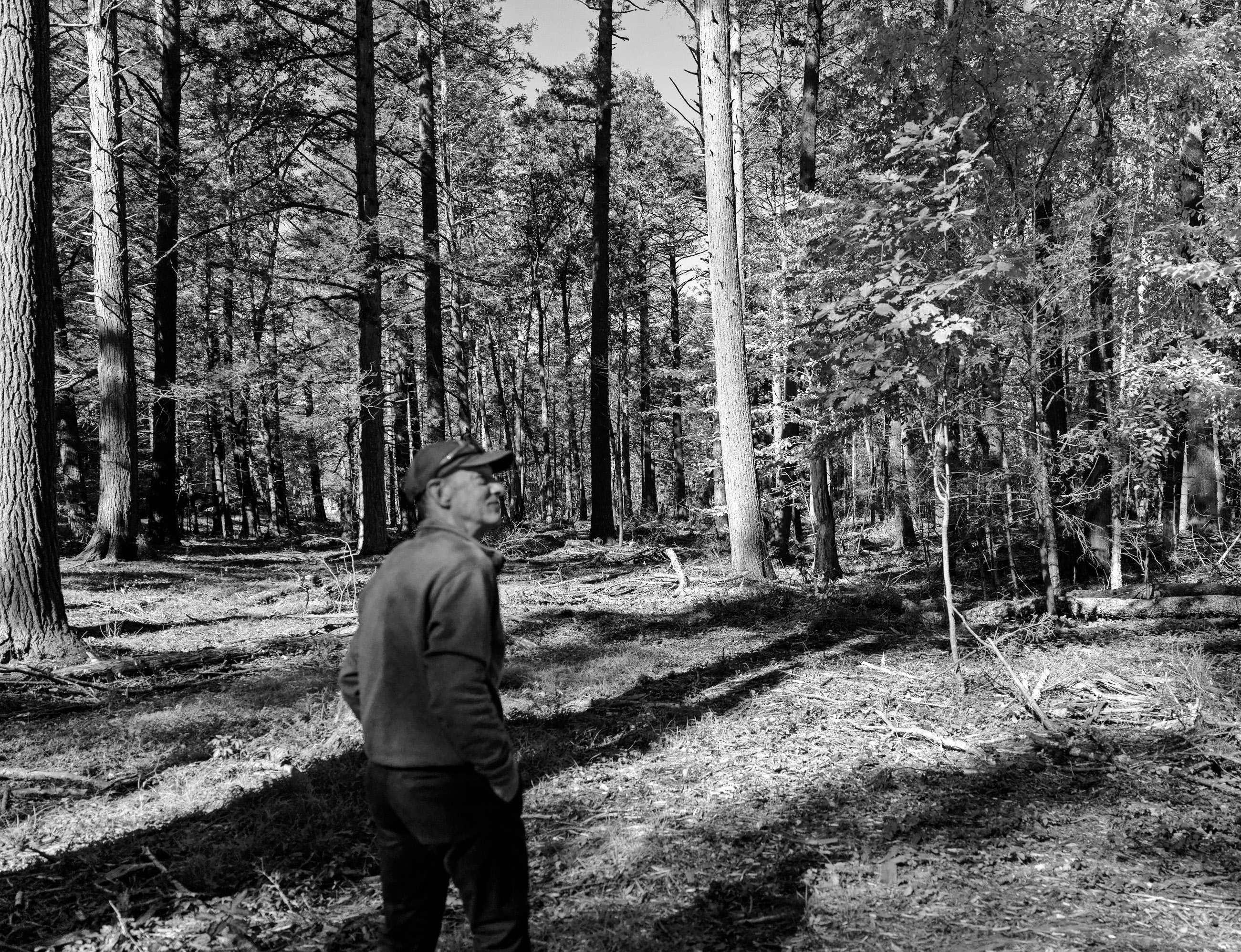
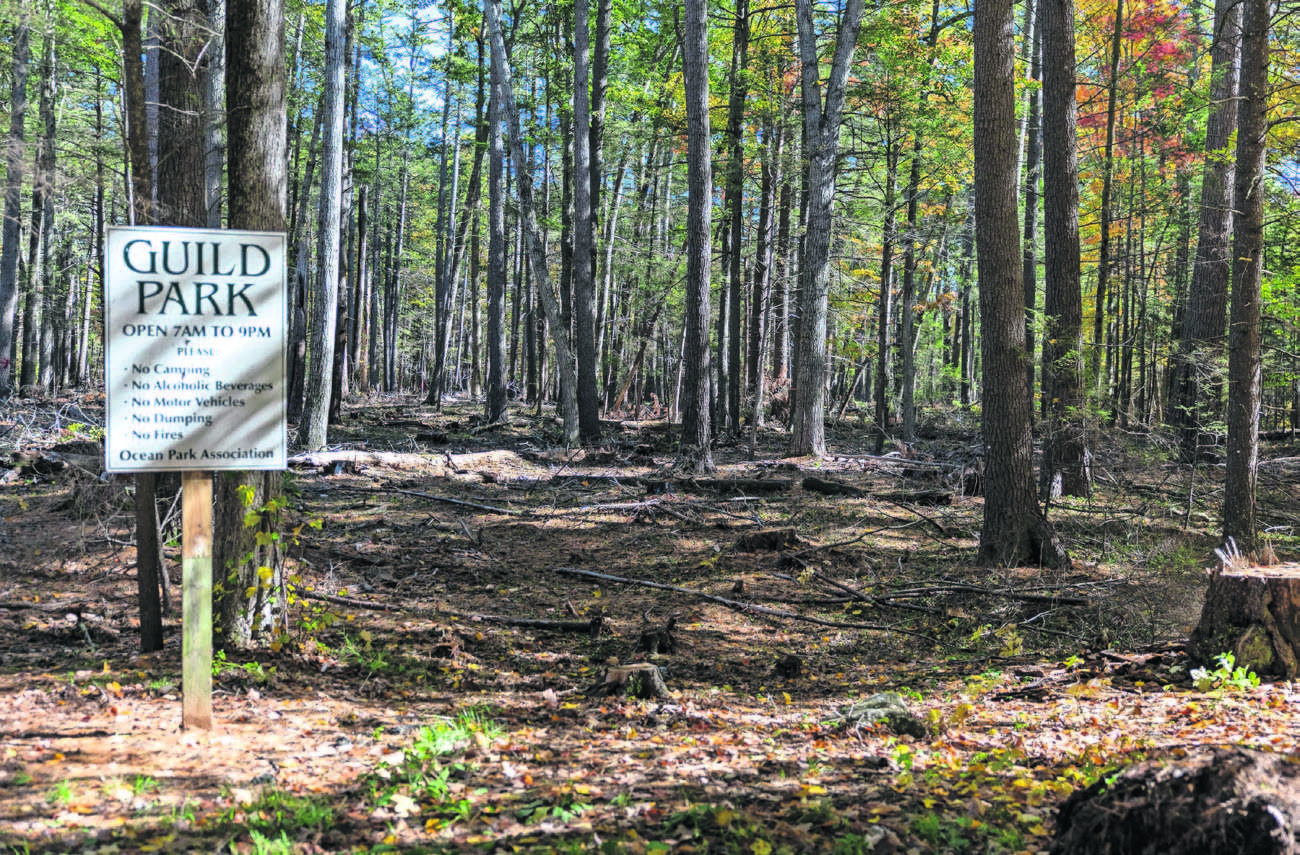


OLD ORCHARD BEACH — Guild Park looks jarringly bare from the road, a noticeable clearing catching the eye. Until recently, the park was chock full of trees, with a vast canopy that gave way to little sunlight.
But in the past few years, an invasive insect moved in, and more than 500 trees were recently removed in an effort to keep its impact on the forest at bay.
And now, the tree removal is paving the way for a brighter future at the park.
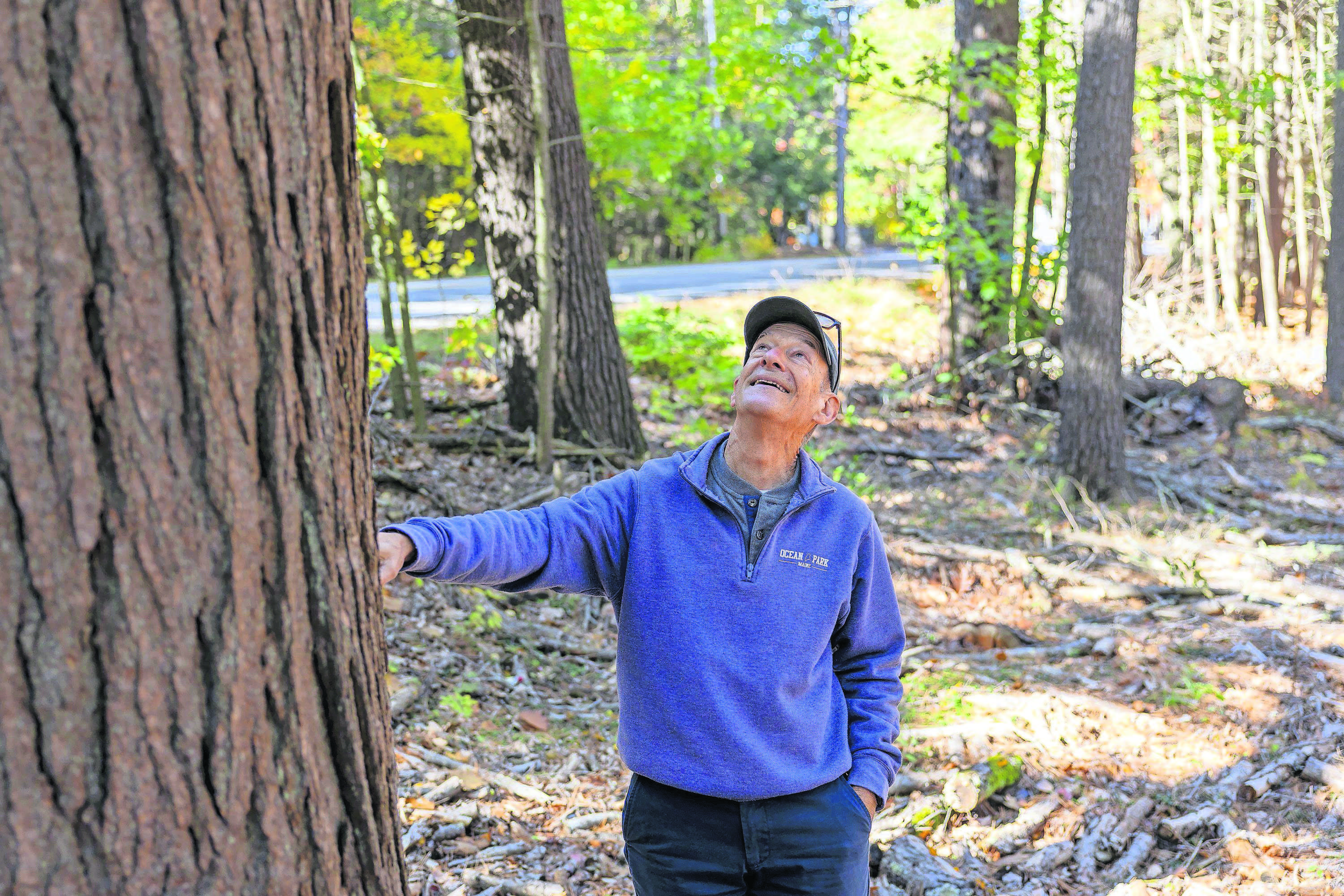
Mark Lauritano, a member of the Ocean Park Association Environment and Natural Resources Committee, said the hemlock woolly adelgid has likely been plaguing the trees for years, attacking the sap and needles of a tree until it dies.
“They can kill a mature tree in a couple of years,” Lauritano said. “They’re very prolific in terms of the population. They can reproduce very quickly.”
The tiny, invasive insects native to East Asia are becoming more prevalent in New England as the winters get warmer. A cold snap with temperatures below zero can kill the insect, Lauritano said, but those stretches of weather are becoming increasingly rare.
“And it’s not just in Ocean Park,” he said. “They’re up and down the coast.”
A PROBLEM REIMAGINED
At first, when the Maine Forest Service recommended removing 578 trees as part of a Guild Park Forest Management Plan, the news was shocking.
“It was very emotional,”Lauritano said. “A lot of people use the park. People get emotional when you remove trees.”
But as the diseased and dying trees came down and a clearing began to emerge, so did silver linings.
Guild Park, which sits on 20 acres of land close to businesses and restaurants, was originally intended to be developed. Instead, it was designated as a conservation easement and has been acting as a park since the late 1800s.
“It was also pretty much untouched since the late 1800s,” Lauritano said.
That meant the land was overgrown, with nearly 4,000 trees creating a canopy that let in very little sunlight. A less dense forest with an open canopy will allow native flora and fauna to thrive, Lauritano said.
The new open space will also make room for a visitors’ center geared toward education about the native plants and animals that inhabit the park. The project, which is led by the Ocean Park Association Environment and Natural Resources Committee, will be funded through a mix of grants and private donations.
“We’re viewing (the tree clearing) as an opportunity,”
Lauritano said.
WHAT COMES NEXT
There’s a lot going on at Guild Park, Lauritano said. Visitors will notice various markings on the trees: bright orange bands, reddish trail markings and even little white flags sticking out of the ground.
(They’re easy to miss if a hiker isn’t careful.) The orange bands signify hemlock trees, each of which will need to be monitored for woolly adelgid activity and treated with a specific pesticide geared toward eliminating the insect.
The little white flags indicate one of the 500 saplings that were planted this spring — and with additional sunlight filtering through a thinner canopy,the saplings will continue to grow and thrive.
Lauritano and other members of the Environment and Natural Resources Committee, along with help from professional foresters, will continue to monitor the forest for any new growth from invasive species, like shrub honeysuckles and Japanese knotweed.
In the spring, volunteers will release predator beetles that feed on the woolly adelgid, further diminishing the invasive population.
At $3 a beetle, they’re not cheap, Lauritano said, but they’re worth the price.
“We hope for the best with them,” he said.
Planning for the visitors’ center is also at the forefront of Lauritano’s mind.
Although the project is still in the very early stages, he hopes it will be beneficial for the many hikers, educational camps and student groups who come through the forest.
“This project is for the good of the park and for safety,” Lauritano said.
“It’ll be good for wildlife as well.”
Sydney Richelieu — 207-689- 2851 srichelieu@metln.org