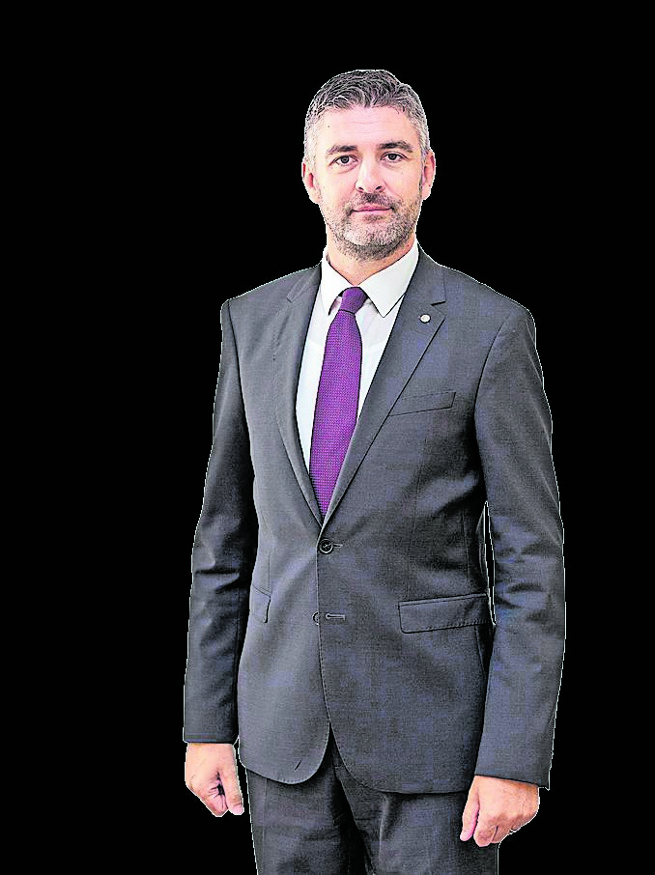


As Mato Frankovic, the mayor of Dubrovnik, outlined his planning revolution, two armed plainclothes policemen sat at the back. They have been at city hall every day since June 28 after a volley of death threats against the mayor.
Frankovic was explaining how he blocked 180 planning applications, wiping up to €700m (£585m) off the real estate value of land for development.
The Montenegrin drug cartels that had invested in many of the cancelled projects responded by issuing at least 20 death threats, sent on WhatsApp from an Algerian number. According to Croatian intelligence sources, the messages said Frankovic would be liquidated if the zoning changes went through.
In 2024 Europol reported that 86 per cent of Europe’s most dangerous criminal networks had invested in legitimate businesses which were “integral to laundering criminal proceeds”.
Properties are bought and renovated using dirty money from crime. They are then listed on short-term rental platforms to be booked by non-existent guests paying with mob cash loaded onto prepaid debit cards. Once that money’s gone through the system, it’s clean.
Restaurants, said Frankovic, run similar operations. “If you have a restaurant with 300 seats you might only get two or three customers per day but you can print 300 receipts and show the auditors, ‘Look: I got all this cash from 300 people.’”
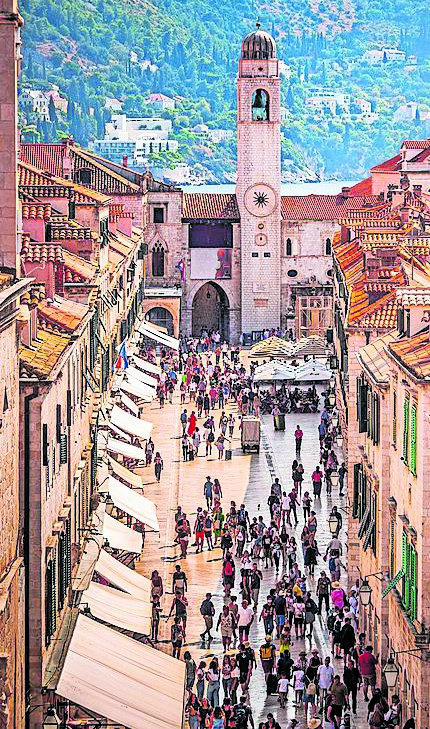
Dubrovnik is ideal for such scams, with about 1.5 million visitors a year. It’s not the first time the gangs have threatened Frankovic: in 2023, infuriated by the booking of a Serbian singer for the city’s New Year’s Eve party they talked of hanging Frankovic from a lamppost.
Is he worried by the current threat? “No,” he said. “If this is the sacrifice I have to make in order to deliver my urban plan, I’m ready.”
So he’d risk his life to protect his city? “Without any doubt.”
When Frankovic was 21 he worked in a local travel agency. Dubrovnik was still recovering from the siege of the Old Town in 1991 during the Croatian War of Independence, when Slobodan Milosevic’s Serbian forces blasted 563 out of 824 buildings in the Unesco-listed citadel, obliterating nine palaces — and Dubrovnik’s tourism industry.
“Back then cruise ships were so rare that we sent a marching band to greet them,” Frankovic said. “Every new tourist was a joy, bringing the possibility of earning a bit of money. And with that, growth started.”
By 2017, Frankovic was in his first term as mayor and that growth was out of control. Budget airlines, cruise ships and the city’s starring role in the TV series Game of Thrones brought up to 20,000 tourists a day and Unesco was threatening to withdraw world heritage status.
Uber arrived and cabbies from other towns came to cash in. As the streets became gridlocked, dustcarts, deliveries, public transport and emergency vehicles were unable to get through.
Meanwhile, the permanent population of the Old Town crashed from 5,000 in 1991 to 1,200 in 2026 as owners sold out to developers and renters were priced out to make room for Airbnb-style shortterm rentals. The grocery shops, bakeries and pharmacies that had served the community were replaced by souvenir shops and gelaterias.
“We would have four cruise ships in the port and three or four more anchored in front. The Old Town was overcrowded ... [the tourists] were staying for just four hours: they’d take a picture, run and go,” Frankovic said. International media were writing about the death of Dubrovnik. Something had to be done.”
And so he did something: in his first year Frankovic threw 70 per cent of street vendors out of the city and limited cruise ship arrivals to two a day, for a minimum of eight hours. Taxi numbers were cut from 8,000 to 700.
Then he took on the shortterm rental owners. Holiday lets account for 75 per cent of beds in Dubrovnik but from January 1, 2027 owners will be required to renew property licences every two years. To do that they’ll need to provide proof that two thirds of neighbours have agreed to tourist lets.
The mayor’s authoritarian style won him few fans in the early years.
“They said I was crazy,” he said, “but then they saw the results. We’re getting better tourists who are staying longer and having a better time. The city is more relaxed, and as a citizen you can find a pharmacy, or get goods delivered.”
There have been economic benefits too.
Keeping cruise passengers in Dubrovnik for eight hours raised the average daily spend, Frankovic claimed, from €24 a day in 2017, but taxi drivers, property developers, landlords and shopkeepers say his policies have made them poorer.
He threw out 70% of street vendors and slashed taxi numbers 2017 to €87 today. He has been re-elected twice since
One hotel worker said her family lost their souvenir stand. “Frankovic doesn’t care about ordinary people,” she said.
In a public spat on November 7 with the Croatian tourism minister, Frankovic opposed a new law allowing ten-year permits for shortterm rentals.
Frankovic said: “All of this will backfire on us because our young people will have nowhere to live.”
Mass tourism has eviscerated neighbourhoods in Barcelona, Palma in Mallorca, Lisbon and Madrid. But in Dubrovnik, locals are moving back in.
So far, grants of up to €45,000 have been given to 66 young families to buy or renovate properties within the city walls. Two palazzos have been converted into primary schools and the city has also developed its own low-rent homes.
Kornelija Smolcic sells boat trips from the Old Town port.
She grew up here but, like many, ended up renting in the suburbs and spending two hours a day commuting.
Now she and her three children are back in a cityowned apartment just off Stradun, the main street, for €200 a month. She said: “Now we see children playing in the streets again. This is their playground.”
Frankovic, 44, could stand for a fourth term in Dubrovnik, but he said he felt burnt out. Did he want to follow Andy Burnham’s path from city hall to prime minister’s residence? “It’s a very hard question,” he said. “Being a prime minister ... you are involved in world politics ... thousands and thousands of daily things.
And you know my problem? I’m not ready to compromise.”