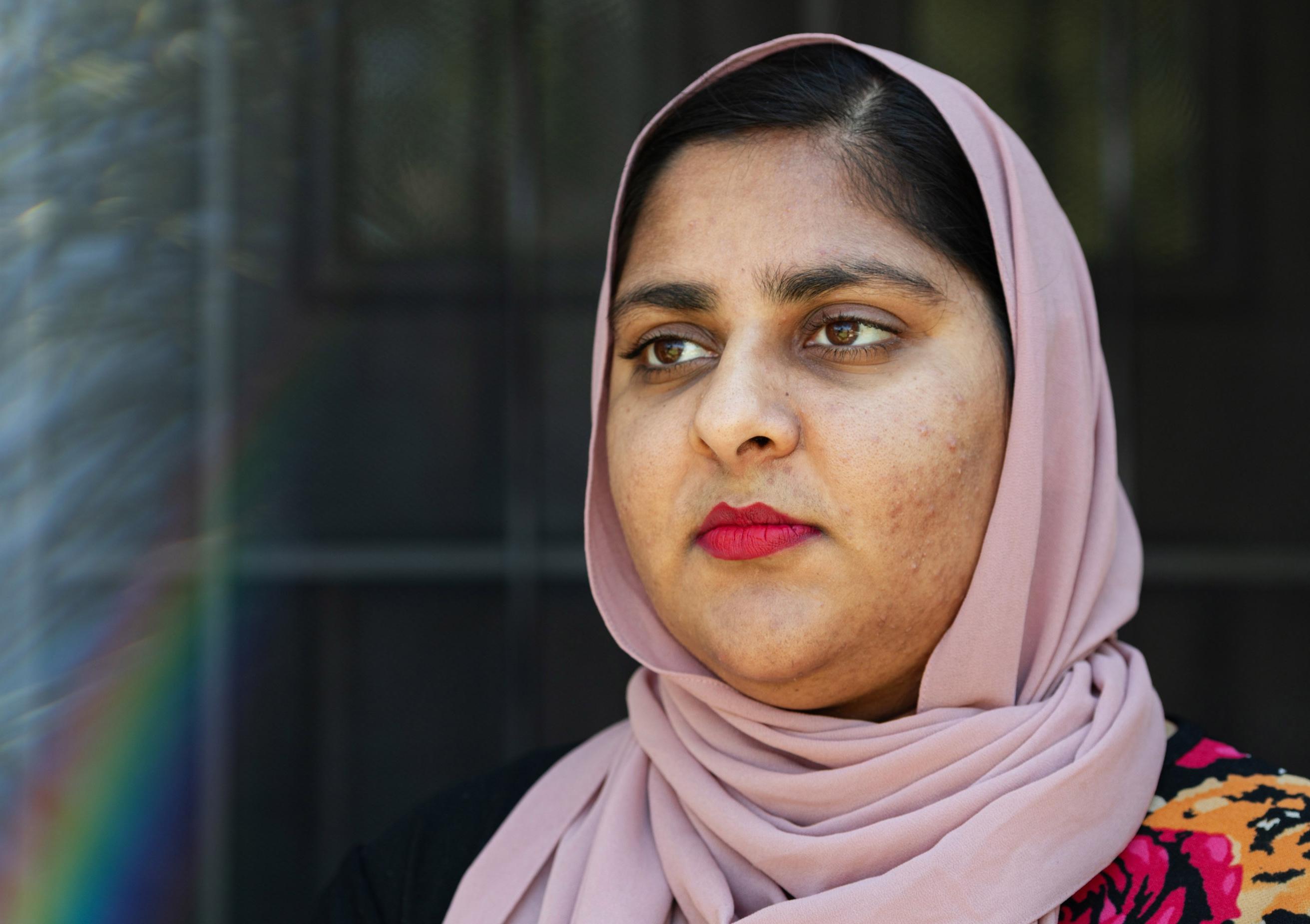
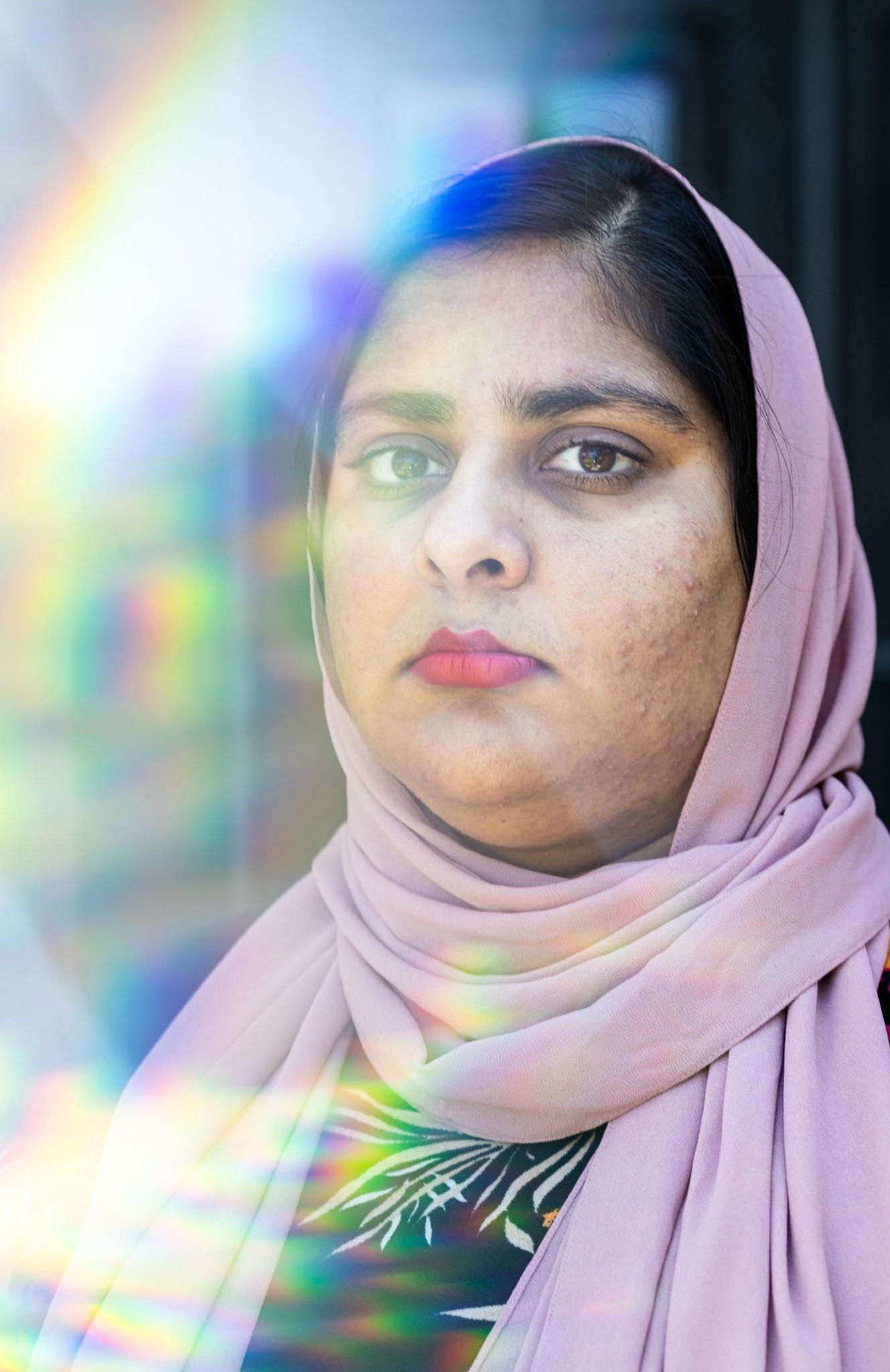


Sadia Khan had just turned 19 when she was forced to marry the stranger who became her abuser.
A whirlwind of circumstance had landed the California native in the predicament.
Her father had unexpectedly died. Her mother was grieving. Respected family elders convinced the mother that an arranged marriage to an older man from the United Kingdom would give her daughter a good life and allow the mother to care for her three other children.
Khan recalled sitting in a locked room in Pakistan looking at a marriage contract she couldn’t read, because it was in Urdu, and listening to those elders tell her she would be beaten if she tried to scupper the deal.
“Next thing I know I’m married and living with this man I don’t know,” said Khan, who was born in Butte County and is of Pakistani descent.
Nine months later, she fled back to California, with a hundred bucks to her name and a complicated road ahead. A dozen years later, she is still on that road and trying to prevent others from going down it.
Khan, 31, a policy advocate with the Family Violence Law Center in Oakland, which provides crisis support and legal assistance to domestic violence and sexual assault survivors, is one of the makers of a proposed law that supporters say would finally address forced marriages in California by giving prospective victims a legal tool to prevent them from happening in the first place.
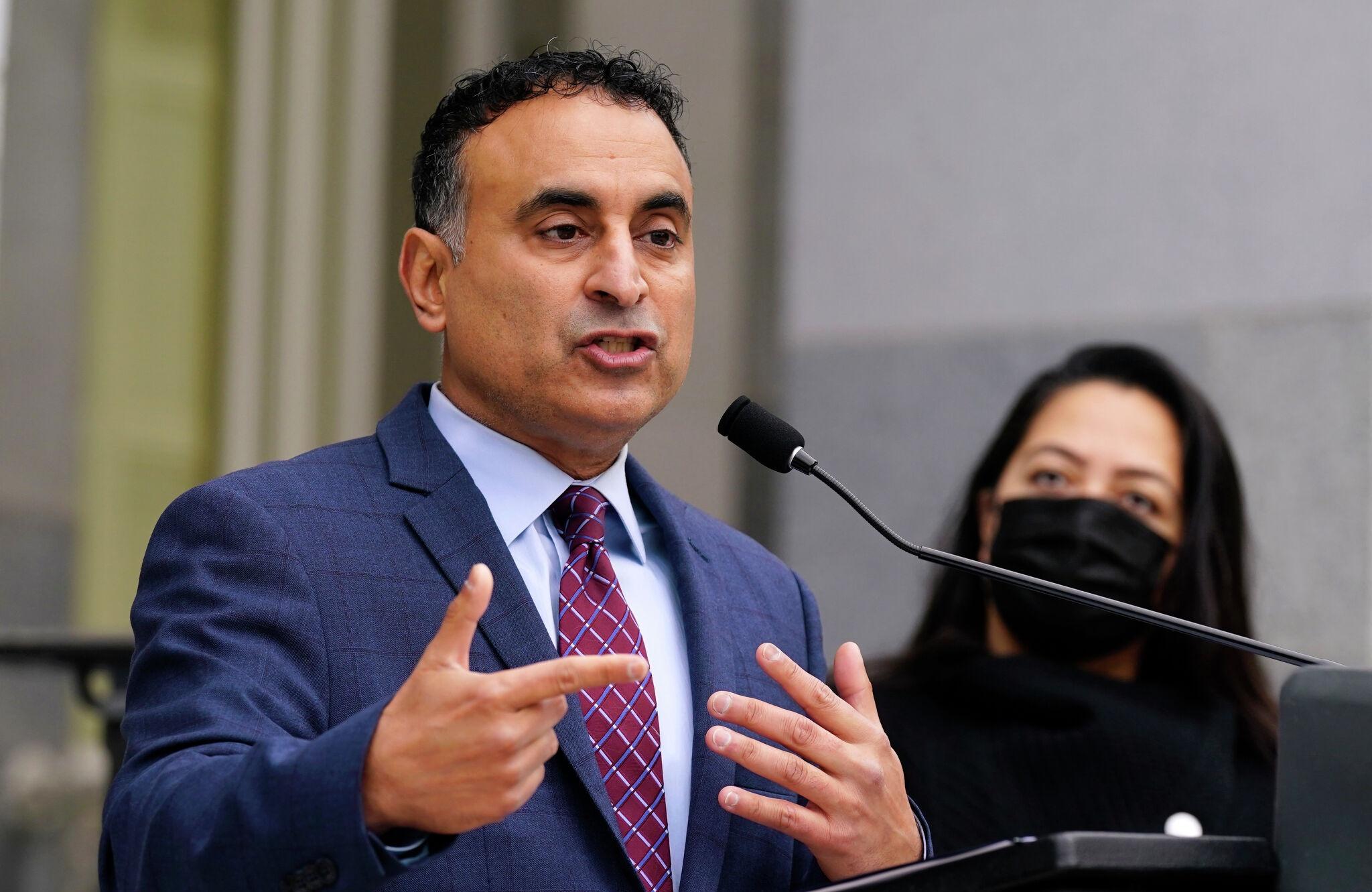
Assembly Bill 2534, from Assembly Member Ash Kalra, D-San Jose, would allow those facing the prospect of being married against their will to obtain restraining orders against anyone attempting to make it happen. The bill would do so by explicitly covering forced marriages, which are illegal in California, under the state’s Domestic Violence Protection Act, codifying legal protections for an overlooked and misunderstood class of abuse victims and survivors, advocates say.
“The truth is there were gaps, and survivors were naming those gaps,” said Casey Carter Swegman, director of public policy at the Tahirih Justice Center, a national nonprofit for immigrant survivors of gender-based violence that is supporting the bill. “We’re leaving these survivors unprotected.”
Modeled on the forced marriage protection order that the United Kingdom adopted in 2007, California’s version, advocates and survivors say, would be both a national first and a long time coming in a state that has tried — and failed — to outlaw child marriages.
If AB2534 succeeds where those attempts sputtered, advocates like Swegman and lawmakers like Kalra say it will be because they started listening more carefully to survivors like Khan.
Interests of the childPrevious attempts to legislate against child marriages became delicate contests between human rights and civil liberties.
In 2017, then-Sen. Jerry Hill, D-San Mateo, introduced a bill to ban minors from getting married.
While California’s official marriage age is 18, parents and guardians are allowed to sign off on their children getting married, making the state one of a handful without a minimum marriage age. Hill’s bill sought to close the loophole, with the Tahirih Justice Center on board as an early supporter.
But the American Civil Liberties Union, National Center for Youth Law and Children’s Law Center of California opposed a blanket age restriction, contending that marriage is a right under the 14th Amendment and that people under the age of 18 should be able to independently choose it.
In registering its opposition, the ACLU objected to the idea “that every marriage involving a person under 18 is coerced” and contended there were better ways to stop coercion without stripping minors of “a fundamental personal right” that the Supreme Court reaffirmed two years earlier, when it upheld same-sex couples’ right to marry, according to a Senate Judiciary Committee analysis.
In the same analysis, the National Center for Youth Law wrote that it was “concerned that eliminating the right to marry may do more harm than good by driving coercive or abusive relationships underground.”
Supporters of a minimum age requirement say there is a world of difference between postponing minors’ right to marry and permanently withholding that right from LGBTQ couples. “I would say that minors have a fundamental right to be protected from abuse, exploitation and rape,” Swegman said.
Nevertheless, the age limit was dropped.
By the time Gov. Jerry Brown signed it in 2018, the bill required the state’s Family Court Services to interview each prospective spouse and at least one parent or guardian from each side to suss out signs of coercion, abuse or neglect. The advocacy group Unchained at Last, which helped craft the measure, turned against its final form, citing “alarming loopholes that seriously endanger children — particularly girls” in a bill analysis.
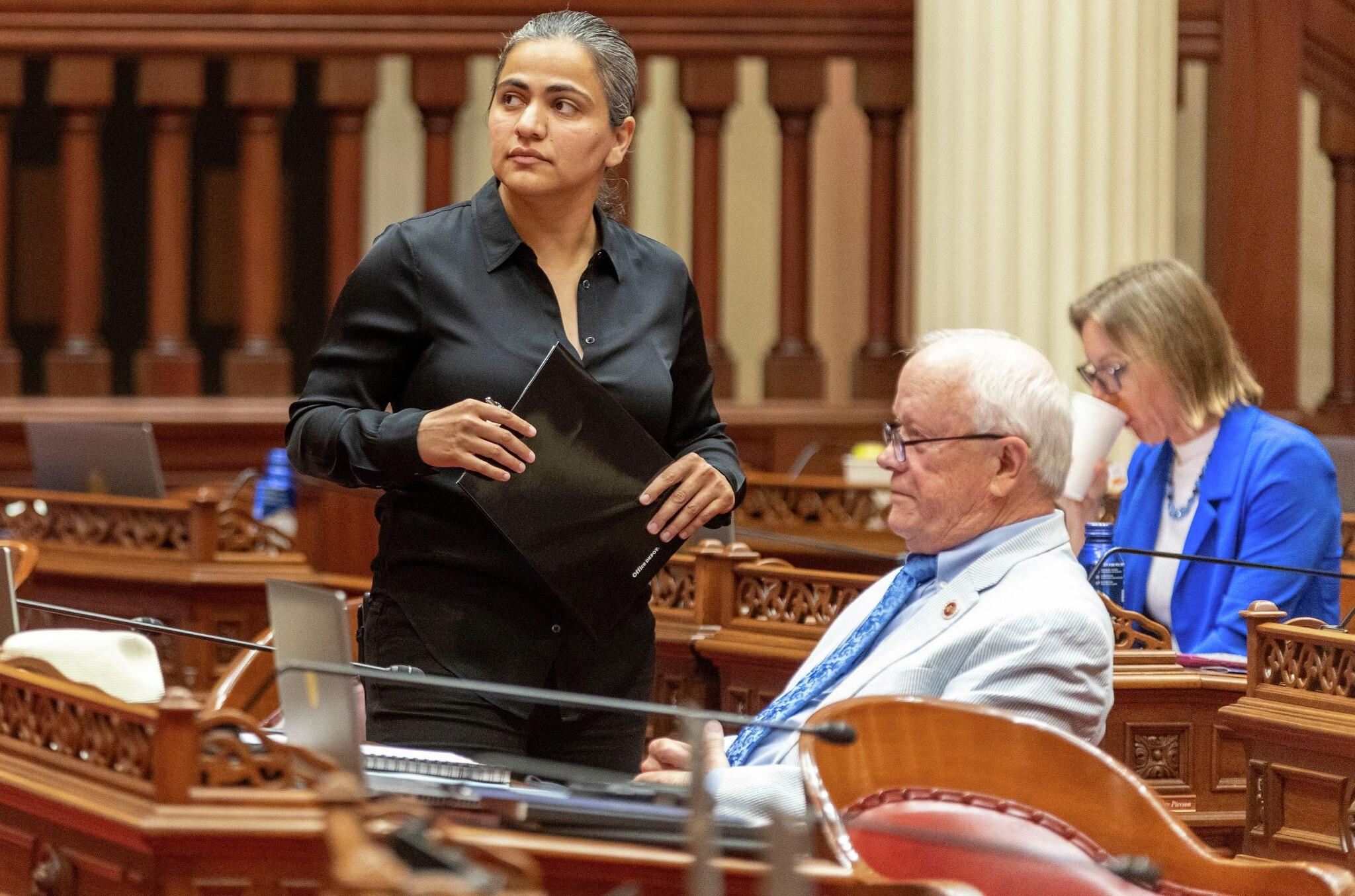
In 2024, state Sen. Aisha Wahab, D-Silicon Valley, tried with a bill that would have made it a misdemeanor for any adult to facilitate the marriage or domestic partnership of a minor. It died over concerns about unintended consequences and the messy family dynamics that often feature in forced marriages.
Effort to countAs the Tahirih Justice Center wrote in a bill analysis, “survivors do not typically want to see their families or communities criminalized, and those who face the intersecting harms that come from being a person of color or immigrant may be especially hesitant to involve law enforcement.”
The same year, legislation to ban marriage for anyone under 18 died in committee before a single vote was cast.
Unable to outlaw child marriages, lawmakers attempted to count them.
In 2024, Gov. Gavin Newsom signed Wahab’s bill requiring the Secretary of State’s Office to create a one-time report by September 2027 on the number of marriages involving minors. The office already compiles annual reports on domestic partnerships involving minors, which are less common than marriages, and provided the Chronicle with data showing that zero had occurred from 2020 to 2025.
Actual marriage data is harder to come by.
A 2017 spot check of larger counties by the Judicial Council of California, requested by the Senate Judiciary Committee, showed that dozens of minors received special marriage licenses, called FL-910 petitions, over the previous five years. From 2012 to 2017, for instance, Los Angeles County granted 44, San Bernardino issued 21, Orange County approved 12, Riverside County granted 10 and Alameda County Superior Court said it averaged five to 10 per year.
Swegman said it’s important to make a distinction between forced marriage and child marriage, as not all forced marriages involve children and not all child marriages are forced.
According to the International Labour Organization, which estimated 22 million globally were in forced marriages in 2021, 13 million of the victims — 59% — were coerced into marriage after they turned 18. That leaves 9 million victims who were married as children.
But reports from the ILO and UNICEF, which focuses on child marriages, have a U.S.-size blind spot as they point to problem areas in the global south, primarily Africa and South Asia.
“It’s always been a tremendous frustration of ours that large research institutions that focus on issues of forced and child marriage have historically ignored the United States when they do their research, as if we are somehow exceptional,” Swegman said. “When we talk about ending the global problem of forced and child marriage, the U.S. is squarely within that globe.”
In the absence of U.S. data are harrowing anecdotes.
Unchained has a webpage with more than a dozen accounts from forced marriage survivors, running the gamut of ethnicity, creed and geography. Many were married off to their rapists, sometimes under pressure from their families or religious communities.
That was something Khan learned while interviewing more than 150 survivors across the U.S. One of the worst stories, she said, involved a 9-year-old Florida girl forced to marry the church deacon who impregnated her.
“What was most surprising to me is that I expected a certain demographic and I got every demographic,” she said. “It was literally everyone under the sun. But the biggest thing was the vast majority were women.”
The other trend Khan said she noticed: “Nobody cared about the autonomy of the individual being forced into the marriage.”
The realization informed Khan’s effort to change state law. It’s an effort she undertook with some reservation.
More than a survivorOn March 24, Khan sat at a desk in a state Capitol hearing room, looked at her prepared remarks and tried to keep her voice from trembling. She’d spent years keeping this story to herself.
Khan said the man she was forced to marry sexually assaulted her on their wedding night. She said it took nine months to escape and longer to wrap her head around what had happened.
If she hadn’t lived through it, Khan told the Chronicle, she might sit in judgment of her mother’s actions and her own. But her mom was a young widow under pressure from influential members of their extended Pakistani family. And she was a college student whisked to Pakistan and then to the U.K.
“I was 19 in a new country,” she said.
On the first day in the man’s house, Khan said her abuser laid down the rules. She couldn’t contact family, attend school, visit the mosque across the street or leave the home without permission. She said she considered waiting until he left for work and running to a neighbor’s, but kept imagining all the ways it could go wrong. What if the neighbors liked her abuser? What if they doubted her?
She said she contacted domestic violence shelters and nonprofits, but found them unable to diagnose her conundrum. They asked about her “husband”; the term stung.
“‘Husband’ implies I had a choice. And I did not,” she said. “I know it doesn’t seem like a big deal to other people, but to me it felt … humiliating and diminishing of the reality I was experiencing.”
She finally did leave, with help from her mother. She landed in New York and made it to California, sleeping on a friend’s floor in San Bernardino. Something inside of her didn’t feel right. She learned that she was pregnant.
She said medical staff treated her like some careless teenager, that their assumptions kept her from telling them the truth, about how she had been raped. She said medical staff put her abuser’s name on her son’s birth certificate, “which has created legal issues for me years later just trying to get my child’s passport and so forth.”
She consulted attorneys and said she received conflicting information. Some said forced marriage was already illegal in California and so she didn’t have to do anything. Others advised her to seek a divorce to protect her child.
In October 2018, she petitioned the Alameda Superior Court for an annulment. It took more than three years to get an answer. Her petition was denied in December 2021, court records show.
Khan said she received the news in brutal fashion. She showed up for a hearing and was told it had been rescheduled to the previous day, but she might not have received the notice because of pandemic-related postal delays. She cried. Under California law, an annulment must be sought within four years of a marriage. She had run out of time.
“I was out of luck,” she said.
She learned about forced marriage protection orders in the U.K. and applied in 2022. She was initially denied, because she is not a U.K. citizen, but appealed. In February 2023, the British High Court granted the order.
Justice Gwynneth Knowles of the High Court’s Family Division issued the decision. In it, she wrote that the evidence established Khan “had been forced into marriage … and repeatedly raped,” leading to her pregnancy and the birth of her child. The evidence also showed that Khan’s abuser had continued to pursue her from thousands of miles away, using social media and his relatives to pressure her to return to the U.K. with her son. Knowles barred him from threatening or contacting Khan directly or through third parties. It was something of a landmark order in that it expanded the court’s definition of victim to those outside the U.K. who need protection from those inside the country.
But Khan didn’t call attention to it.
Uncomfortable topicEven after reenrolling in community college, transferring to UC Berkeley, joining student government and identifying as a sexual assault survivor, she still didn’t feel comfortable discussing her forced marriage. She worried about drawing negative attention to her community and culture, but also of being judged as an individual.
“I would be reduced to just a survivor of forced marriage,” she said, “this girl that didn’t have the agency to say no.”
It was at UC Berkeley, after joining the Student Parent Center to advocate for better accommodations for parenting students like herself, that the feeling changed.
“I was talking about being a parent. I was talking about being a survivor, but I had never acknowledged the bigger picture of how all of those things happened,” she said. “That’s when I realized I needed to advocate more than just some parts of my identity.”
Khan has tried to bring all aspects of herself to her work at the Family Violence Law Center. Her interviews with forced marriage survivors and her experience with Alameda Superior Court informed her work on a 2025 bill allowing judges to waive the four-year limit for survivors seeking annulments. Newsom signed the bill in October.
Khan, who is still technically married, worked on it with a friend from UC Berkeley who escaped a forced religious marriage and said they intentionally started small to build support for what she thought would be a harder ask: the restraining order.
Addressing the Assembly Judiciary Committee in March, Khan testified that she contemplated suicide before escaping her abuser.
“But escaping physical confinement was only the beginning,” she told the committee. “To secure legal protection, I had to turn to the courts of another country and obtain a forced marriage protection order, unavailable in the United States. No American should have to beg another country to protect them.”
AB2534 passed the Assembly in May and is now navigating the Senate chamber. It has no opposition.
Swegman praised the bill for returning agency to survivors and allowing them to determine what help looks like. A forced marriage protection order could look like a traditional restraining order, prohibiting contact and establishing physical radiuses. But a lot of times, the intended victims of forced marriages just want them not to happen.
“It’s really anything that the survivor feels would prevent the marriage from happening, including surrendering passports to the court and being ordered not to take the child out of the state of California or not out of the country,” Swegman said. “It’s a really powerful rebalancing of the dynamic in that family.”
Kalra said his bill could also double as a data collection tool, providing California its first glimpse at how many people feel at risk of being forced to marry someone they did not choose.
“Data has been a huge problem,” he told the Chronicle. “I think this legislation will help.”
For Khan, who is seeking a divorce in the U.K. because her annulment petition was dismissed, simply preventing an unwanted marriage from going forward, she said, “is powerful enough.”