
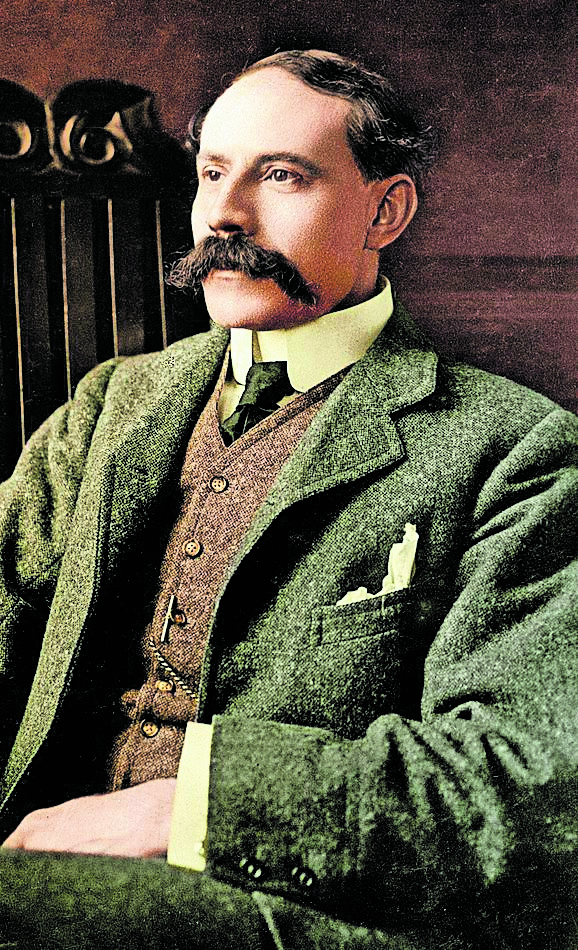


Today most musicians rate Edward Elgar as Britain’s greatest romantic composer.
His finest works, which include two symphonies, two concertos, oratorios, the Enigma Variations and of course Land of Hope and Glory and the Pomp and Circumstance Marches, are regularly performed. But it wasn’t always thus.
“When I first came to England, to study at Cambridge in 1965, Elgar’s reputation was at its nadir,” says Arthur Reynolds, speaking on the phone from New Jersey. “His music was out of fashion. The Elgar Birthplace Museum [at Lower Broadheath, just outside Worcester] was a shambles. You could buy Elgar’s handwritten letters for half a crown, and his music manuscripts for not much more. So I started collecting Elgar material as a student. Nobody else was interested.”
And for the next 60 years Reynolds, an American-born “self-confessed anglophile”, banker and investment consultant, never wavered in his single-minded pursuit of Elgar memorabilia, even when the prices went up. “In fact, Elgar brought me close to financial ruin a number of times,” he says. “The real expense was restoration. A lot of the paper items — the letters, postcards, manuscripts, photos — were in fragile condition.”
Now it’s all coming back to Britain.
Today the National Heritage Memorial Fund (NHMF) announces that Reynolds, now 82, has donated his entire collection — 1,500 items — to the Hallé Orchestra in Manchester.
It’s a good fit. The orchestra premiered Elgar’s First Symphony in 1908 and has championed his music ever since, especially under such conductors as John Barbirolli and, more recently, Mark Elder.
“When I was the Hallé’s music director I got to know Arthur very well,” Elder says. “He was a great supporter of the orchestra, and he loved the fact that we had an unbroken tradition of performing Elgar going right back to 1908. One day he and I were discussing his collection, and he said, ‘At some point it will be the Hallé’s, Mark. I can’t hang on to it for ever.’”
The NHMF has given the Hallé £105,000 to pay for the complicated process of removing the material legally from America (a trust had to be created), then transporting it safely to Manchester. “It’s really quite a small amount of money for an unbelievable acquisition,” says Simon Thurley, the NHMF chair. And the Hallé, which already has a large archive detailing British musical life back to the orchestra’s founding in 1858, is now setting its sights on acquiring a building in the Ancoats area of Manchester to house its new treasures.
"Elgar brought me close to financial ruin a number of times
Perhaps the most revelatory items in Reynolds’s collection are likely to be what’s known as the “test pressings”.
They tell a fascinating story. Elgar was almost obsessed by science and technology. Indeed, one of the most atmospheric photographs in Reynolds’s collection shows the composer concocting heaven knows what unstable substance in the homemade chemistry lab he set up in his garden shed.
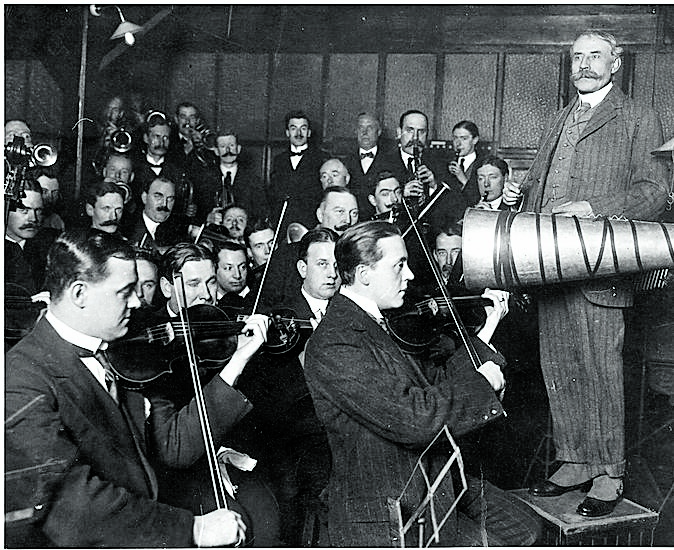
He was one of the first composers to conduct recordings of his own music, which he did from 1914 until his death in 1934. And in 1931 he was the first person to conduct in EMI’s new studios at Abbey Road in London.
But recording in those early days was a fraught affair, with conductor and whittled-down orchestra crammed into a little studio alongside a giant recording horn, and no immediate way of telling how good the results were. So the company would send Elgar a one-off “test pressing” of each take. Elgar would either approve it or not, and write comments on the disc’s sleeve — fascinating insights into the interpretation he was trying to achieve. “Over the years I managed to acquire about 99 per cent of these test pressings, and in some cases they are the only surviving recordings of the performances,” Reynolds says.
On one intriguing sheet of manuscript paper he copied out a few bars from the first movement of the Symphony No 40 in G minor by Mozart, whom he revered. Then underneath, in what he calls “a respectful perversion”, he jots down some music showing how he used the same bars as a model for his own youthful G minor symphony, which he never completed.
The collection also contains a manuscript book dating from his days as a church organist in Worcester. The primly Victorian liturgical settings in it are a universe away from the surging rush of emotions in the music he composed only a decade or so later. And there are letters, sketches, marked-up scores and exchanges with his publishers revealing his compositional process.
But Elgar connoisseurs may be drawn to quirkier, more personal items in Reynolds’s collection.
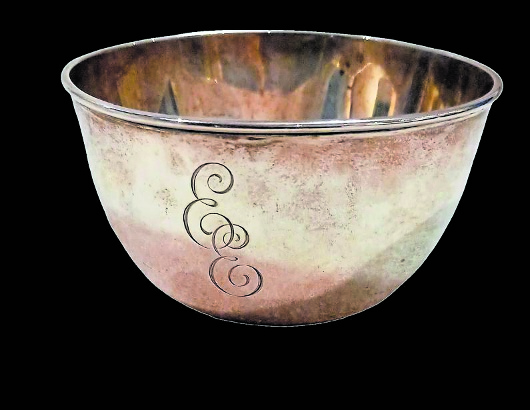
Elgar’s shaving bowl, for instance. “That was inherited by Elgar’s niece, Madge Grafton,” Reynolds says.
“I was able to buy several things from her before she died in 1971.”
Even more unexpectedly there is also a handwritten recipe book compiled by Elgar’s wife, the formidable Alice, a major general’s daughter nine years older than Elgar whose unswerving faith in his genius did much to propel him to greatness.
“If she ate something she really liked at dinner parties she would go into the kitchen and ask the cook to write down the recipe,” Reynolds says.
Alice (or Edward) had a very sweet tooth, because the majority of the recipes are for very Victorian cakes, ranging from “transparent gingerbread”, custard puffs and coconut biscuits to a citrus-based “Prince of Wales pudding”. However for the meatier appetite there are also recipes for haggis and “quenelle of rabbit”.
How did Reynolds acquire it? “A friend called me and said, ‘There’s a man in Wolverhampton who has something of Elgar’s he wants to sell,’” Reynolds says. “I found him in a tiny council house, sitting in a room mostly taken up by a bed in which his wife had recently died. I asked him how much he wanted for the recipe book, and he replied, ‘I want to spend Christmas with Jack Daniel’s.’ So I bought him a bottle and we were both happy.”
I ask why Reynolds chose the Hallé as the new home of his collection, rather than, say, the Elgar Birthplace Museum. “You might be surprised at how hard it is to give things away,” Reynolds replies. “The Elgar Birthplace belongs to the National Trust, which likes places where they can sell teas.
The Birthplace’s displays have been slimmed down and a lot of its collection is in the basement. It hasn’t taken in anything new for years.”
Does he feel Elgar is better appreciated now than 60 years ago? “I still don’t think he has the acknowledgment he deserves,” Reynolds says. “Elgar was the ultimate outsider: son of a tradesman, Catholic in a Protestant society, largely self-taught and coming from a provincial backwater, which Worcester then was. Yet he became the first British person in two centuries to be ranked alongside the great European composers. His story should be a major strand in Britain’s national heritage.”