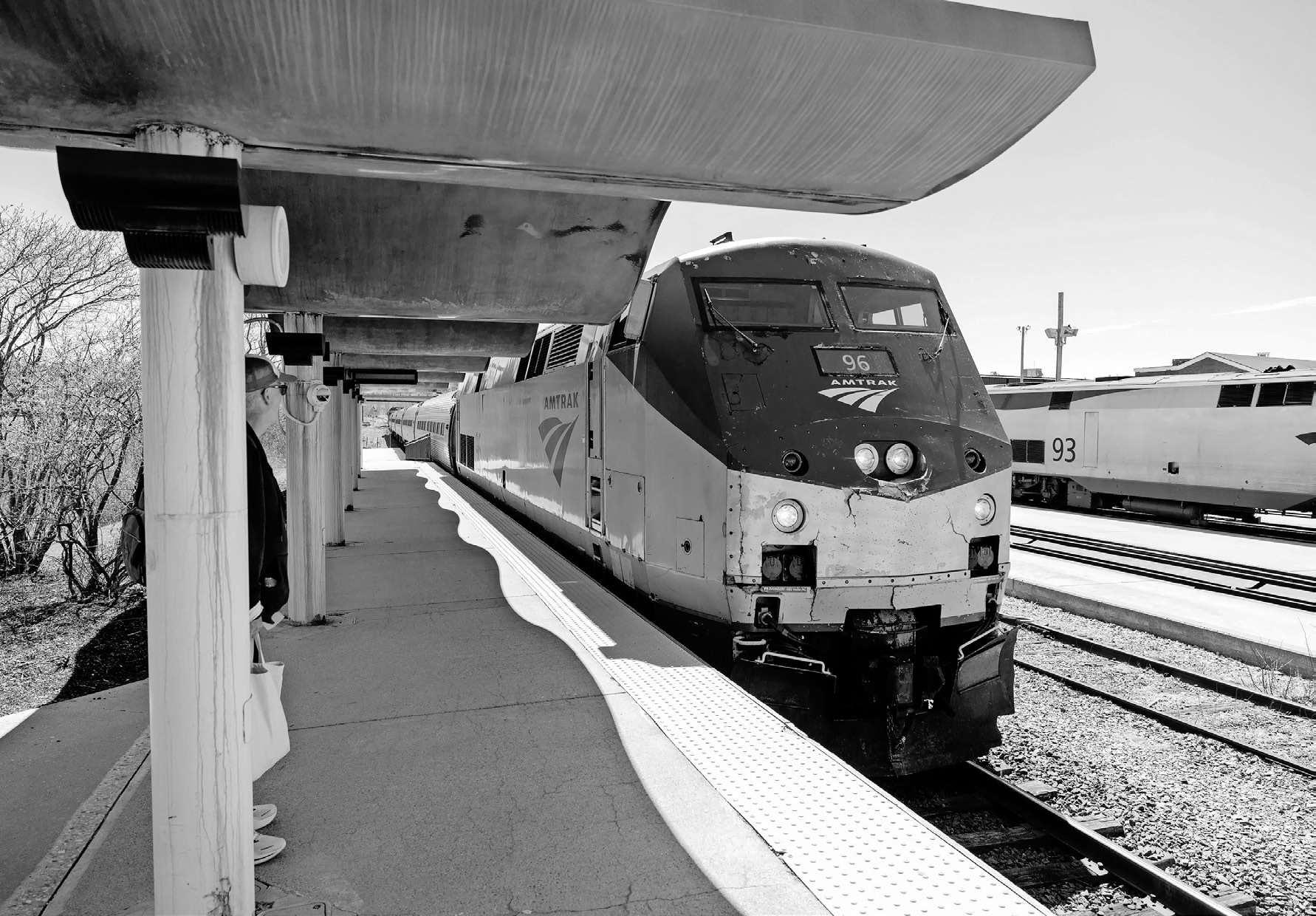


Last month, the Northern New England Passenger Rail Authority (NNEPRA) and the public got word that NNEPRA would receive $48 million in federal funding for the design and construction of a new Amtrak Downeaster passenger rail station on St. John Street in Portland.
This was fantastic news, and credit goes to many stakeholders, including to Maine’s congressional delegation.
Understandably, there have been questions about moving the station, but there’s an incredible amount of optimism for a project that can re-energize part of the city, improve connections in the region and save time and money.
Currently, Portland station is located about one mile from the mainline tracks in Portland, which requires all Amtrak Downeaster trains to back up into the station, a maneuver that adds 15 minutes of travel time for every journey — 30 more minutes for every round trip. The new station will reduce travel time between Brunswick and Portland from 50 minutes to just 33 minutes, which will make the train more competitive with cars and buses, improve ridership and revenues and reduce greenhouse gas emissions.
Today, the Amtrak Downeaster makes five round trips a day between Brunswick and Boston, with stops in 12 communities and three states. The Downeaster also plans to add a sixth round trip next year. But unless Portland station moves to the mainline, the current freight operator, CSX, has stated that the Amtrak Downeaster cannot operate any additional round trips — so train service would be capped at six round trips forevermore.
In short, if Maine wants more and faster rail service, including to points north of Brunswick, it is essential that Portland station move to the mainline along St. John’s Street. Staying put is not an option.
The new station will serve north and southbound trains with an elevated pedestrian bridge connecting the Northern Light Mercy Campus and Fore River Parkway to St. John Street, improving pedestrian connectivity in the area and better access to over 9,000 jobs within a half mile of the new station.
The new station will be located at the point where the mainline tracks meet the Mountain Division line that goes to the current Portland station and beyond to New Hampshire.
This allows the station to serve both lines if rail service is ever established to the west.
The station’s location also opens a new and exciting transportation option for people who wish to take the train to see the Hearts of Pine Soccer Club at their proposed new stadium at Cassidy Point.
The location is currently served by METRO Bus Route 1 and Biddeford, Saco, Old Orchard Beach Transit Bus Route 60. NNEPRA is collaborating with local transit and intercity bus providers to improve and enhance connectivity to the Amtrak Downeaster when the new station is complete, including connectivity to the Portland Transportation Center and Concord Coach Lines.
Work on the new station began in earnest in 2021 when the Maine Department of Transportation finished a draft study of the Portland Transportation Center. The processes, including extensive stakeholder engagement, public meetings and a formal public comment period, resulted in a final report issued in 2024. Through that work, it was determined that this location for the new station was the only viable option after considering other sites.
The new, federally funded station has a growing list of supporters, which includes Amtrak, CSX, the Maine Tourism Association, MaineDOT, the Portland Chamber, Freeport Economic Development Corp., Visit Portland, the Urbanist Coalition of Portland and the chairs of the Legislature’s Transportation Committee. In addition, other communities on the line are supportive of a new station along the mainline, including Brunswick, Freeport, Old Orchard Beach and Wells.
The new station has the potential to transform St. John Street into a transit and pedestrian-friendly corridor and serve as an anchor for transit-oriented development.
The relocation of the Downeaster station is an incredible investment in the city and the region, funded primarily by federal dollars, that will better connect us to the region and allow for better and more rail service along the entire line.