

The plaintiff’s attorney stood before the judge and recited the statistic: In 2 1/2 years, gas lines had been struck 2,965 times after the defendant in the case, Dallas-based Atmos Energy, had made a mistake marking them.
The strikes had all happened in the company’s Mid-Tex division, which covers the D-FW area and portions of Central Texas.
County Court at Law Judge Melissa Bellan stopped the attorney. She wanted to double-check what she had just heard.
“How many?” she asked. “And what was the time period?”
The attorney, Chris Hamilton, repeated the numbers. Bellan wrote them down.
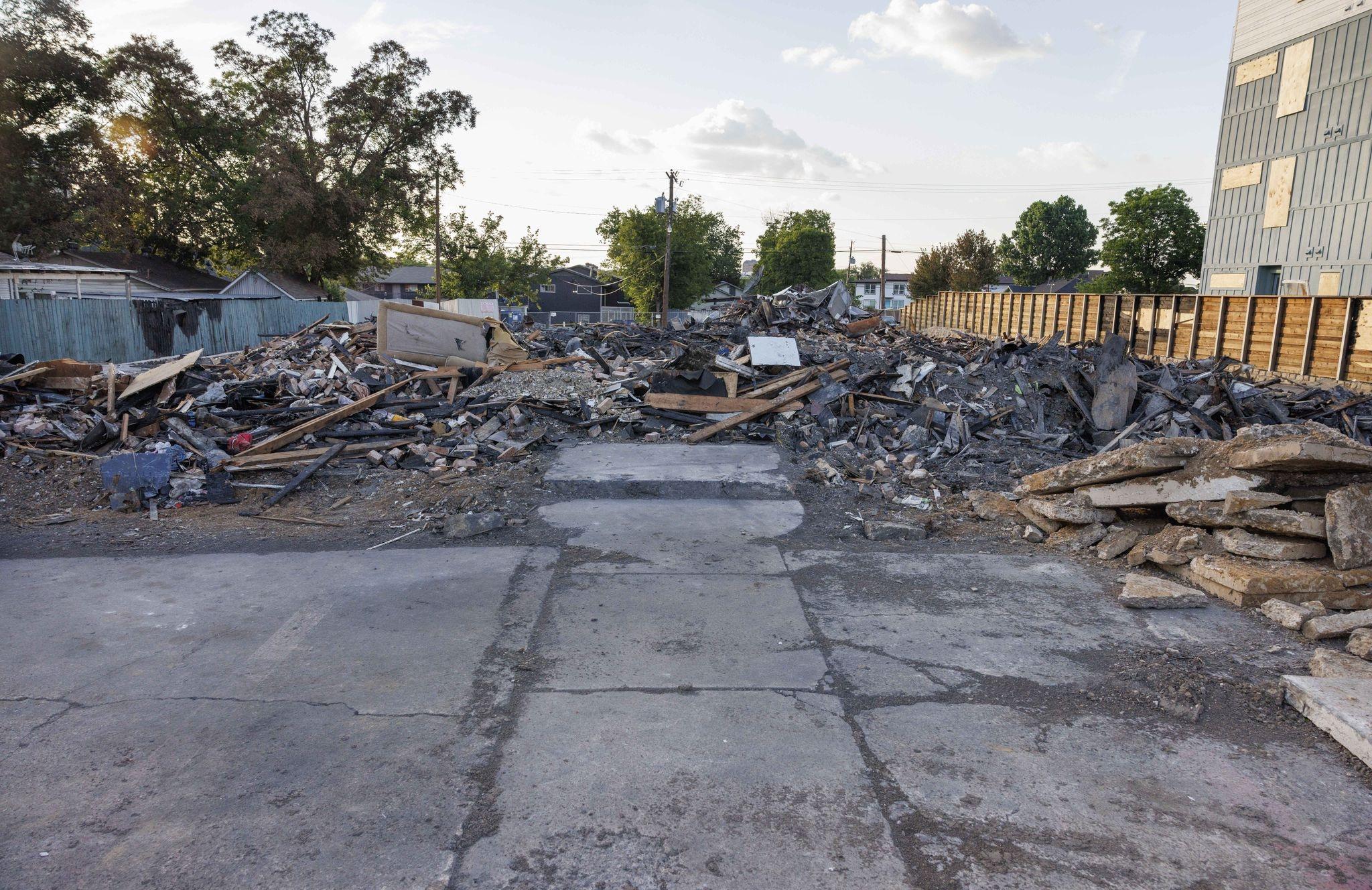
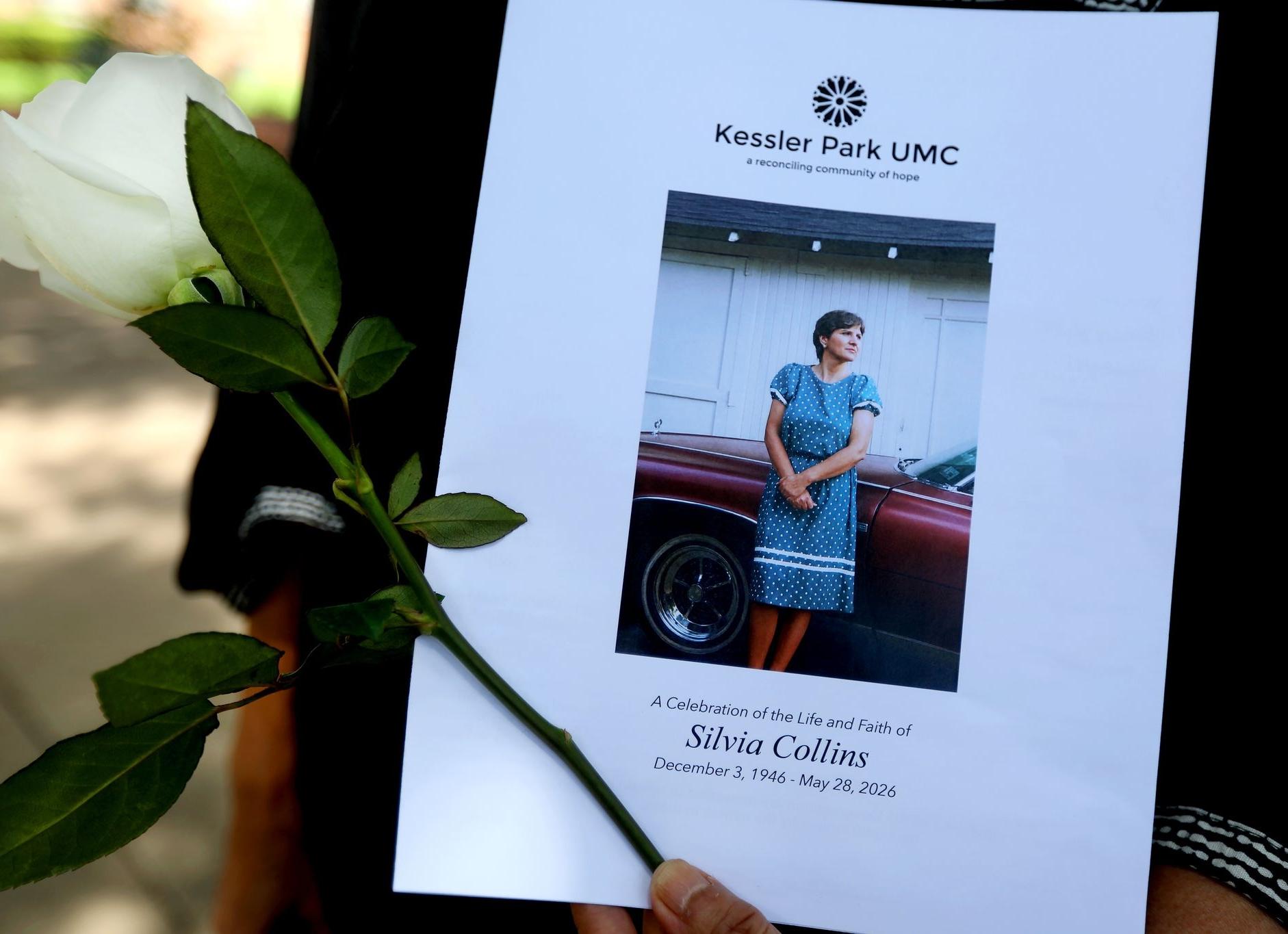
Hamilton represents victims and families injured or killed in the May natural gas explosion at The Clyde apartments in Oak Cliff. Three people died and at least five were injured.
The courtroom exchange took place during an animated hearing Monday centered on the victims’ and families’ request for Atmos to turn over records in the litigation’s pre-trial phase. That’s where attorneys exchange documents and other information to support their clients’ case.
The hearing was routine and procedural in a case that could be consequential. The victims and their families hope to hold the energy company accountable — at least monetarily — for the damage caused that day.
The victims at The Clyde are not alone. Their case is one of four lawsuits against Atmos related to natural gas explosions that are pending in Dallas County courts. In legal filings, Atmos has denied wrongdoing in each case.
“Our hearts go out to the people who were lost, their families, and everyone who has been impacted by this tragedy,” Atmos said in a statement to The Dallas Morning News. “The safety of our employees, customers, and the communities we serve is our highest priority.
“We strongly disagree with the claims made in the lawsuit and will continue to cooperate fully with the investigation and address the claims through the legal process.”
The Clyde exploded about 30 minutes after a driller collecting soil for analysis struck the building’s gas line. The National Transportation Safety Board investigated and in its preliminary report found a company Atmos hired failed to place required warning marks at the correct location. USIC Locating Services, LLC, the company hired to mark the line, is also a defendant and has denied wrongdoing.
Attorneys representing the victims wanted to know if poor line marking was a pattern for Atmos lines. They had requested records of any instance, between Jan. 1, 2024 and July 1, 2026, of Atmos lines being struck after a call was made to 811 but lines were not properly marked.
Atmos had argued that the request was overbroad, burdensome to produce, irrelevant to the single pipeline struck at The Clyde, and that filling it would go against the wishes of the NTSB. In court filings, attorneys for Atmos have provided the court with letters from the NTSB stating certain information related to the explosion should not be released.
Early in the hearing, Hamilton and Marquette Wolf, another attorney for the victims and their families, introduced David Appelbaum, a former official with the federal Pipeline and Hazardous Materials Safety Administration. PHMSA oversees state agencies such as the Texas Railroad Commission, which, in turn, regulate energy providers such as Atmos.
Appelbaum now owns the consulting firm Clearpath Pipeline Advisors, and is serving as an expert witness in the case. His testimony at the hearing, the attorneys said, would show that Atmos has problems across its system.
Appelbaum, Hamilton told the court, contributed to a report based on a first-of-its-kind federal assessment of Atmos’ safety practices in Texas and the seven other states it supplies natural gas.
As The News reported this month, that assessment began after two houses exploded in early 2024 in Jackson, Miss., in a neighborhood where Atmos supplied natural gas, killing a woman and injuring another person.
The News found that a report based on the assessment was under management review early in 2025, but has yet to be released.
Appelbaum, the attorneys said, had analyzed publicly available data related to Atmos’ safety record to present at the hearing.
As Monday’s hearing proceeded, slides showing Appelbaum’s comparisons between Atmos’ Mid-Tex division and other natural gas providers across the country flashed on the screen. After the hearing, the attorneys provided a copy of his presentation to The News.
Compared to five other natural gas providers in the country with similar mileage of gas mains as Atmos’ Mid-Tex division, Appelbaum found, the division had the highest number of accidents that require reporting to PHMSA — and more than half were due to excavation damage. Atmos Mid-Tex, Appelbaum found, also had the highest number of fatalities and injuries per mile of gas mains compared to the other five providers.
Atmos Mid-Tex also reported the highest number of active leaks in the country in 2025 — both in raw numbers, and per miles of main, according to Appelbaum’s analysis — nearly twice as many as the next-highest operator. Atmos’ number of reported active leaks at the end of each year has been trending upward for the last 10 years, he found.
By its most recent report to the federal government Appelbaum found, Atmos Mid-Tex owns 2.4% of miles of gas mains in the country, but its almost 23,000 reported leaks accounted for more than 21% of leaks reported nationwide.
The News provided Atmos with a copy of Appelbaum’s analysis for a response.
In a statement to The News, the company attributed its increasing number of reported leaks on improvements in leak detection. Atmos further said it had not had a chance to review Appelbaum’s analysis, which it argued contained numerous topics “unrelated to the facts of the case,” nor did it have a chance to cross-examine him.
“Because we do not have access to the raw data,” the statement read, “it’s difficult for us to validate it and comment on the substance.”
Appelbaum confirmed to The News his analysis was based on data that is publicly available on PHMSA’s website.
As Appelbaum rose to testify, Judge Bellan said she wanted to hear from Atmos first.
Susan Kennedy, a lawyer with Baker Botts L.L.P. representing Atmos, told the judge that based on the NTSB’s letters, Atmos hadn’t even provided its own attorneys the requested information. And because of the way Atmos stores information related to line strikes, each of the almost 3,000 strikes required manually downloading individual records.
Bellan wasn’t having it. She repeatedly interrupted Kennedy, saying she had a responsibility to the court to get the documents.
The high volume of documents related to improperly marked lines wasn’t a reason to not produce them, Bellan said. On the contrary, she said, so much improper marking made producing the documents more important.
“It sounds like Atmos is saying ‘this is so bad for us’,” Bellan said, “ ‘we don’t want to give it to you’.”
“I’m instructing Atmos to produce all responsive information,” Bellan said. “NTSB cannot control what this court can and cannot do.”
Appelbaum left the hearing without testifying.
Afterward, he told The News “When you have numbers like we’re seeing, you have to be concerned.”
A trial is set for June 29, 2027 in Dallas County.
Other lawsuitsIn addition to the lawsuit over The Clyde explosion, Atmos Energy is facing lawsuits for three others that together have killed one person and injured more than 20. In all the cases, plaintiffs have alleged negligence on Atmos’ part, and Atmos has denied wrongdoing.
Fort Worth
On January 8, 2024, a natural gas explosion rocked the Sandman Signature Fort Worth Downtown Hotel, injuring at least 21 people. Atmos supplied natural gas to the hotel.
According to the lawsuit, employees smelled gas in the building’s basement, but managers didn’t evacuate the building. And Atmos, the suit alleges, hadn’t installed a pressure regulator on the property’s gas meter.
Like Atmos, the hotel and restaurant owners are defendants and have also denied wrongdoing.
No trial date has been set.
Carrollton
Less than two weeks after the Sandman explosion, at about 3:45 a.m. on Saturday, Jan. 20, Sergio Valdez was in the bathroom of his Carrollton home when the house exploded. Valdez spent a month in the hospital with severe burns to his face and arms, and then died from his injuries.
Valdez left behind a wife, four children, and a grandchild.
Atmos investigated and found that two segments of the 3-inch-diameter plastic gas main under the alley behind the house had separated. The pipe had been installed in 1974. The gas migrated to the home through the sewer system, according to the report Atmos submitted to PHMSA.
A trial is set for Nov. 2 in Dallas County.
Lake Dallas
In March 2026, a home without natural gas service exploded in the early evening in Lake Dallas, a small town in Denton County just west of Lewisville Lake. The roof blew off, walls were leveled, debris flew into the trees, and the home caught fire, according to a lawsuit filed by Jessica Lopez, the woman who lived there.
Lopez was buried under the rubble until neighbors rescued her. She had burns on her face and body, broken bones, and wounds from flying debris. She was hospitalized in the intensive care unit. After the accident, Atmos arrived to investigate, found subsurface gas nearby, and shut off gas in the area, according to the incident report the company submitted to PHMSA. A leak was discovered in a nearby gas main. The pipe, Atmos reported, had been installed in 1970.
A trial is set for Nov. 1, 2027.