

Thoroughbred racing disappeared from New England in 2019, when horses circled the Suffolk Downs track in East Boston for the last time.
Now, the return of this sport of kings could be up to voters in the no-stoplight farming town of Hardwick.
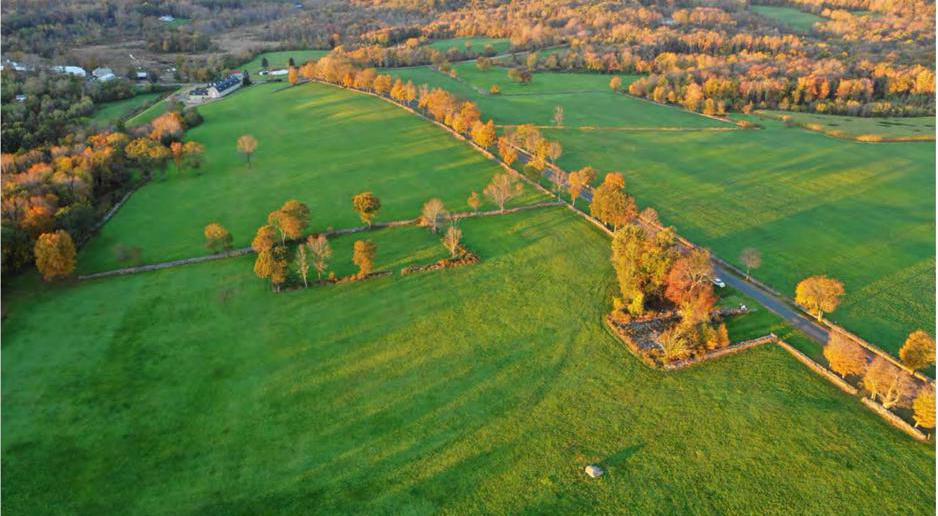
Developer Richard Fields and his business partners — including Medfield horse breeders Armand Janjigian and Robin Kalaidjian — are planning a thoroughbred breeding and racing facility, dubbed the Commonwealth Equine and Agricultural Center, for the 360-acre Great Meadowbrook Farm. First, they need a referendum in Hardwick to go their way on Saturday. They would build two barns and a community pavilion. Most race-related structures would be temporary, going up around a one-mile grass oval, and parking would happen elsewhere in town.
With an operating track, Fields would have the right to a sports betting license, to offer year-round online bets and in-person wagers on race days.
However, the $20 million proposal has sharply divided this quiet Central Massachusetts town of about 2,600 residents.
Opponents worry about traffic on race days when several thousand people could descend on Hardwick, and argue using state-protected farmland for an operation tied to gambling sets a bad precedent. Supporters cite the $500,000 that would go annually to the town budget, and dozens of new jobs. There would be a single two-day race weekend this year, in September, and in 2024 and 2025, with two weekends in 2026 and in 2027.
Hardwick’s selectmen recently voted 2-1 in favor of the proposal, but critics rapidly gathered several hundred signatures in opposition. The Massachusetts Gaming Commission awaits the results of this weekend’s referendum before granting a racing license.
“This is an opportunity to ... preserve the farm and simultaneously provide jobs and revenue that the community very much wants,’’ project attorney John Stefanini said.
Fields and his partners expect farm operations, breeding, and racing would all lose money, Stefanini said. They plan to make up for it with revenue from online betting on sports events and races. Fields spent heavily on lobbyists last year to persuade the Legislature to approve a law allowing sports wagering; lawmakers eventually did so last summer. (The state’s remaining horse track, in Plainville, features cart-pulling standardbreds.)
Fields had invested in Suffolk Downs years ago, with the hopes a casino could subsidize horse racing there, but the Greater Boston casino license went to Wynn Resorts instead. More recently, Fields pursued a track concept in Sturbridge, but lost a crucial town-meeting vote.
With those setbacks in mind, Paul Umbrello, executive director of the New England Horsemen’s Benevolent and Protective Association, and several other horsemen were busy this week with last-minute campaigning in Hardwick. Even with limited racing days, Umbrello said Commonwealth Equine could play a key role in ensuring thoroughbred breeding and care survives in Massachusetts.
Critics such as Cara Wilczynski, who lives near the site, have been making their case to voters, too. She said the proponents have not shared enough details, and she doesn’t think the remote property is a good place for a racetrack.
“I’m all for supporting any business in town,’’ she said. “What I’m not interested in is making these millionaires richer, ... these people who are trying to come into the town and take over.’’
Several local farmers have also been fighting it. They worry it could erode protections from the state’s Agricultural Preservation Restriction program. APR subsidies helped preserve nearly 1,000 farms — including Great Meadowbrook, now used for hay — totaling more than 73,000 acres across the state since the late 1970s.
“If you let one farm do it, you have to let the others do it,’’ said Kate Stillman, owner of Stillman Quality Meats, referring to other possible commercial uses being proposed for farmland. “Once this is let out, it’s Pandora’s Box.’’
Stefanini argued that racing indeed fits the state’s agricultural definition, noting that race festivals are often used to buy and sell horses.
“It may not be lettuce, ... but it’s an agricultural product,’’ he said, “no different from a pig farm or a duck farm.’’
Jon Chesto can be reached at jon.chesto@globe.com. Follow him on Twitter @jonchesto.