The show must go on
Performing Law: Actors, Affects, Spaces (Law in Context)


Performing Law: Actors, Affects, Spaces (Law in Context)
Editors: Peter Goodrich, Anna Jayne Kimmel and Bernadette Meyler £105, Cambridge University Press
An early book by Peter Goodrich (once described as the Keith Richards of postmodern legal theory) was Languages of Law: From Logics of Memory to Nomadic Masks (1990). It was published within the Law in Context series, of which this edited volume forms a part. Over 35 years, Goodrich has footloosed from masks to masques, an element of performance being part of his contribution to thinking about law.
A review of Languages of Law praised it as a law book with pictures, a device repeated in this volume of essays.
Indeed, the contributors resemble a troupe of eminent groundling scholars who are reverentially imitating and politely elucidating on imagery and a canonical text.
The images are taken from an installation created by Carey Young called Palais de Justice (2017), which ‘moves as if by stealth through the soaring architecture of the Brussels law courts, noticing strange symmetries, hidden figures, the weird murmur of voices that are always elsewhere, behind closed doors’ (Guardian, 26 March 2023). Here the lawyer is glanced as a diminutive and costumed figure who is engulfed by the stage of the law. And we are reminded at the outset that actor is an old Latin term for lawyer.
The canonical text which these essays reflect upon is Julie Stone Peters’ Law as Performance: Theatricality, Spectatorship, and the Making of Law in Ancient, Medieval and Early Modern Europe (2022). This is described here as ‘meticulous, mellifluous and monumental’ in provoking and taunting (legal) scholars in their siloes and secluded specialisms’.
The editors of this volume note that Peters argues that ‘the force of law lies in its aesthetics, in the style of its performance’.
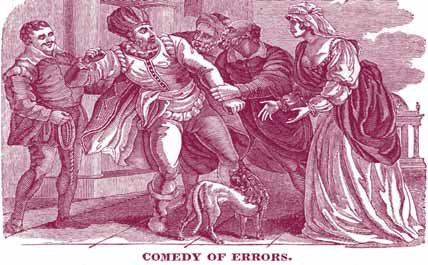
I am writing this review from Gray’s Inn Library overlooking South Square. Here, in the Elizabethan period, there were masques and revels, and it is where Shakespeare’s The Comedy of Errors was apparently first staged.
Here also is where students still learn the Art of the Advocate (first published in 1964), following their success in university mooting and debating competitions. And costumed actors continue to perform in the various courts of protection, of immigration, of high and low, of criminal and civil, whether costumed or not.
For a lawyer who has stood in a court or tribunal, wigged and gowned or not, solicitor or barrister, knows that their argument, their rhetoric, their forensics, their force of law are key elements of their performance made to judges with downcast eyes, to jurors and to the public gallery and media. The force of their performance lies in the style of their law. And the style of the law – its aesthetics – is its power, increasingly in contemporary societies dominated by the visual, not the textual.
Performing Law explores some of the theoretical and conceptual questions opened by Peters. It does this over 11 essays, and a reflection by Peters on the reception of her work, on how it is being reviewed and played out. The essays are presented – performed – in three parts, each prefaced with an image from Young’s installation.
Part 1 concerns the forensic as the Latin derivation for the forum where the law is performed. Here the essay by Mukherji (Chapter 3) shows how the schools of the law at the Inns of Court depended on familiarity with the techniques of theatre and the arts of the actor in learning to persuade through performance.
Part 2 concerns affectations, ‘the fleeting emotions and humours, to the play of anger, laughter, sorrow and anxiety’ on the margins (in the wings?) of the presumed gravitas and authority of law, which is centre stage. Here, I was struck by a statement from Bentham that ‘in a well-composed committee of penal law, I know not a more essential personage than the manager of a theatre’ (Kafka’s Harrow as the ultimate theatrical prop in the execution of the law).
Part 3 considers transgressions as ‘the ways in which law is performed and transgressed, through absence, interruption, non-performance, hilarity, laughter, and the various eruptions that follow’. Here Goodrich entertains (Chapter 9) with an examination of the fabrication of common law in terms of what the 17th-century barrister (also lexicographer and antiquarian) Thomas Blount coined as comediography (comœdiographus). ‘In whirl and jig, lawyers and playwrights of comedies share a trajectory from conflict to resolution, disruption to decision,’ providing a harmonious conclusion.
In this part enters Naked Athena before the police in Portland, Oregon, in 2020, committing an inoffensive offence in a mask. I was reminded of the transgressive refusal to accept the presence/ authority of the court by the Baader-Meinhof section of the Red Army Faction. Here the performance was a mute and unmasked act of violent negation of judicial authority.
This collection is edited with wit. The troupe is composed of both scholars of law, specifically jurisprudes (to use the description of the editors) and of the humanities, including visual arts and performance studies.
For those unexposed to the aesthetic turn in contemporary legal theory, the play of ideas may be dense and forbidding, indeed unwelcoming to the practical lawyer plying a trade before the law and viewed as absurd. But stripped back – indeed unmasked – the practical lawyer is a player in the performance of law.
As I concluded this review, Peters reminded me in her reflection on her own work and that of her glossators (Chapter 13) that writing to produce text – particularly in the practice and scholarship of law – excludes performance. But now contemporary life is dominated by performance and the visual, and the artifices of the theatrical.
Therefore, codes and norms risk becoming dead letters. This may be a good thing in terms of positive transgressive acts. This may be a bad thing in terms of society losing the script.
The letter of the law is held by lawyers and judges. If it is lost in the post – on the way to the theatre – there is a risk of uncertainty and ambivalence about the role of law when played out.
We would then sit with Kafka’s Josef K, having gone through the door to the theatre of the law, waiting for the performance. Kafka was a legal clerk with a love of theatre.
Christopher Stanley is a domestic and international human rights advocate, Relatives for Justice
Editors: Peter Goodrich, Anna Jayne Kimmel and Bernadette Meyler £105, Cambridge University Press
An early book by Peter Goodrich (once described as the Keith Richards of postmodern legal theory) was Languages of Law: From Logics of Memory to Nomadic Masks (1990). It was published within the Law in Context series, of which this edited volume forms a part. Over 35 years, Goodrich has footloosed from masks to masques, an element of performance being part of his contribution to thinking about law.
A review of Languages of Law praised it as a law book with pictures, a device repeated in this volume of essays.
Indeed, the contributors resemble a troupe of eminent groundling scholars who are reverentially imitating and politely elucidating on imagery and a canonical text.
The images are taken from an installation created by Carey Young called Palais de Justice (2017), which ‘moves as if by stealth through the soaring architecture of the Brussels law courts, noticing strange symmetries, hidden figures, the weird murmur of voices that are always elsewhere, behind closed doors’ (Guardian, 26 March 2023). Here the lawyer is glanced as a diminutive and costumed figure who is engulfed by the stage of the law. And we are reminded at the outset that actor is an old Latin term for lawyer.
The canonical text which these essays reflect upon is Julie Stone Peters’ Law as Performance: Theatricality, Spectatorship, and the Making of Law in Ancient, Medieval and Early Modern Europe (2022). This is described here as ‘meticulous, mellifluous and monumental’ in provoking and taunting (legal) scholars in their siloes and secluded specialisms’.
The editors of this volume note that Peters argues that ‘the force of law lies in its aesthetics, in the style of its performance’.
I am writing this review from Gray’s Inn Library overlooking South Square. Here, in the Elizabethan period, there were masques and revels, and it is where Shakespeare’s The Comedy of Errors was apparently first staged.
Here also is where students still learn the Art of the Advocate (first published in 1964), following their success in university mooting and debating competitions. And costumed actors continue to perform in the various courts of protection, of immigration, of high and low, of criminal and civil, whether costumed or not.
For a lawyer who has stood in a court or tribunal, wigged and gowned or not, solicitor or barrister, knows that their argument, their rhetoric, their forensics, their force of law are key elements of their performance made to judges with downcast eyes, to jurors and to the public gallery and media. The force of their performance lies in the style of their law. And the style of the law – its aesthetics – is its power, increasingly in contemporary societies dominated by the visual, not the textual.
Performing Law explores some of the theoretical and conceptual questions opened by Peters. It does this over 11 essays, and a reflection by Peters on the reception of her work, on how it is being reviewed and played out. The essays are presented – performed – in three parts, each prefaced with an image from Young’s installation.
Part 1 concerns the forensic as the Latin derivation for the forum where the law is performed. Here the essay by Mukherji (Chapter 3) shows how the schools of the law at the Inns of Court depended on familiarity with the techniques of theatre and the arts of the actor in learning to persuade through performance.
Part 2 concerns affectations, ‘the fleeting emotions and humours, to the play of anger, laughter, sorrow and anxiety’ on the margins (in the wings?) of the presumed gravitas and authority of law, which is centre stage. Here, I was struck by a statement from Bentham that ‘in a well-composed committee of penal law, I know not a more essential personage than the manager of a theatre’ (Kafka’s Harrow as the ultimate theatrical prop in the execution of the law).
Part 3 considers transgressions as ‘the ways in which law is performed and transgressed, through absence, interruption, non-performance, hilarity, laughter, and the various eruptions that follow’. Here Goodrich entertains (Chapter 9) with an examination of the fabrication of common law in terms of what the 17th-century barrister (also lexicographer and antiquarian) Thomas Blount coined as comediography (comœdiographus). ‘In whirl and jig, lawyers and playwrights of comedies share a trajectory from conflict to resolution, disruption to decision,’ providing a harmonious conclusion.
In this part enters Naked Athena before the police in Portland, Oregon, in 2020, committing an inoffensive offence in a mask. I was reminded of the transgressive refusal to accept the presence/ authority of the court by the Baader-Meinhof section of the Red Army Faction. Here the performance was a mute and unmasked act of violent negation of judicial authority.
This collection is edited with wit. The troupe is composed of both scholars of law, specifically jurisprudes (to use the description of the editors) and of the humanities, including visual arts and performance studies.
For those unexposed to the aesthetic turn in contemporary legal theory, the play of ideas may be dense and forbidding, indeed unwelcoming to the practical lawyer plying a trade before the law and viewed as absurd. But stripped back – indeed unmasked – the practical lawyer is a player in the performance of law.
As I concluded this review, Peters reminded me in her reflection on her own work and that of her glossators (Chapter 13) that writing to produce text – particularly in the practice and scholarship of law – excludes performance. But now contemporary life is dominated by performance and the visual, and the artifices of the theatrical.
Therefore, codes and norms risk becoming dead letters. This may be a good thing in terms of positive transgressive acts. This may be a bad thing in terms of society losing the script.
The letter of the law is held by lawyers and judges. If it is lost in the post – on the way to the theatre – there is a risk of uncertainty and ambivalence about the role of law when played out.
We would then sit with Kafka’s Josef K, having gone through the door to the theatre of the law, waiting for the performance. Kafka was a legal clerk with a love of theatre.
Christopher Stanley is a domestic and international human rights advocate, Relatives for Justice