

I HAVE been living and working in Jersey for 21 years and have seen how politicians and NHS-appointed senior managers have ruined the health service here by introducing an NHS culture.
That culture was to disempower and ignore doctors and nurses when they raise concerns about the strategic (NHS) path they are introducing, believing it is the only way to modernise our healthcare system.
Recruitment and retention of good staff in Jersey is a problem, not isolated to us, but is affecting much of the developed world. However, recent exit interviews indicate a quarter of those leaving are for “cultural reasons”, indicating strong differences of opinion, poor leadership, lack of support and poor career development, with only very few leaving because of cost of living.
The result is a 27% shortage of nurses.
In order to maintain our current good standards of care, we have needed to employ bank and agency nurses and allied healthcare professionals (AHPs) and locum doctors and consultants at a cost of a £28 million overspend.
The NHS way is a broken system caused by underfunding and over-management.
We need an Island-specific rethink, and as a small independent jurisdiction, we have the opportunity to achieve it. But it will mean spending in the short term to produce savings in the long term.
A dreadful amount of money is wasted by HCS because of political interference and too many non-clinical appointments who do not add value to patient care.
The obvious example is the £140 million spent planning the new hospital (and not a brick laid).
Politicians pass the site. They pass the funding. Planning gets passed eventually, after four attempts and ten years. And then, a new States Assembly is voted in and it all stops dead.
Now we have a multi-site New Hospitals Facilities Project (NHFP). The costs are spread over a longer period, therefore, arguably more affordable and cheaper. That may be so, but there has not been any assessment of the cost of running multiple sites, which will need more staff and duplicating equipment.
Finding extra equipment is easy, but finding quality permanent staff is elusive, unless of course the politicians are prepared to recognise their value with better terms and conditions.
The running costs will inevitably be much higher for multiple sites than a single site. What is saved by the build in the short term is going to be swallowed up by the revenue costs over time by several fold.
And therein lies the problem. Short-termism – running from one four-year term to another rather than forward thinking and anticipating our healthcare demands.
I am neither supporting nor condemning the NHFP because I see the urgent need for a new hospital, and like the silent majority, I say “Just get on with it, and stop wasting our money.”
The past two Treasury Ministers have asserted the need for HCS to work within their budget, and I agree. The £28 million overspend is mostly because of paying for essential locum consultant doctors and agency staff. They are essential to try to stop our waiting lists getting longer for routine surgeries and procedures. So, if the HCS budget is cut, services will have to be cut, and we will have to go outside the Island for treatment. Is this what we really want? There are other examples of “inappropriate” political interference in recruitment, with 66 steps to overcome in order to appoint certain frontline staff; even an Olympian would be hard-pressed to overcome these hurdles. Differences of “management style” and “lack of support” have led to resignations from important roles, and more wasted money.
There are complaints about waiting lists being too long, and there are examples of the current senior-executive team beginning to listen to our doctors about how these should be addressed.
The “turnaround” team led by Chris Bown, and the finance director, Obi Hasan, have made a positive difference, in my opinion. They respond to emails and they seem to be listening to clinicians’ concerns and ideas about our health service.
It was a significant loss to lose Professor Simon McKenzie overseeing governance.
They have reduced the waiting lists for cataract surgery, endoscopy and MRI scans by listening and facilitating clinicians, after they were approached directly, missing out some middle managers. But it has come with a cost.
Endoscopy has had to bring in a team of doctors and nurses to work Saturdays and Sundays for four months. The waiting list has come down from over six months to several weeks. This has cost HCS £800,000.
MRI-scan waiting lists have come down when clinicians suggested doing additional public and private (70:30 split) lists in the evenings and weekends. The staff were paid extra to work in their own time. The initial outlay was £100,000. The income generated from the private patients’ scans paid for this.
Not only did the waiting list reduce from several months to a few weeks, it also highlighted the need to invest in four additional X-ray staff to maintain the short wait. Income from private practice raises over £30 million for HCS, and has been recognised and encouraged by the Health Minister.
Then there is the waiting list for cataract surgery and, as many know, our patients have been sent off to the UK. Their flights, accommodation and surgery have been paid for out of taxpayers’ pockets, because we do not have the staff nor the capacity for the demand.
Healthcare inflation is at least 3% higher than the general rate of inflation. The cost of drugs, chemotherapy, immunotherapy and new treatments are even greaterthan that, and that’s if we can get hold of them (eg ADHD drugs, HRT). So how are we going to pay for it? The current HCS budget is £250 million, and we are told to save £25 million over the next three years, £8 million by the end of 2025. But the costs of treatments and staffing are increasing. The Health Minister has realised this after consultations with clinicians (and recent clinical retirees), the HCS Advisory Board and other experts, and asked for a further £24 million.
The hospital build may be partly paid for by the “windfall” revenue generated by the OECD “Pillar Two Framework”, taxing the 3% of Jersey companies worth over £630 million, but this may not be recurring revenue.
So what are the choices: perhaps cut services? The (broken) NHS have abolished the following surgical procedures, considering them to be “non-vital” in a vain attempt to cut waiting lists for more “important” operations. The list includes:
•Removal of benign skin lesions.
•Breast reduction.
•Tonsillectomy for sore throats.
•Hysterectomy for heavy menstrual bleeding.
•Chalazia (lesions on eyelids) removal.
•Removal of bone spurs for shoulder pain.
•Carpal tunnel syndrome release.
•Dupuytren’s contracture release for tightening of fingers.
•Ganglion excision – removal of noncancerous lumps on the wrist or hand.
•Trigger finger release.
•Varicose vein surgery.
•Injections for back pain.
•Knee arthroscopies for arthritis and snoring surgery are to be banished completely; others such as grommets for glue ear, haemorrhoid surgery and the removal of skin lesions will be restricted to exceptional cases.
There would be an outcry from those affected by these conditions, and in Jersey it seems the minority who shout loudest are heard above the quieter majority.
I read about Parkinson’s Law (as mentioned in Kevin Keen’s recent article) when work fills in time, and managers are appointed to buffer those at the top.
This has happened since the Island began appointing managers from the NHS over 15 years ago.
But what should we actually do? Making savings by cutting back on non-front-line managers would be a good idea, after examining all non-patient-facing posts and justifying the value of their roles in patientcare, and governance. It seems that for every new manager there is at least one assistant manager. It sounds like a bacterial culture. They do not add value to patient care. Just like clinical staff their appointments have to be justified.
What about raising taxes? “Oh! My!
God!! (Shock!! Horror!!) You can’t do that!!”
I hear you shout. I would shout too. What about increasing the duty on smoking (cigarettes and vapes) and alcohol, and cannabis products? These lead to demands on our health service, so smokers and excessive drinkers not only “invest” in their deteriorating health, but also “invest” in their inevitable future healthcare needs.
How much would a ring-fenced 1% on duty generate? For the size of our population, we receive a very broad range of services, procedures and operations for which a similar-sized cottage hospital in the UK would send their patients to larger hospitals many miles away. And I believe that our clinical professionals are as good as the bigger centres, with the addition of our hospital staff being more compassionate and caring.
We need to restructure our health service away from the broken NHS model that we’ve careered down for the past 15 years.
We need a patient-centred system, providing care where the demand is, and not what managers think we need. We need to educate about healthier lifestyles, diets and exercise.
We need to improve community and social care with attractive terms and conditions for the carers. We need to care for carers, recognising and supporting families who sacrifice their time and lives for the care of their relatives.
We need to flatten the management structure across HCS, with managers being closer to front-line workers by listening and facilitating, and not dictating.
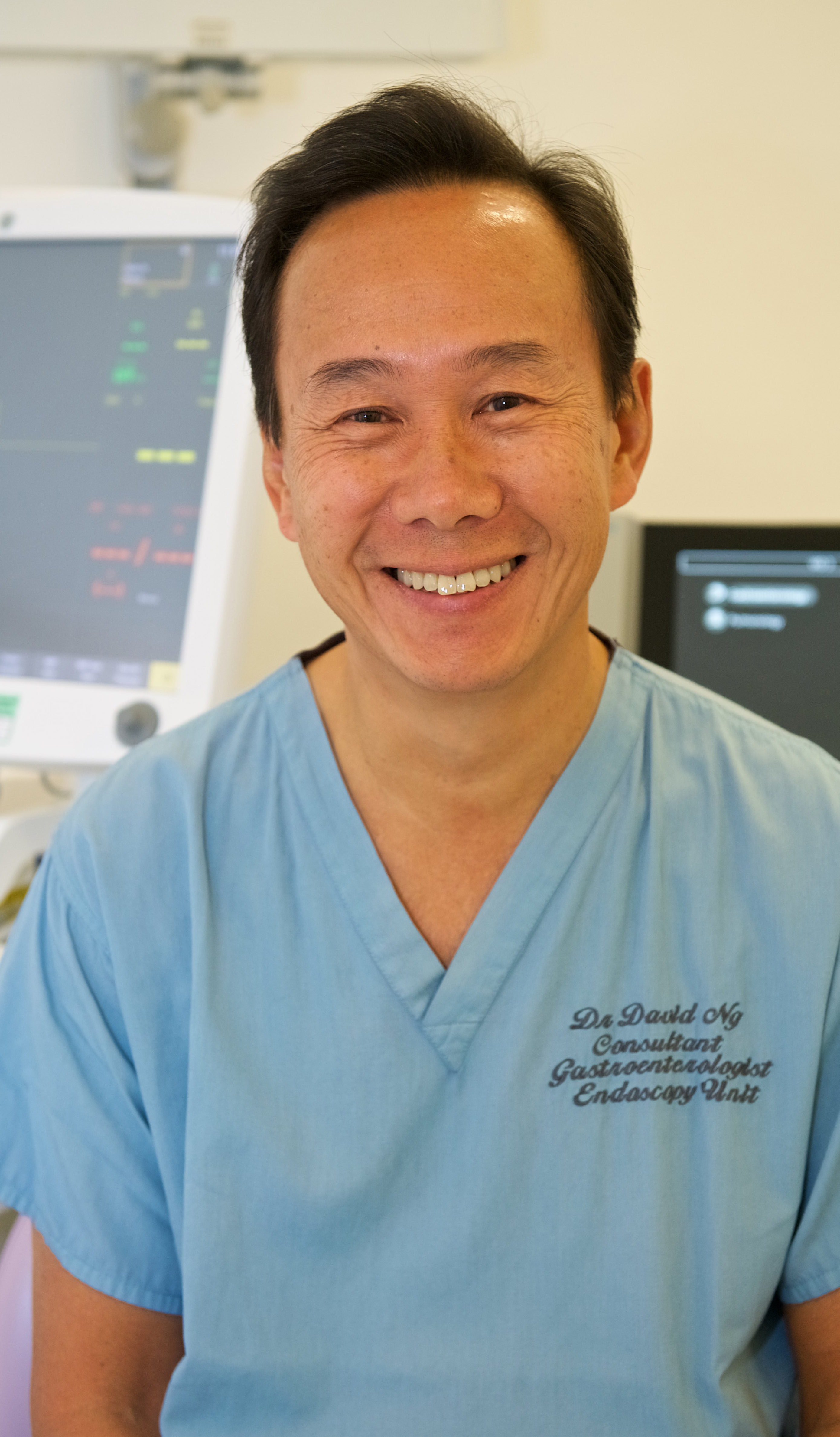
•Dr David Ng was a medical consultant serving Jersey for 20 years, heading up a prize-winning island bowel cancer screening programme, and gastroenterology service. He was a member of the Our Hospital Project team between 2018 to 2022.
‘ We need to restructure our health service away from the broken NHS model that we’ve careered down for the past 15 years. We need a patient-centred system, providing care where the demand is, and not what managers think we need. We need to educate about healthier lifestyles, diets and exercise