Spain, Vox, and European populism

Analysis
by Scott Chipolina
by Scott Chipolina
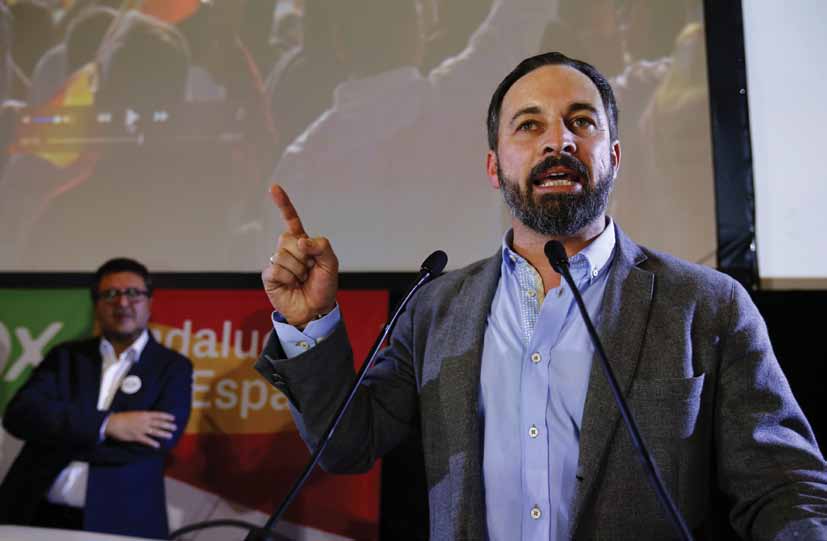


Far right politics has enjoyed success across Europe in recent years.
France’s National Rally, Italy’s League party, Hungary’s Fidesz, and Germany’s Alternative Für Deutschland have all attested to the rise of populism. As statistics from the BBC show, as many as 15 European parliaments already have far-right representation in their halls. Thus far, with voters’ collective memories of the Franco era still prominent, Spain’s national politics has remained commendably immune to these movements. However, Andalucia’s December 2018 elections have shown that this dynamic is changing, and Spanish populism promises to be the latest iteration of Europe’s return to the far right.
Established in 2013 and led by former Partido Popular lawmaker Santiago Abascal, Vox gained 11% of Andalucia’s vote, forming a coalition with the PP and Cuidadanos, upending 36 years of socialist rule in the region.
Without the doubt, there are explanations for Vox’s sudden rise that are unique to Spain’s political context, including their approach to Catalonia and Gibraltar. However, one cannot understand Vox without first understanding the wider European background from which it has its origins.
Vox’s rise has followed the European populist’s playbook to a tee. Their success in Andalucia can be attributed to three pillars of this narrative; immigration, unemployment rates, and political corruption. In 2018 alone, Spain took in 27,614 refugees, more than the two other leading Mediterranean states in Italy’s 18,475 and Greece’s 16,142.
In Almerìa, where the foreign population is about double the national average, Vox’s antiimmigration rhetoric was vindicated.
The party polled at 17%, well above their regional share of 11%.
Unemployment in Andalucia sits at roughly 21%, which soars at 7% above the national average.
Coupled with corruption charges leveled at PP after the party benefitted from a ‘massive grant scheme involving kickbacks in exchange for public contracts to businesses’, and Vox’s appeal strengthens in the eyes of the ‘everyday’ Andalucia citizen, who feels they have lost out to illegal immigrants and corrupt politicians. Much like Trump’s 2016 campaign promise to ‘drain the swamp’ of corruption in Washington DC, Vox has tapped into a population anxious about their way of life, harnessing the perceived failures of Spain’s political establishment.
Vox has also taken a page out of President Trump’s media playbook. As the era of ‘fake news’ surges across Western democracies, Vox has joined the attack on those who criticize party line. On December 2nd, 2018, the day Vox achieved their maiden parliamentary success, the left leaning media outlet La Sexta was banned from the party’s electoral building. You can listen to Santiago Abascal’s discussion of events during an interview on the following day, here.
These populist bases have propelled Vox into the newest ally of European far-right politics.
However, they also owe their success to two issues that are particular to the Spanish political condition, Catalonia and Gibraltar.
The Catalonian independence movement is considered a national embarrassment in the eyes of Spain’s right-wing patriots, who consider the current government weak on this issue, offering little more than timid dialogue.
Since the establishment of Spain’s 1978 constitution, Spanish democracy has been comprehensively decentralized and regions like Catalonia enjoy relative autonomy. Vox’s response to this issue would mark a return to centralized political power in Madrid, as a means of quelling Catalonia’s thirst for independence: “Transforming the Estado autonómico into a state with a single set of laws that will promote equality and solidarity instead of privilege and division. One single government and one single parliament for all of Spain.
As a preliminary step, [we want] the immediate devolution of powers over education, health, security and justice, and to curtail regional legislative power as much as possible.”
According to the Center for Sociological Research, support for prying back regional autonomy has grown by 3% since last year, now sitting at 30%.
This makes life incredibly difficult for Spanish Prime Minister Sanchez, who needs to keep Catalonia’s lawmakers on side as long as they retain the political power guaranteed to them by Spain’s 1978 constitution.
However, what may help consolidate his political clout today, certainly will not help his and PSOE’s electoral cause tomorrow.
If support for Vox’s proposals continues to rise, Sanchez’s future is further cast into dou bt.
On the subject of Gibraltar, Abascal has declared his party’s intentions in no unclear terms.
On Vox’s Youtube account, the leader states: ‘Pablo Casado habla de co-soberenia, Vox habla de soberenia. España debe recuperar la soberenia sobre Gibraltar.’ Translated, Abascal argues that while the PP pursue co-sovereignty of Gibraltar between the UK and Spain, Vox cares only for complete Spanish control of our peninsula. This elevates Vox into the epicentre of Spain’s right-wing narrative, and Santiago’s own antics from 2016 serve as a reminder that Vox does not hesitate to fan these flames.
It is hard to imagine that Vox has reached their political limits.
A hallmark of extreme parties that find success is their ability not to form a majority government, but to pull a major party closer to them on the political spectrum. The UK knows this all too well. For fear of losing Conservatives to a resurgent UKIP, David Cameron took the decision to offer EU membership to the public via referendum, ultimately costing him his leadership. In similar fashion, Vox’s views on Catalonia and Gibraltar have moved the goalposts for the PP and Pablo Casado.
Jose Luis Mateos, a PhD candidate at Durham University from Barcelona discussed Vox’s role in Spanish politics with me and echoes concern for Gibraltar: “If Article 50 is eventually extended and negotiations for the withdrawal agreement continue, a right-wing government pressured by VOX on Gibraltar’s sovereignty could translate into greater pressures from Spain in the EU to remove Gibraltar from any deal reached with the UK.”
A mainstream embrace of the far right may be just around the corner, and Gibraltarians must look to observe Spain’s political movements in 2019 mindful of this concern.
Scott Chipolina is a Gibraltarian journalist with an academic background in International Relations and the Middle East, focusing on terrorism and international security. He has also written extensively on the far right and populism.
France’s National Rally, Italy’s League party, Hungary’s Fidesz, and Germany’s Alternative Für Deutschland have all attested to the rise of populism. As statistics from the BBC show, as many as 15 European parliaments already have far-right representation in their halls. Thus far, with voters’ collective memories of the Franco era still prominent, Spain’s national politics has remained commendably immune to these movements. However, Andalucia’s December 2018 elections have shown that this dynamic is changing, and Spanish populism promises to be the latest iteration of Europe’s return to the far right.
Established in 2013 and led by former Partido Popular lawmaker Santiago Abascal, Vox gained 11% of Andalucia’s vote, forming a coalition with the PP and Cuidadanos, upending 36 years of socialist rule in the region.
Without the doubt, there are explanations for Vox’s sudden rise that are unique to Spain’s political context, including their approach to Catalonia and Gibraltar. However, one cannot understand Vox without first understanding the wider European background from which it has its origins.
Vox’s rise has followed the European populist’s playbook to a tee. Their success in Andalucia can be attributed to three pillars of this narrative; immigration, unemployment rates, and political corruption. In 2018 alone, Spain took in 27,614 refugees, more than the two other leading Mediterranean states in Italy’s 18,475 and Greece’s 16,142.
In Almerìa, where the foreign population is about double the national average, Vox’s antiimmigration rhetoric was vindicated.
The party polled at 17%, well above their regional share of 11%.
Unemployment in Andalucia sits at roughly 21%, which soars at 7% above the national average.
Coupled with corruption charges leveled at PP after the party benefitted from a ‘massive grant scheme involving kickbacks in exchange for public contracts to businesses’, and Vox’s appeal strengthens in the eyes of the ‘everyday’ Andalucia citizen, who feels they have lost out to illegal immigrants and corrupt politicians. Much like Trump’s 2016 campaign promise to ‘drain the swamp’ of corruption in Washington DC, Vox has tapped into a population anxious about their way of life, harnessing the perceived failures of Spain’s political establishment.
Vox has also taken a page out of President Trump’s media playbook. As the era of ‘fake news’ surges across Western democracies, Vox has joined the attack on those who criticize party line. On December 2nd, 2018, the day Vox achieved their maiden parliamentary success, the left leaning media outlet La Sexta was banned from the party’s electoral building. You can listen to Santiago Abascal’s discussion of events during an interview on the following day, here.
These populist bases have propelled Vox into the newest ally of European far-right politics.
However, they also owe their success to two issues that are particular to the Spanish political condition, Catalonia and Gibraltar.
The Catalonian independence movement is considered a national embarrassment in the eyes of Spain’s right-wing patriots, who consider the current government weak on this issue, offering little more than timid dialogue.
Since the establishment of Spain’s 1978 constitution, Spanish democracy has been comprehensively decentralized and regions like Catalonia enjoy relative autonomy. Vox’s response to this issue would mark a return to centralized political power in Madrid, as a means of quelling Catalonia’s thirst for independence: “Transforming the Estado autonómico into a state with a single set of laws that will promote equality and solidarity instead of privilege and division. One single government and one single parliament for all of Spain.
As a preliminary step, [we want] the immediate devolution of powers over education, health, security and justice, and to curtail regional legislative power as much as possible.”
According to the Center for Sociological Research, support for prying back regional autonomy has grown by 3% since last year, now sitting at 30%.
This makes life incredibly difficult for Spanish Prime Minister Sanchez, who needs to keep Catalonia’s lawmakers on side as long as they retain the political power guaranteed to them by Spain’s 1978 constitution.
However, what may help consolidate his political clout today, certainly will not help his and PSOE’s electoral cause tomorrow.
If support for Vox’s proposals continues to rise, Sanchez’s future is further cast into dou bt.
On the subject of Gibraltar, Abascal has declared his party’s intentions in no unclear terms.
On Vox’s Youtube account, the leader states: ‘Pablo Casado habla de co-soberenia, Vox habla de soberenia. España debe recuperar la soberenia sobre Gibraltar.’ Translated, Abascal argues that while the PP pursue co-sovereignty of Gibraltar between the UK and Spain, Vox cares only for complete Spanish control of our peninsula. This elevates Vox into the epicentre of Spain’s right-wing narrative, and Santiago’s own antics from 2016 serve as a reminder that Vox does not hesitate to fan these flames.
It is hard to imagine that Vox has reached their political limits.
A hallmark of extreme parties that find success is their ability not to form a majority government, but to pull a major party closer to them on the political spectrum. The UK knows this all too well. For fear of losing Conservatives to a resurgent UKIP, David Cameron took the decision to offer EU membership to the public via referendum, ultimately costing him his leadership. In similar fashion, Vox’s views on Catalonia and Gibraltar have moved the goalposts for the PP and Pablo Casado.
Jose Luis Mateos, a PhD candidate at Durham University from Barcelona discussed Vox’s role in Spanish politics with me and echoes concern for Gibraltar: “If Article 50 is eventually extended and negotiations for the withdrawal agreement continue, a right-wing government pressured by VOX on Gibraltar’s sovereignty could translate into greater pressures from Spain in the EU to remove Gibraltar from any deal reached with the UK.”
A mainstream embrace of the far right may be just around the corner, and Gibraltarians must look to observe Spain’s political movements in 2019 mindful of this concern.
Scott Chipolina is a Gibraltarian journalist with an academic background in International Relations and the Middle East, focusing on terrorism and international security. He has also written extensively on the far right and populism.