



TECHNOLOGY
Boston company that helps businesses manage student loan debt benefits is bought
A two-year-old Boston technology company that helps businesses manage their student loan repayment benefits has been bought by San Francisco-based First Republic Bank. The Silicon Valley bank on Monday announced its purchase of Gradifi Inc. First Republic did not disclose the purchase price, but said it would have no material impact on its earnings or capital. Gradifi will remain in Boston and its founder Tim DeMello, along with other senior managers, will stay in place and operate the company as a subsidiary. Gradifi plans to hire another 10 employees to add to its staff of 27 and open offices in markets where First Republic is active, including New York, San Francisco, Los Angeles, and Palo Alto, Calif. Gradifi has been at the forefront of the emerging student loan repayment marketplace. Companies interested in attracting and keeping young workers are increasingly offering to help them pay off their student loans, usually contributing up to $10,000 over several years. Gradifi provides the technology to help these companies ensure that payments are going directly to lenders. PricewaterhouseCoopers, Natixis Global Asset Management, and Penguin Random House are among Gradifi’s largest clients. — DEIRDRE FERNANDES
ENERGY
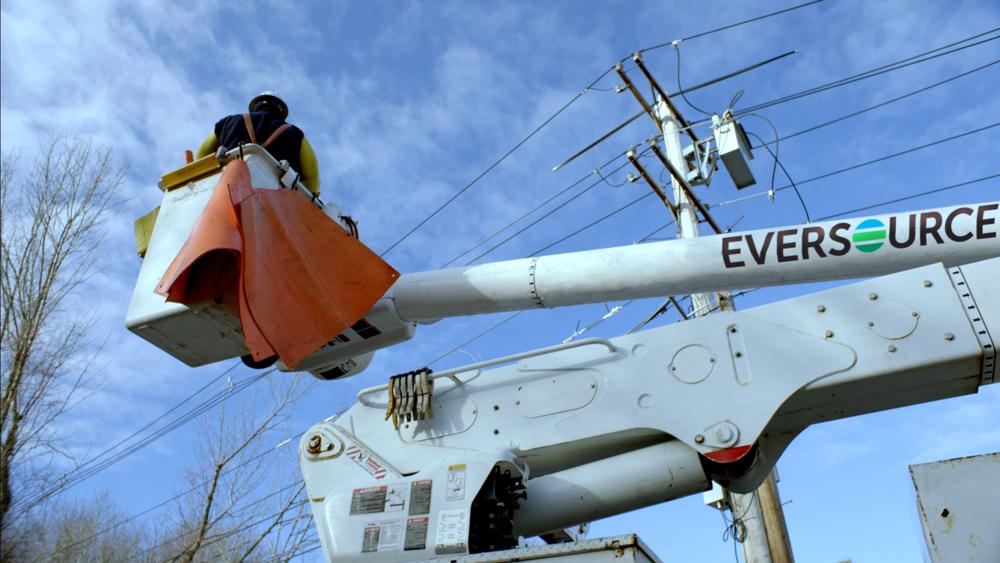
Eversource invests in wind project off Martha’s Vineyard
Eversource is investing in a large offshore wind project 15 miles south of Martha’s Vineyard, a deal that could help the company capitalize on a new state law requiring electric utilities to ramp up their use of wind energy. Boston-based Eversource is taking a 50 percent stake in Bay State Wind, a company set up by Danish wind power company DONG Energy. The project’s cost will likely exceed $1 billion, according to Eversource spokeswoman Caroline Pretyman, although no formal estimate has been made public. Lee Olivier, executive vice president of strategy and business development at Eversource, said the company is initially investing $10 million but will spend much more as the project progresses. The companies hope to take advantage of a state law passed earlier this year that will require big electric utilities — mainly Eversource and National Grid — to purchase large amounts of offshore wind power on contracts of 15 to 20 years. Wind-power producers that reach agreements with utilities would be guaranteed a long-term source of revenue. The joint venture could also provide Eversource with some of the wind power it will need to buy. — ADAM VACCARO AND JON CHESTO
ECONOMY
Federal Reserve raises key interest rate for only second time since 2008
In stark contrast to the economic exuberance of President-elect Donald Trump — whose pledge to double the pace of economic growth has sent the stock market soaring — the Federal Reserve on Wednesday offered a more measured long-range outlook. In raising a key interest rate for only the second time since the 2008 financial crisis, the Federal Open Market Committee, the Fed’s rate-setting group, said its previous projections for unemployment, inflation, and economic expansion were largely unchanged from before the Nov. 8 election. The Fed now expects the economy to expand by 2.1 percent in 2017, compared to a previous 2.0 percent projection. And in the longer term, it still pegs economic growth at a fairly anemic 1.8 percent, far below Trump’s pledge of 4 percent. Unemployment is expected to decrease to 4.5 percent in 2017, down slightly from the Fed’s previous forecast of 4.6 percent. And the core inflation projection remains the same in the coming years. “The shifts you see here are really very tiny,’’ Fed chair Janet Yellen said. Pointing to a strengthening labor market and a more resilient economy, the Fed voted unanimously to increase the interest rate by a quarter of a point to between 0.5 and 0.75 percent. And it said it anticipated that it will raise rates three times next year, instead of twice, as projected before the election — a sign of growing optimism in the US economy. A higher federal funds target rate can push up the cost of borrowing for consumers on mortgages, credit cards, and auto loans. — DEIRDRE FERNANDES
PENSIONS
MBTA retirement board members questioned investment in hedge fund
When MBTA Retirement Fund board members met in March 2007 to consider sinking $25 million into a hedge fund, several of them weren’t convinced it was a smart move. They wondered whether the fund was too risky, too expensive, or even a good match for that slice of pension money, records recently obtained by the Globe show. But a month later, the board’s executive director at the time, Michael Mulhern, recommended that they commit to the investment. He cited the “level of trust’’ they all had in the man pitching the deal, Karl White — who also happened to be Mulhern’s predecessor as chief of the $1.5 billion MBTA pension fund. It turned out to be trust that was badly misguided. The hedge fund, run by Fletcher Asset Management, where White had gone to work just 10 months earlier, eventually collapsed. The trustee overseeing New York-based Fletcher’s bankruptcy called the operation a fraud, and the pension fund lost every dollar it invested on behalf of the MBTA’s more than 12,000 employees and retirees. Retirement board documents newly released to the Globe cast light on how the MBTA Retirement Fund trustees came to make such a disastrous move, and how they failed to promptly report the investment’s unraveling to transit workers and taxpayers. The Globe requested documents related to the Fletcher investment in December 2013, after reporting on the loss and uncovering the White connection. The Massachusetts Bay Transportation Authority pension board refused to release the records, and the Globe sued in 2014 to have them made public. The board provided heavily redacted records last week as part of a settlement in which the Globe agreed to dismiss the case and the pension board pledged to “voluntarily’’ respond to public records requests starting Jan. 1, when a broad update of the state’s public records law takes effect. The fund, which covers 5,885 employees and 6,472 retirees and beneficiaries, was organized as a private trust in 1948. Its overseers historically have fought to operate in secret, claiming exemptions from state laws on conflicts of interest and public records, despite nearly $500 million in taxpayer funding over the past 10 years. The new records law specifically calls on the MBTA Retirement Fund to comply for the first time. But the pension fund says it could decide to fight the law, maintaining the disclosure requirements are unconstitutional if applied to a private entity. — BETH HEALY
TELEVISION
Comcast strikes deal to boost signal for new NBC station
Facing complaints from some viewers and pressure from lawmakers, Comcast Corp. struck a deal with a local television station to boost the over-the-air signal for its new NBC Boston station that will officially debut in three weeks. In a letter Monday to Senator Edward Markey, who had questioned the strength of the company’s signal in the Boston area, Comcast said it has entered into an agreement with Boston television station WMFP that will result in the NBC signal reaching even more viewers than the current affiliate, WHDH. WMFP broadcasts on channel 62, but the NBC broadcast will be on a sub-channel, 60.5. NBC, which is owned by Comcast, will be dropping its affiliation with WHDH-TV (Channel 7) beginning Jan. 1. It began the transition in November with an over-the-air “countdown channel’’ broadcasting from WNEU (Channel 60) in Merrimack, N.H., and from WBTS, a low-power station in Needham. The channel currently airs simulcasts of Comcast’s local cable news station, NECN, as well as some talk and entertainment shows including the “Rachael Ray Show’’ and “Access Hollywood Live.’’ But some over-the-air viewers who live in Boston or nearby suburbs complained on NBC Boston’s Facebook page that they could not get either new channel, or had poor reception. — KATHELEEN CONTI

